


Scientists at the University of Hong Kong have developed a corrosion-resistant stainless steel that could replace expensive titanium components in green hydrogen production. The new “super steel” hydrogen material, called SS-H2, could slash structural material costs by roughly 40 times. The breakthrough, which researchers say “cannot be explained” by current corrosion science, could slash structural material costs by roughly 40 times and make seawater-based hydrogen production far more economical.
The new material, called SS-H2 (stainless steel for hydrogen), uses an unexpected dual-layer protection mechanism that allows it to withstand the harsh electrochemical conditions inside electrolyzers. If the technology successfully transitions from laboratory to commercial scale, it could help close the cost gap between green hydrogen and fossil fuel alternatives.
What Is SS-H2 Super Steel?
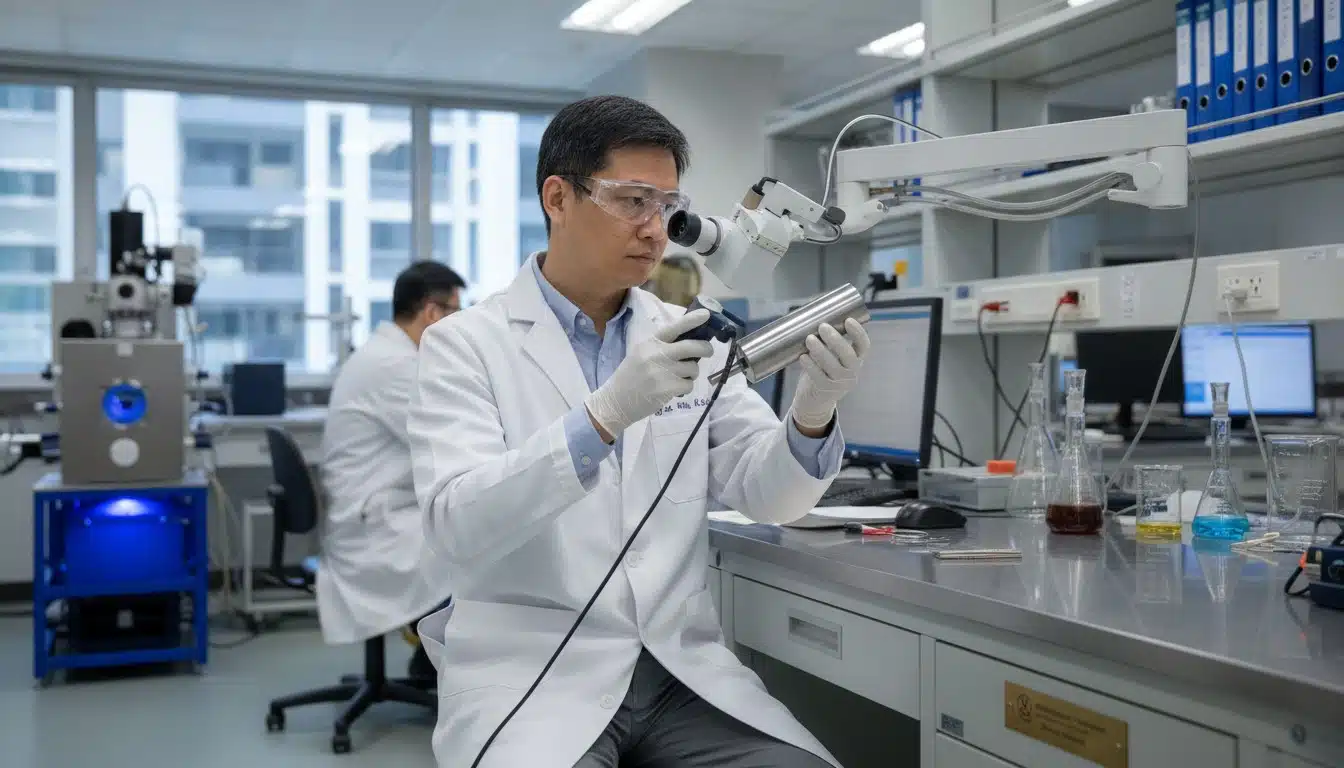
SS-H2 is a novel stainless steel alloy developed specifically for hydrogen production applications. Led by Professor Mingxin Huang of HKU’s Department of Mechanical Engineering, the research team created the material as part of their long-running “Super Steel” Project, which has produced several breakthrough materials since 2017.
The project’s previous achievements include:
- Exceptionally strong and tough Super Steel with world-record strength-ductility combinations (published in Science, 2017)
- Super Steel with world-record strength-toughness combinations (published in Science, 2020)
- Stainless steel with anti-COVID-19 properties for public health applications (2021)
- Now, SS-H2 for green hydrogen production (2026)
The findings were published in Materials Today in a study titled “A sequential dual-passivation strategy for designing stainless steel used above water oxidation.” The research was supported by the University of Hong Kong’s press office, and the researchers have applied for patents in multiple countries, with two already authorized.
The Problem: Why Conventional Stainless Steel Fails
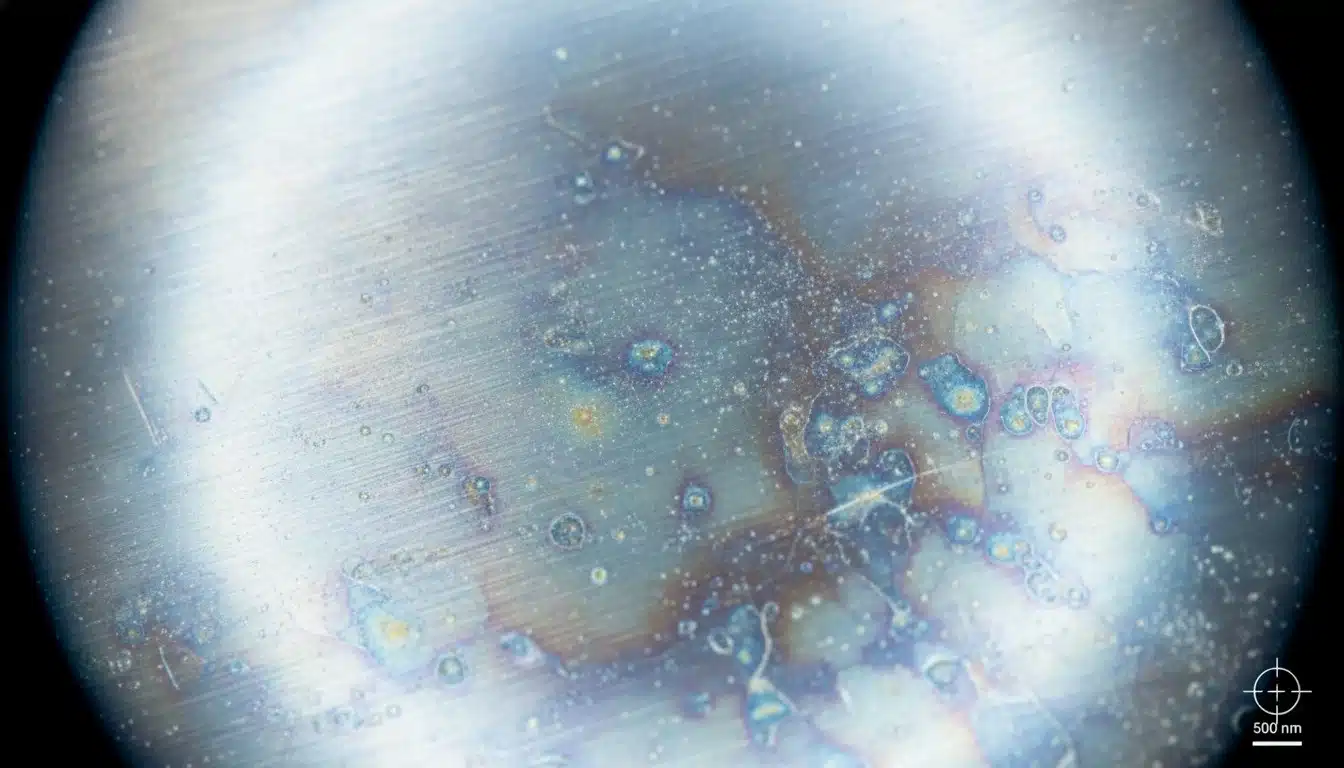
Stainless steel has been used for roughly a century in applications where corrosion resistance is critical. Its durability comes from chromium, which reacts with the environment to form a thin protective film on the surface. This passive layer, primarily composed of chromium oxide (Cr2O3), prevents the underlying metal from continuing to corrode.
However, conventional stainless steel has an important limitation.
The protective chromium oxide layer can undergo further oxidation and form soluble Cr(VI) species. When this happens, the surface enters a form of degradation known as transpassive corrosion. In conventional stainless steel, this process occurs at approximately 1,000 millivolts (mV) using a saturated calomel electrode (SCE).
The problem? Water oxidation, an essential reaction during electrolysis, requires a substantially higher potential of about 1,600 mV. This mismatch has prevented conventional stainless steel from being used effectively in high-voltage electrochemical applications.
Even 254SMO super stainless steel, considered a benchmark chromium-based corrosion-resistant alloy with excellent resistance to pitting in seawater, faces this problem. Its corrosion resistance decreases when the electrical potential becomes sufficiently high.
The Breakthrough: Sequential Dual-Passivation

Huang’s team found a way around this long-standing limitation using what they call “sequential dual-passivation.”
Instead of relying only on the traditional chromium oxide layer, SS-H2 develops a second protective layer on top of it. This secondary layer is based on manganese and begins forming at approximately 720 mV.
Together, the two layers allow the steel to resist corrosion in chloride-containing environments at potentials reaching 1,700 mV. Since chlorides are abundant in seawater and particularly aggressive toward many metals, this represents a fundamental advance over conventional stainless steel.
What makes the result especially striking is the role played by manganese. Traditionally, manganese has been regarded as harmful to the corrosion resistance of stainless steel.
“Initially, we did not believe it because the prevailing view is that Mn impairs the corrosion resistance of stainless steel. Mn-based passivation is a counter-intuitive discovery, which cannot be explained by current knowledge in corrosion science. However, when numerous atomic-level results were presented, we were convinced.”
— Dr. Kaiping Yu, first author of the study
The project took nearly six years, beginning with the discovery of the unusual steel and continuing through efforts to understand why it behaved this way at the atomic level.
Why This Matters for Green Hydrogen

Green hydrogen, produced by splitting water using renewable electricity, is considered a key fuel for decarbonizing industries like steel, cement, and shipping. The International Energy Agency has identified green hydrogen as essential for meeting climate targets, but its high production cost has limited widespread adoption.
As of 2026, green hydrogen production costs remain significantly higher than fossil fuel alternatives:
| Hydrogen Type | Production Cost (per kg) | Source |
|---|---|---|
| Green Hydrogen (Global Average) | $4.50 – $6.00 | Green Fuel Journal, 2026 |
| Green Hydrogen (Best Case) | Below $2.00 | China, US with IRA subsidies |
| Blue Hydrogen | $2.00 – $3.50 | Industry average |
| Grey Hydrogen | $1.50 – $2.50 | Natural gas (SMR) |
A major cost driver is the electrolyzer itself. According to the U.S. National Renewable Energy Laboratory (NREL), current electrolyzer capital costs range from $975 to $2,500 per kilowatt, with significant regional variation. Chinese systems average around $600/kW, while equivalent Western systems cost roughly four times as much at $2,500/kW.
For proton exchange membrane (PEM) electrolysis systems, which are well-suited for pairing with renewable energy, structural components can represent as much as 53% of total system cost. These components currently require expensive titanium coated with gold or platinum.
According to the HKU researchers, a 10-megawatt PEM electrolysis system costs approximately HK$17.8 million (roughly $2.3 million). Replacing titanium-based structural materials with SS-H2 could reduce that component’s cost by about 40 times.
SS-H2 vs. Titanium: Cost Comparison
| Parameter | Titanium Components | SS-H2 Steel |
|---|---|---|
| Corrosion Resistance | Excellent | Comparable (up to 1,700 mV) |
| Material Cost | High (requires gold/platinum coating) | ~40x lower |
| Seawater Performance | Proven at industrial scale | Laboratory validated |
| Commercial Readiness | Widely available | Early industrialization |
From Laboratory to Industrial Production
Important engineering challenges remain before SS-H2 can be widely deployed:
- Electrolyzers require components in practical forms such as metal meshes and foams
- Laboratory performance must be validated at commercial scale
- Manufacturing processes need optimization for mass production
- Long-term durability testing under real-world conditions is still needed
However, the researchers have already begun moving the technology toward large-scale production.
“From experimental materials to real products, such as meshes and foams, for water electrolyzers, there are still challenging tasks at hand. Currently, we have made a big step toward industrialization. Tons of SS-H2-based wire have been produced in collaboration with a factory from the Mainland.”
— Professor Mingxin Huang
The team is now focused on applying SS-H2 in hydrogen production from renewable sources, with the goal of providing a cheaper route to producing green hydrogen from seawater.
Frequently Asked Questions
What is green hydrogen?
Green hydrogen is hydrogen produced by splitting water (H2O) into hydrogen and oxygen using electricity from renewable sources like solar or wind power. Unlike grey hydrogen, which is produced from natural gas and releases carbon dioxide, green hydrogen produces no direct greenhouse gas emissions during production.
How does electrolysis work?
Electrolysis uses an electric current to drive a chemical reaction that splits water molecules. Inside an electrolyzer, water is separated at two electrodes: hydrogen gas forms at the cathode (negative electrode), while oxygen gas forms at the anode (positive electrode). The process requires specialized materials that can withstand corrosive conditions and high electrical potentials.
Why is seawater important for hydrogen production?
Seawater is abundant and available in coastal regions worldwide, making it an attractive feedstock for hydrogen production. However, seawater contains chlorides and other corrosive elements that can damage conventional electrolyzer components. Developing materials that resist seawater corrosion could enable hydrogen production in coastal areas without the need for expensive desalination.
When will SS-H2 be commercially available?
The researchers have not announced a specific commercialization timeline. However, they have already produced tons of SS-H2-based wire in collaboration with a Chinese manufacturing partner, and patents have been authorized in multiple countries. The transition from laboratory to commercial electrolyzer components will depend on further engineering validation and manufacturing scale-up.
How does this compare to other green hydrogen breakthroughs?
SS-H2 addresses a different part of the hydrogen production challenge than catalyst-focused breakthroughs. While platinum-free catalysts reduce the cost of the catalytic materials that drive the electrolysis reaction, SS-H2 targets the structural components that house the electrolyzer system. Both types of innovation are needed to make green hydrogen economically competitive with fossil fuels.
The Path Forward
The development of SS-H2 represents a significant step toward making green hydrogen production more economical. By replacing expensive titanium components with a corrosion-resistant steel that costs roughly 40 times less, the technology could help close the price gap between green hydrogen and fossil fuel alternatives.
If SS-H2 successfully makes the transition from experimental steel to industrial components, it could provide a cheaper route to producing green hydrogen from renewable energy and seawater, supporting the global transition to clean energy.
Other recent innovations in the hydrogen sector include Sunfire’s 50 MW pressurized alkaline electrolyzer, which claims up to 50% lower installed costs, and China’s “Ocean Refinery” project that sustainably converts seawater into drinking water, green hydrogen, and mineral-rich brine.
The research was published in Materials Today (DOI: 10.1016/j.mattod.2023.07.022).
For more on hydrogen technology, see our coverage of H2Pro’s membrane-free green hydrogen technology and next-generation electrolyzers that could power the globe with renewables.


