

Today’s ESG Updates
- India Needs $220 Billion to Close the Clean Energy Gap: A senior official says solar, wind, storage, green hydrogen, and grids need the money within three years, yet 40 GW of awarded projects still lack buyers.
- China’s Clean Tech Exports Cut Emissions by a Brazil-Sized Amount: Solar leads the 450 million tons avoided in 2026, mostly in the Global South, though lower prices hurt incumbent producers.
- Deutsche Bank Posts Record Profit as Sustainable Finance Hits a High: Third-quarter profit after tax reached €1.9 billion, while sustainable and transition volumes outside DWS hit €32 billion, the best quarter since the strategy launch.
- EU Proposes Climate Resilience Law as Low Rivers Disrupt Fuel Supply: Member states would draft adaptation plans by end-2030, with adaptation costs put at about €70 billion a year, while Hoekstra calls a fossil fuel levy complicated.
India needs $220 billion to hit clean energy goal
India will need roughly $220 billion in clean energy investment across the next three years to hit its 2030 goal of 500 GW non-fossil capacity, a senior official said. Santosh Kumar Sarangi, the top official at the clean energy ministry, said money must flow to solar, wind, battery storage, green hydrogen and transmission lines.
The nation has around 308 GW of non-fossil capacity and targets net zero by 2070. Between 2024 and 2026, private players invested about $64 billion, including $6.2 billion from abroad, while the government added $6 billion. Overseas buyers, among them Japan and South Korea, have created demand for 550,000 tonnes of green ammonia.
About 40 GW of awarded projects still lack buyers. New Delhi has asked states to adopt more clean power and storage. Next week, officials will meet investors, including Canadian pension funds, at a summit in New Delhi.
Klimado – Navigating climate complexity just got easier. Klimado offers a user-friendly platform for tracking local and global environmental shifts, making it an essential tool for climate-aware individuals and organizations.
China clean tech exports to avoid 450 million tons of emissions in 2026
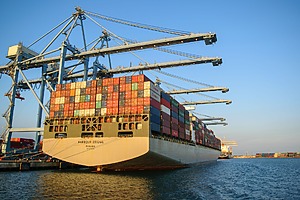
China’s clean technology exports will help the world avoid 450 million metric tons of carbon dioxide in 2026, roughly what Brazil emits each year from fossil fuel use, a new analysis finds. The Center for Research on Energy and Clean Air said solar panels, wind turbines, electric vehicles and batteries drive the savings, with solar the largest source. That equals 2% of annual emissions outside China, down from 370 million tons last year.
Most of the benefit lands in the Global South, where buyers use Chinese equipment to clean up fossil-heavy grids. The report estimates clean tech imports repay their production emissions in about six months.
The analysis found these exports opened new markets overall rather than displace producers elsewhere, though lower prices hurt incumbent revenues. China has vowed to push back on clean tech tariffs at next month’s COP31 summit.
Related Articles
Here is a list of articles selected by our Editorial Board that have gained significant interest from the public:
Deutsche Bank posts record €1.9 billion profit as sustainable finance hits quarterly high

Deutsche Bank booked a record €1.9 billion profit after tax in the third quarter of 2026, its third consecutive record quarter. Pre-tax profit rose 8% year on year to €2.6 billion, and net revenues grew 4% to €8.3 billion. Costs held flat year on year at €5.2 billion.
On the ESG side, sustainable and transition finance volumes outside DWS reached €32 billion, the strongest quarter since the bank launched its sustainability strategy. The cumulative total since 2020 now stands at €555 billion, and transition finance totaled €6.4 billion, up from €4.3 billion in Q2.
Deals included a €1 billion guarantee facility for wind turbine maker ENERCON, a €375 million loan for Benin, and a role in TenneT Germany’s €2.6 billion green bond. The bank also updated its Transition Plan in September.
EU proposes climate resilience law as fossil fuel levy proves complicated

The European Commission has proposed a climate resilience law that would require member states to prepare adaptation plans and assess climate risks by the end of 2030. Climate commissioner Wopke Hoekstra said fossil fuel firms have a clear case for sharing the cost, but called the discussion hugely complicated and said a quick add-on to the EU carbon market (ETS) is not simple.
The Commission put climate damage losses at €200 billion over 2022-25, about €50 billion a year, and adaptation costs at roughly €70 billion a year. It said adaptation returns can exceed ten times the losses avoided.
Energy commissioner Dan Jorgensen said the law would help safeguard energy supplies. Low Rhine levels have left German terminals short of diesel and HVO, and low Danube levels hit shipments and nuclear output.
Hoekstra said the 1.5°C goal stands, yet it would be unwise not to prepare for other scenarios.
Editor’s Note: The opinions expressed here by the authors are their own, not those of impakter.com — Cover Photo Credit: Quang Nguyen Vinh


