

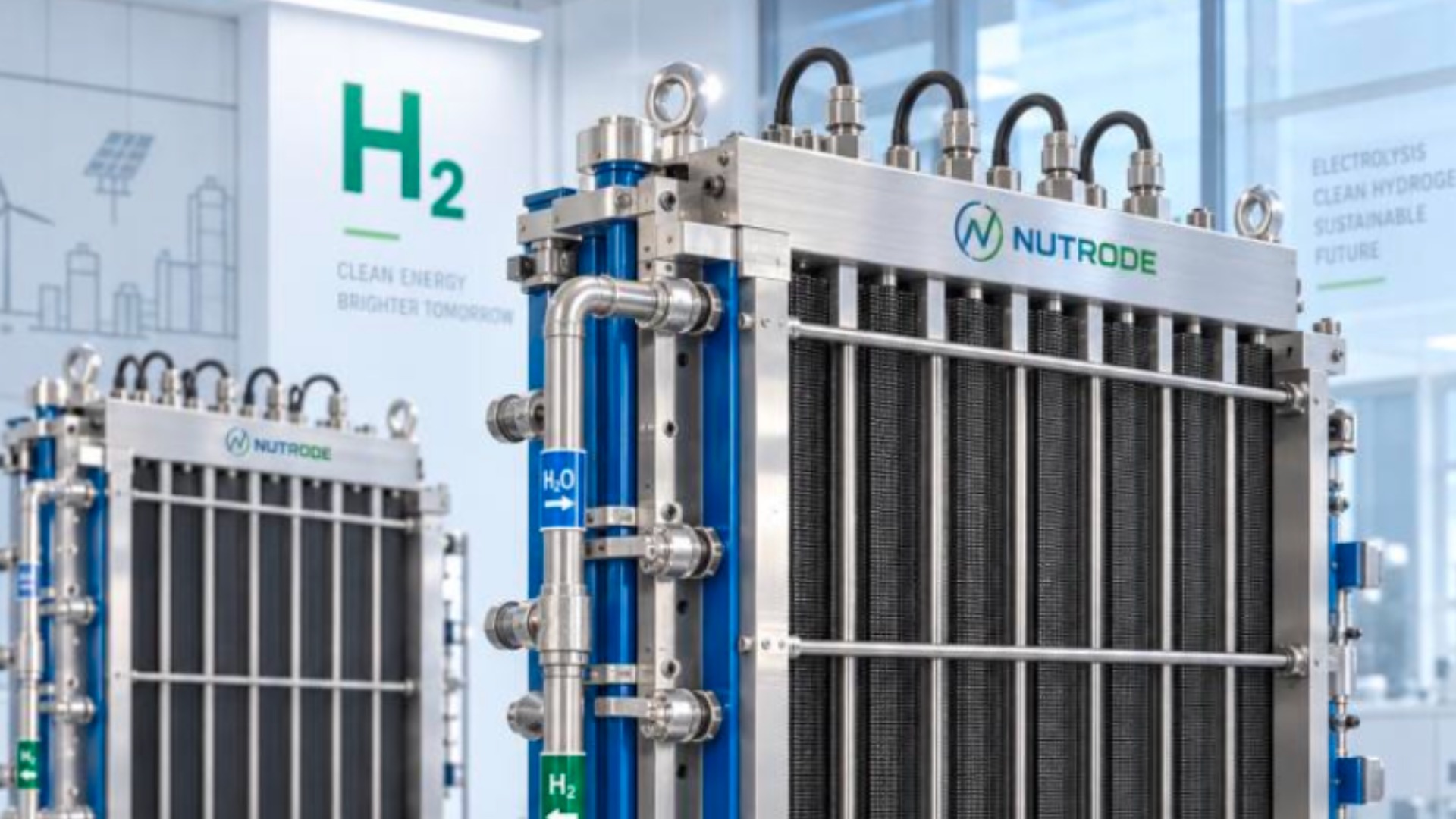
Nutrode says it can cut the cost of a key clean-hydrogen component by 90%
A Knoxville startup built on University of Tennessee research is working to make clean hydrogen cheaper by rethinking how one of an electrolyzer’s key components is manufactured.
Many of the processes in our current working world have at least one pain point that could be alleviated with technology. A team from the University of Tennessee, Knoxville, has identified a process improvement in the production of green hydrogen that could significantly reduce the cost and improve the overall effectiveness of this energy source.
Nutrode, Inc. was founded in Knoxville by UT professors Feng-Yuan Zhang (CEO) and Matthew Mench, with team members Weitian Wang (CTO) and Lei Ding (R&D).
Nutrode makes electrodes for electrolyzers, which use electricity to split water into hydrogen and oxygen. The company says its design requires 90% less rare earth metals typically used in those electrodes. Furthermore, its reinvented method also cuts the traditional 10-step process down to just three.
“Compared to the conventional electrode, our electrode is better, cheaper and faster,” said Lei Ding, Nutrode’s director of research and development.
The cost challenge behind clean hydrogen
Hydrogen is used to make ammonia, the main ingredient in most fertilizer, and can provide energy for trucks, industrial facilities and power plants without releasing carbon dioxide at the point of use.

Most hydrogen today is produced from natural gas, which is relatively inexpensive, but it releases carbon dioxide. Producing hydrogen by splitting water with renewable electricity, commonly called green hydrogen, avoids those emissions but remains significantly more expensive. Research firm BloombergNEF estimates that green hydrogen costs 2x to 4x as much as hydrogen produced from fossil fuels.
Part of that cost comes from the electrolyzer itself.
Inside each machine are electrodes, and they are typically coated in platinum and iridium, two of the rarest and most expensive metals on Earth.
“For the water electrolyzer, the electrode is the key indicator for the cost and for the efficiency,” Ding said.
How is Nutrode doing it differently?
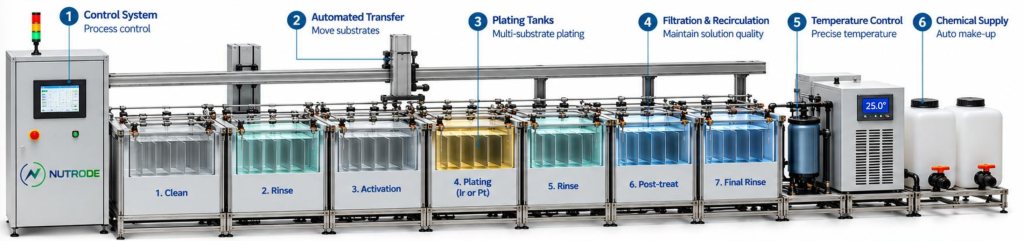
Nutrode’s technology, called the Integrated Dual Electrode Assembly, or I.D.E.A., is designed to reduce both the amount of precious metals and the time it takes to manufacture an electrode.
According to Nutrode, they can grow a very thin layer of metal directly onto the electrode instead of spraying it on. That cuts the amount of platinum and iridium needed by about 90%. The process works at room temperature and normal atmospheric pressure, eliminating the need for some of the energy-intensive manufacturing steps used in conventional approaches.
“We have significantly simplified the process,” Ding said.
Making an electrode now takes minutes or even seconds instead of several hours, she explained.
The company estimates that the combination of reduced metal use and a simpler process could cut electrode production costs by more than 90%.
Ding said its internal testing has also shown improved efficiency in converting electricity into hydrogen compared with a conventional electrode. These findings, however, are based on Nutrode’s lab work and controlled testing. The technology has not yet been tested at commercial scale, though that is an opportunity the team is looking for.
Backed by UTK
Nutrode’s technology emerged from more than a decade of federally funded research at UT Knoxville.
Ding worked on the technology during graduate school, earning his Ph.D. in 2024. She then completed a one-year postdoctoral position at Argonne National Laboratory near Chicago before returning to Knoxville to join the company full time.
“I’m very familiar with all the technology because during my five-year PhD, this is what I was working on,” Ding said.
Since she’s returned, Nutrode has made several key accomplishments.
Nutrode received an award from UT’s Chancellor’s Innovation Fund and was selected for the 2026 cohort of the Spark Accelerator at UT Research Park. The company is also recognized by the UT Research Foundation and has been working closely with the organization on the commercialization of its patented technologies.
What’s next for Nutrode?
Electrolyzers are Nutrode’s initial focus, but Ding sees broader potential for the manufacturing process.
The same approach could be adapted to electrodes used in fuel cells and water treatment applications, she explained.
For now, the company is taking one step at a time and remains focused on moving its technology beyond the laboratory. Nutrode aims to reach industrial-scale manufacturing by 2028.
Connect with the Nutrode team.


