

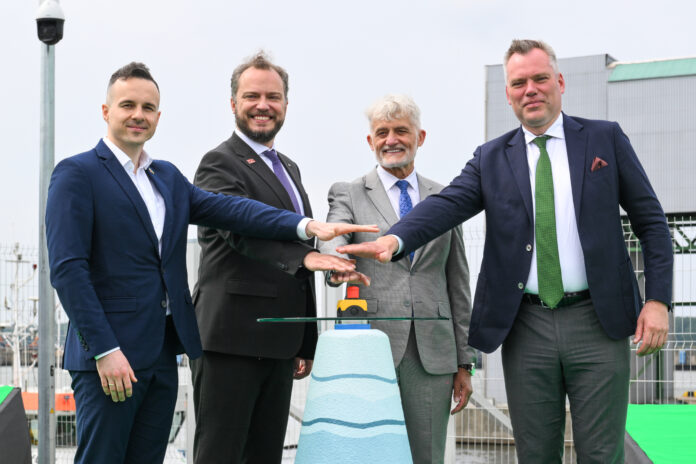
Klaipėda Port has opened Lithuania’s first green hydrogen production and refuelling station, marking a major step in the country’s clean energy transition.
The new facility will supply green hydrogen for passenger vehicles, heavy-duty trucks, ships and port operations. It aims to support the development of a low-emission transport ecosystem in Lithuania.
“Only a few years ago, green hydrogen at Klaipėda Port was little more than an ambitious vision,” said Algis Latakas, Director General of Klaipėda Port Authority.
“Today, we are proud to open Lithuania’s first green hydrogen facility and contribute to a new chapter in the country’s energy transition.”
Klaipėda Port launched the project in 2023.
Construction began in summer 2025. The main equipment arrived in October, and the facility produced its first green hydrogen in April 2026.
The station uses a polymer electrolyte membrane (PEM) electrolyser to produce hydrogen.
At full capacity, the facility will produce approximately 127 tonnes of green hydrogen per year.
Klaipėda Port Authority will use around 25% of the hydrogen generated at the site for its own operations.
A hydrogen-powered waste collection vessel will soon enter service at the port. The authority has also added a hydrogen-powered Toyota Mirai to its vehicle fleet.
The port said these investments demonstrate its commitment to testing and deploying clean technologies in real operating conditions.
The facility will operate as open infrastructure and serve the wider transport and logistics sector.
Klaipėda Port Authority is working with LTG Group, Klaipėda Stevedoring Company BEGA and Volvo Lietuva to explore hydrogen use in road transport, rail operations and port activities.
Commercial hydrogen supply is expected to begin in autumn 2026.
The project forms part of the Next Generation Lithuania Economic Recovery and Resilience Plan and received funding from the European Union’s NextGenerationEU programme.
The total investment in the hydrogen production and refuelling station reached approximately €12 million.
The European Union contributed around €6 million to the project.
Companies Inžinerinis projektavimas, MT Group and Gevalda delivered the project.


