

In the world of gastronomy, names can be notoriously deceptive. Just as a Welsh Rabbit contains no trace of meat and a pineapple bun contains no fruit, Hong Kong’s kitchens are home to a fascinating culinary misnomer. While some locals still refer to the city’s piped gas as mui hei—literally translating to “coal gas”—the town gas we use daily hasn’t actually been derived from coal for decades.
The familiar blue flame that ignites when we turn on our stoves represents much more than a heat source for cooking; it is the culmination of a 160-year decarbonisation journey. While Towngas originally relied on coal, the company transitioned to heavy oil in 1967 and ultra-low sulphur naphtha in 1973 to improve air quality. By 2006, it introduced natural gas, widely regarded as the cleanest fossil fuel. Today, the fuel mix serving Hong Kong has been comprehensively upgraded.
A 1% emissions footprint and the power of landfill gas
According to the HKSAR Government’s 2024 greenhouse gas emission inventory, electricity generation (61%) and transport (18%) are the city’s primary emission sources. Surprisingly, producing the town gas that supplies over two million households accounts for merely 1% of Hong Kong’s total emissions. This remarkable figure is the result of a century-old enterprise’s quiet environmental efforts over the past 50 years.
Currently, the feedstock mix for the city’s piped gas consists of roughly 55% natural gas and 42% naphtha. The remaining 3%, though seemingly insignificant, represents a highly innovative environmental strategy: landfill biogas.
Transforming waste into a clean resource
For years, decomposing waste in landfills has generated biogas rich in methane, a potent greenhouse gas. Rather than adopting the traditional method of flaring it off, Towngas chose a more challenging but rewarding path: turning waste into energy. By capturing, purifying, and injecting this biogas directly into the gas grid, the company not only creates a valuable energy source but also prevents harmful methane from entering the atmosphere.
The vision extends further. To support the Government’s goal of achieving carbon neutrality by 2050, Towngas is actively exploring the use of green naphtha and green methane derived from biomass, which will further reduce greenhouse gas emissions.
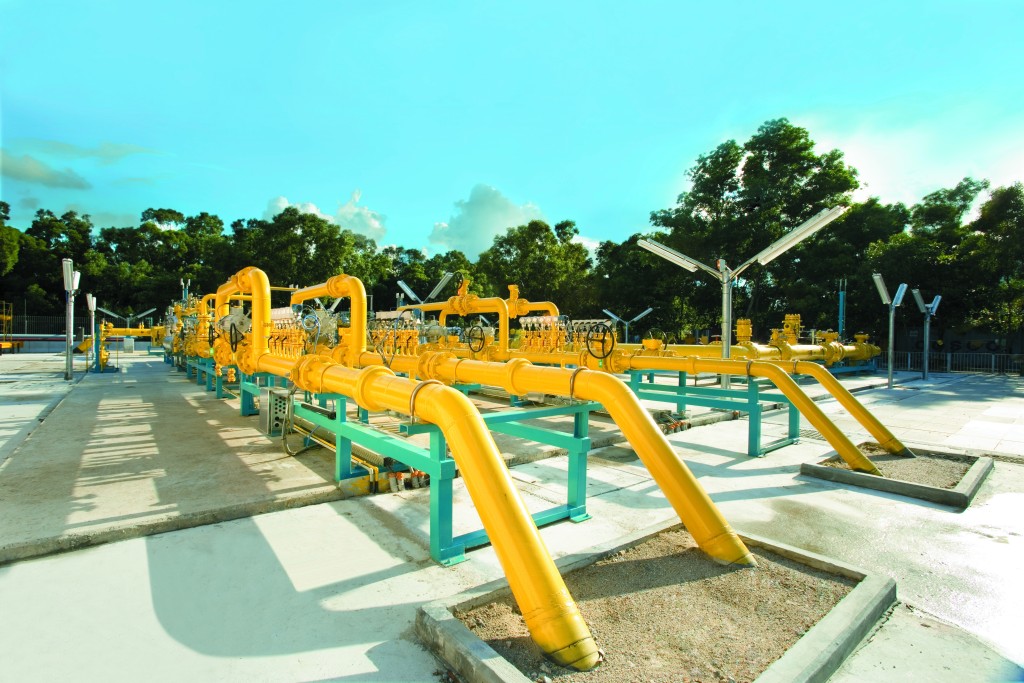
The Tai Po plant houses a large-scale liquefied natural gas (LNG) receiving terminal. By utilising cleaner natural gas as a primary feedstock, Towngas has significantly reduced carbon emissions at the source.
A hidden hydrogen network beneath our streets
Beyond exploring new green feedstocks, Hong Kong possesses a unique, built-in advantage in the development of hydrogen energy. While the global community grapples with the high costs of storing and transporting hydrogen—a crucial element in combating climate change—Hong Kong already has a solution in place. Remarkably, up to half of the gas currently flowing through the city’s underground pipe network is composed of hydrogen.
This means high-purity hydrogen can be extracted directly from the existing grid, bypassing the need to build expensive new infrastructure. Furthermore, Hong Kong’s first green hydrogen project, co-developed by Towngas, is set to launch soon. By converting landfill biogas into hydrogen, the initiative marks a significant milestone in the city’s ability to produce its own green hydrogen.
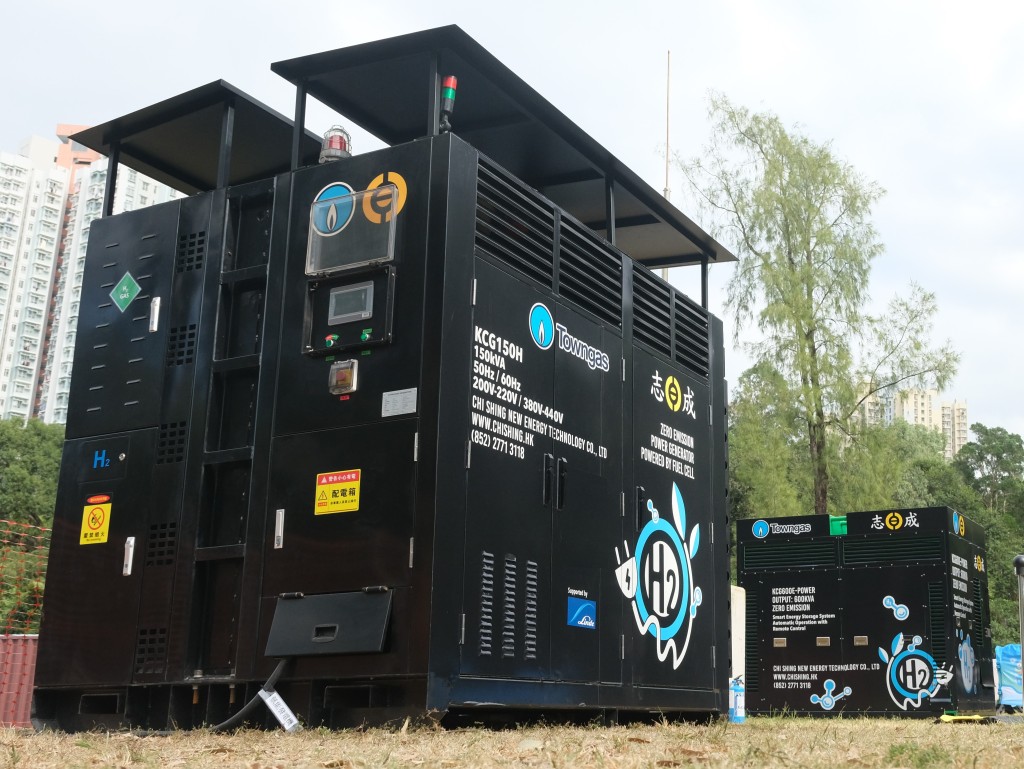
An integrated hydrogen generator, developed by Towngas and its partner, successfully provided clean electricity for a National Games venue in Hong Kong. The technology will be deployed at construction sites, replacing high-emission diesel generators.
160 years of service: Paving the way for a zero-carbon future
Having served Hong Kong for over 160 years, Towngas has grown alongside the city. The everyday convenience of a hot shower or a home-cooked meal is backed by a 99.99% supply reliability and decades of decarbonisation efforts.
While the “pineapple bun without pineapple” remains a classic piece of Hong Kong humour, the reality of a “coal gas without coal” reflects a genuine commitment to the environment. Through continuous technological innovation, Towngas has been quietly laying the groundwork for a zero-carbon future by integrating green initiatives into the city’s infrastructure, ensuring a cleaner, more sustainable home for generations to come.
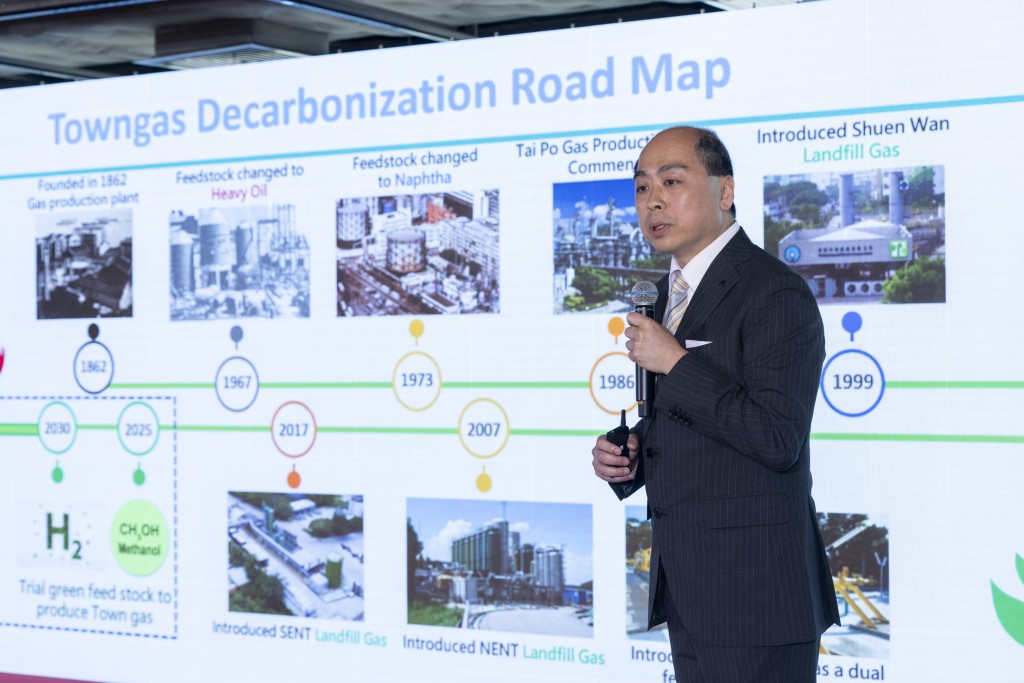
Hong Kong’s first green hydrogen project will collect landfill biogas and convert it into green hydrogen. Don Cheng, Towngas Chief Operating Officer – Hong Kong Business, notes that this waste-to-energy initiative can contribute to achieving carbon neutrality in the city.


