

Japan for nearly a decade has been one of the world’s most committed proponents of hydrogen. It was among the first countries to establish a national hydrogen strategy, and it continues to invest heavily in hydrogen infrastructure, supply chain, and industrial applications even as enthusiasm for the sector has cooled in parts of North America and Europe.
 |
|
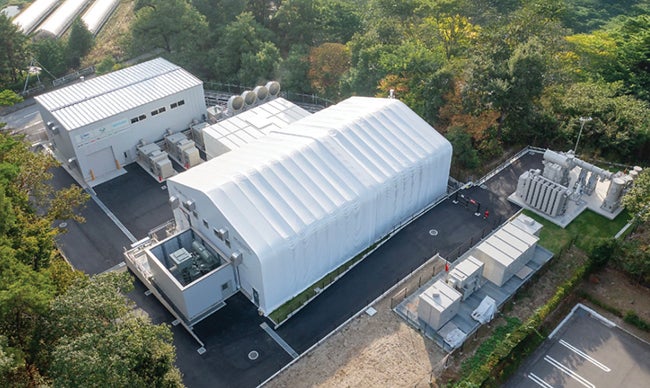
1. Green Hydrogen Park Hakushu is a $122-million project located in Hokuto City, Japan. The facility is expected to produce about 2,200 tons of green hydrogen each year. Courtesy: Taiyo Kogyo Corp. (used with permission) |
One example came in October 2025, when Japan advanced its industrial decarbonization efforts with the launch of a large-scale green hydrogen production facility. The $122-million project, known as Green Hydrogen Park Hakushu (Figure 1), was developed through a partnership among Yamanashi Prefecture and several corporate partners, including Suntory Holdings, Toray Industries, Tokyo Electric Power Co. Holdings, Kanadevia Corp., Siemens Energy, and Miura Co. Located in Hokuto City, the facility is expected to produce about 2,200 tons of green hydrogen each year while reducing annual CO 2 emissions by an estimated 16,000 tons.
At first glance, commitments like this appear straightforward. Hydrogen is widely viewed as a decarbonization tool, and Japan has been public about its ambitions to reduce emissions while continuing industrial competitiveness.
However, Japan’s recent policy decisions suggest decarbonization is only one objective driving its hydrogen strategy. Hydrogen may be one of the most visible components of Japan’s energy strategy, but it is unlikely to be the most important. Perhaps what stands out most is the country’s overall commitment to energy security.
Japan doesn’t have the abundant domestic energy resources of the U.S., Canada, or many countries in the Middle East. It imports the majority of the fuel required to power its economy. This reality has shaped Japanese energy policy for decades, influencing decisions around liquefied natural gas (LNG), nuclear power, overseas resource investments, and strategic infrastructure. Hydrogen fits within that same tradition.
Viewed through this lens, Japan’s approach begins to look less like a bet on a specific technology and more like a dedicated focus on increasing resilience within a fundamentally vulnerable energy system.
This distinction is subtle, but important. According to Japan’s Ministry of Economy, Trade, and Industry (METI), the country is no longer focused solely on hydrogen research. It is investing across the entire hydrogen value chain, from international production and shipping to domestic storage, power generation, heavy industry, and transportation. (As an example, the Tokyo 2020 Olympic and Paralympic Games—actually held in 2021 due to the pandemic—prominently showcased hydrogen energy, featuring the first Olympic flame powered by hydrogen. The event also showcased hydrogen-fueled vehicles, and the Olympic Village was powered by hydrogen, with hydrogen fuel cells providing electricity, hot water, and heat to the athletes’ housing.)
Passed in 2024, Japan’s updated Hydrogen Society Promotion Act introduced a government support framework to bridge the price gap between low-carbon hydrogen and conventional fuels while also providing assistance for large-scale infrastructure development. The legislation seemed to aim for a shift from demonstration projects into long-term commercial deployment.
Several flagship projects are already underway. The Hydrogen Energy Supply Chain (HESC) project continues to develop an international supply chain capable of transporting liquefied hydrogen from Australia to Japan. Meanwhile, JERA and IHI are advancing ammonia co-firing projects at thermal power plants, while steelmaker JFE Steel and Nippon Steel continue evaluating hydrogen pathways for lower-carbon steel production. Japanese utilities and industrial companies have also signed long-term agreements to source hydrogen and hydrogen derivatives from projects in Australia, the Middle East, and North America.
According to METI, these investments are intended not only to reduce emissions but also to diversify Japan’s future energy supply and strengthen long-term energy resilience.
Much of the discussion surrounding hydrogen, particularly in Western markets, focuses on whether hydrogen itself will succeed. Will costs fall quickly enough? Will demand emerge? Which production pathways will ultimately prove competitive?
These are important questions, but they are frequently framed as though hydrogen exists in isolation. According to METI policy documents and the country’s Basic Hydrogen Strategy, hydrogen is positioned alongside LNG, nuclear energy, ammonia, and synthetic fuels as part of a wider effort to strengthen energy security while reducing emissions.
 |
|
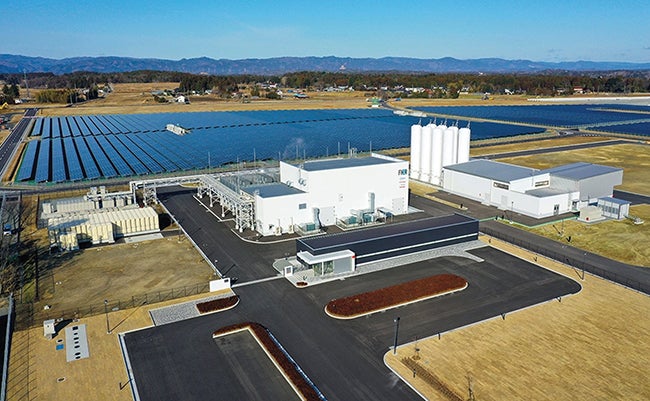
2. Among Japan’s important energy installations is the Fukushima Hydrogen Energy Research Field, which has operated since March 2020. The plant produces hydrogen by utilizing electricity generated from solar panels arrayed around its perimeter. Source: The Government of Japan (used with permission) |
Rather than positioning hydrogen as a replacement for existing energy systems, Japanese policymakers and industrial groups have generally approached it as one component (Figure 2) of a broader portfolio that includes LNG, nuclear power, ammonia, e-methane, e-fuels, and conventional hydrocarbons. The objective is not necessarily to identify a single winning pathway. It is to preserve optionality in an increasingly uncertain world.
That philosophy extends well beyond hydrogen. Japanese companies have historically sought influence across global energy value chains, not simply through commodity purchases but through ownership, infrastructure, and long-term strategic partnerships. This strategy is increasingly visible in Japanese corporate investment.
According to public announcements from companies including Mitsubishi Corp., Mitsui & Co., Marubeni, and JERA, Japanese firms continue to invest across LNG production, hydrogen, ammonia, synthetic fuels, and carbon capture projects around the world. Many of these investments are structured as long-term partnerships rather than one-time purchases, reflecting Japan’s longstanding preference for securing reliable access to future energy supplies.
Australia remains one of Japan’s closest hydrogen partners. Projects such as the Hydrogen Energy Supply Chain initiative and large-scale renewable hydrogen developments in Western Australia are intended to create export pathways capable of supplying Japanese industry for decades. Similar partnerships have emerged with the United Arab Emirates, Saudi Arabia, and the U.S. as Japan seeks multiple sources of future low-carbon fuel imports.
This broader policy framework helps explain why Japan has maintained support for hydrogen despite a more challenging global investment environment. The hydrogen industry has entered a more difficult phase of development. Initial enthusiasm has given way to questions around cost, infrastructure requirements, financing, and timelines. Numerous projects have been delayed, scaled back, or abandoned altogether. Expectations are becoming more grounded in economic reality.
Yet none of those developments necessarily undermine the strategic rationale for hydrogen. While hydrogen investment has slowed in many regions, Japan has continued to improve rather than abandon its strategy. According to the International Energy Agency (IEA), Japan remains among the world’s leading public investors in hydrogen technologies and has consistently supported demonstration projects that span production, transportation, storage, power generation, and industrial use. Rather than concentrating on a single production pathway, Japanese policy supports imported clean hydrogen, domestic production, ammonia, synthetic methane, and multiple transportation technologies.
This portfolio approach embodies an understanding that the future hydrogen market is unlikely to be served by one technology alone. Instead, policymakers appear to be reducing risk by supporting multiple pathways simultaneously while allowing economics and technology readiness to determine which ultimately scale.
Global hydrogen consumption already exceeds 100 million tons annually, although the vast majority of that supply remains carbon intensive. The challenge facing the industry is not whether hydrogen has industrial applications. Those applications already exist. The challenge is producing low-emission hydrogen at a cost and scale that existing and emerging markets can support.
According to the IEA’s Global Hydrogen Review, more than a thousand hydrogen production projects have been announced worldwide, but only a relatively small share have reached final investment decision. Rising capital costs, uncertain demand, and infrastructure constraints have delayed many projects, reinforcing the importance of technologies capable of lowering production costs rather than depending solely on policy support.
Against that backdrop, Japan’s strategy appears less focused on identifying a single winning technology than on making sure that multiple production pathways remain available as markets mature. Historically, major transitions within the energy industry have rarely been driven by demand alone. They have been enabled by technologies that improved economics, unlocked new resources, or made existing infrastructure more productive. Horizontal drilling transformed unconventional oil and gas development. Advances in seismic imaging reshaped exploration. LNG infrastructure profoundly changed global gas markets.
Japan’s policy framework also reflects a broader shift occurring across global energy markets. Its strategy implicitly acknowledges something that is increasingly evident across global energy markets: decarbonization and energy security are not separate conversations. For much of the past decade, they were often treated as distinct, and occasionally competing, objectives. Today, they are becoming increasingly intertwined.
Governments around the world are rediscovering the importance of secure supply chains, reliable infrastructure, and affordable energy. Industrial competitiveness, economic security, and national security all depend on them. From that perspective, Japan’s hydrogen strategy may be less about forecasting the future of hydrogen and more about preparing for a range of possible futures. Hydrogen must now scale. Energy transitions rarely unfold according to plan, and the winners are seldom obvious in advance.
What seems clear is that Japan is asking a different set of questions than many of its peers. Not simply how to decarbonize, but how to decarbonize while maintaining resilience. How to diversify while preserving reliability. And how to manage an increasingly uncertain energy landscape without becoming dependent on any single pathway. Those questions go well beyond hydrogen. In many respects, they may be the defining energy questions of the next several decades.
—Ajeet Singh is director of Business Development for Eclipse Energy.


