

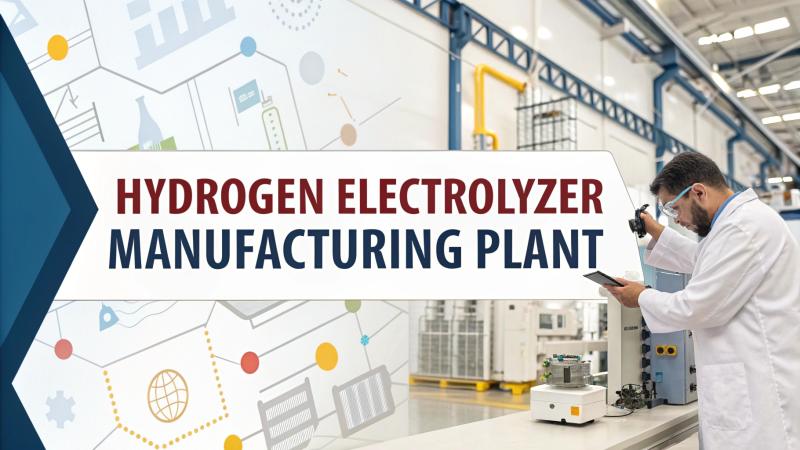
Setting up a Hydrogen Electrolyzer manufacturing plant positions investors in one of the most transformative and high-growth segments of the global clean energy value chain, backed by accelerating global decarbonization initiatives, rising investments in green hydrogen projects, expanding renewable energy integration, and supportive government policies promoting clean energy transition. As national hydrogen strategies multiply across major economies, carbon pricing mechanisms intensify, and the demand for green hydrogen in industrial, transportation, and power sectors surges, the global hydrogen electrolyzer industry continues to present compelling opportunities for manufacturers and entrepreneurs seeking long-term profitability in a mission-critical, high-demand sector.
Market Overview and Growth Potential:
The global hydrogen electrolyzer market demonstrates an exceptional growth trajectory, valued at USD 811.90 Billion in 2025. According to IMARC Group’s comprehensive market analysis, the market is expected to reach USD 5,709.48 Billion by 2034, exhibiting a CAGR of 24.2% from 2026 to 2034. This extraordinary expansion is driven by accelerating global decarbonization initiatives, rising investments in green hydrogen projects, expanding renewable energy integration, and supportive government policies promoting clean energy transition.
A hydrogen electrolyzer is an electrochemical device that splits water (H2O) into hydrogen (H2) and oxygen (O2) using electricity through the process of electrolysis. When powered by renewable energy sources such as solar or wind, the produced hydrogen is classified as green hydrogen. Electrolyzers typically consist of anode and cathode electrodes, electrolyte membranes, bipolar plates, power electronics, and control systems. The main technologies include Alkaline Electrolyzers (AEL), Proton Exchange Membrane (PEM) Electrolyzers, Solid Oxide Electrolyzers (SOEC), and Anion Exchange Membrane (AEM) systems. Key performance parameters include energy efficiency, hydrogen purity, operating pressure, current density, and system durability. Hydrogen electrolyzers are critical components in renewable energy storage, industrial decarbonization, and hydrogen mobility infrastructure.
The global hydrogen electrolyzer industry is primarily driven by national hydrogen strategies and net-zero emission commitments across several countries. According to the Ministry of New and Renewable Energy, India recorded an increase in total installed capacity of renewable energy to 253.96 GW in November 2025, up from over 23% from the recorded capacity of 205.52 GW in November 2024. Such rapid expansion in renewable power infrastructure generates surplus electricity during peak production periods, which can be utilized for green hydrogen production. Carbon pricing strategies, the implementation of renewable fuel standards, and the allocation of subsidies for clean energy are further driving the industry. The market is witnessing the adoption of hydrogen across several industries due to the need to reduce carbon emissions, while improved efficiency of hydrogen electrolysis systems and reduction in the cost of electricity from renewable sources are expected to further augment product demand.
Plant Capacity and Production Scale:
The proposed hydrogen electrolyzer manufacturing facility is designed with an annual production capacity ranging between 100-1,000 MW stack capacity, enabling economies of scale while maintaining operational flexibility. This capacity range allows manufacturers to cater to diverse market segments – from renewable energy and power storage and oil and gas refining to chemical manufacturing, steel production, transportation and mobility, and energy utilities – ensuring steady demand and consistent revenue streams across multiple industry verticals. The facility is designed to serve both domestic clean energy supply chains and export requirements, positioning the plant at the intersection of industrial efficiency and global energy transition.
Request for a Sample Report: https://www.imarcgroup.com/hydrogen-electrolyzer-manufacturing-plant-project-report/requestsample
Financial Viability and Profitability Analysis:
The hydrogen electrolyzer manufacturing business demonstrates healthy profitability potential under normal operating conditions. The financial projections reveal:
Gross Profit Margins: 35-45%
Net Profit Margins: 20-30%
These margins are supported by stable and rapidly growing demand across renewable energy and power storage, oil and gas refining, chemical manufacturing, steel production, and transportation sectors, value-added positioning including advanced PEM and alkaline electrolyzer stacks, and the critical role of hydrogen electrolyzers in enabling the global energy transition and industrial decarbonization. The project demonstrates strong return on investment (ROI) potential, making it an attractive proposition for both new entrants and established clean energy equipment or industrial manufacturing companies looking to diversify their portfolio.
Cost of Setting Up a Hydrogen Electrolyzer Manufacturing Plant:
Operating Cost Structure:
Understanding the operating expenditure (OpEx) is crucial for effective financial planning and cost management. The cost structure for a hydrogen electrolyzer manufacturing plant is primarily driven by:
Raw Materials: 50-60% of total OpEx
Utilities: 10-15% of OpEx
Other Expenses: Including labor, packaging, transportation, maintenance, depreciation, and taxes
Raw materials constitute the largest portion of operating costs, with electrodes (nickel) being the primary input material. Separator (zirfon), KOH electrolyte, and stack components form secondary raw material requirements. Establishing long-term contracts with reliable suppliers of nickel electrodes and specialist electrolyzer components helps mitigate price volatility and ensures consistent raw material supply, which is critical given that specialty material price fluctuations represent the most significant cost factor in hydrogen electrolyzer manufacturing.
Capital Investment Requirements:
Setting up a hydrogen electrolyzer manufacturing plant requires substantial capital investment across several critical categories:
Land and Site Development:
Selection of an optimal location with strategic proximity to electrodes (nickel), separator (zirfon), KOH electrolyte, and stack component suppliers. Proximity to target renewable energy, industrial, and transportation markets will help minimize distribution costs. The site must have robust infrastructure, including reliable transportation, utilities, and waste management systems. Compliance with local zoning laws, environmental regulations, and hydrogen safety standards must also be ensured.
Machinery and Equipment:
The largest portion of capital expenditure (CapEx) covers specialized manufacturing equipment essential for production. Key machinery includes:
• CNC machining centers: for precision fabrication of bipolar plates, end plates, and structural electrolyzer components to required dimensional tolerances
• Laser cutting machines: for high-precision cutting of metallic and composite materials used in electrolyzer stack construction
• Coating and catalyst deposition systems: for applying catalyst coatings and functional layers onto electrode surfaces during membrane electrode assembly
• Membrane fabrication equipment: for processing and forming electrolyte membranes used in PEM and AEM electrolyzer configurations
• Leak testing systems: for pressure and integrity testing of assembled electrolyzer stacks to verify performance and safety compliance
• Stack assembly and integration lines: for assembling electrode membrane assemblies, bipolar plates, and balance-of-plant (BoP) systems into finished electrolyzer units
• Quality control and analytical instruments: for monitoring product concentration, purity, energy efficiency, and compliance with industry and customer standards
Civil Works:
Building construction, factory layout optimization, and infrastructure development designed to enhance workflow efficiency, ensure workplace safety, and minimize material handling complexities throughout the production process. The layout should be optimized with separate areas for raw material storage, electrode preparation and catalyst coating zone, membrane production section, bipolar plate fabrication area, stack assembly line, balance-of-plant integration zone, leak testing station, quality control area, finished goods warehouse, utility block, and administrative block.
Other Capital Cost:
Pre-operative expenses, machinery installation costs, regulatory compliance and hydrogen safety certification costs, initial working capital requirements, and contingency provisions for unforeseen circumstances during plant establishment.
Speak to Analyst for Customized Report: https://www.imarcgroup.com/request?type=report&id=28020&flag=C
Major Applications and Market Segments:
Hydrogen electrolyzer products find extensive applications across diverse market segments, demonstrating their versatility and critical importance across the global clean energy and industrial supply chain:
Renewable Energy & Power Storage: Electrolyzers convert surplus renewable electricity into hydrogen for long-term energy storage and grid stabilization. They are foundational to power-to-gas systems, enabling sector coupling between electricity grids and hydrogen networks, and supporting the integration of variable renewable energy sources such as solar and wind.
Oil & Gas Refining: Used for hydrogen generation in hydrocracking and desulfurization processes, reducing carbon intensity when powered by renewable energy. Oil and gas refineries across the world rely on electrolytic hydrogen as a cleaner feedstock alternative to conventional grey hydrogen produced from fossil fuels.
Chemical Industry: Green hydrogen serves as a feedstock for ammonia and methanol production, enabling decarbonized chemical manufacturing. The chemical sector represents one of the largest current consumers of hydrogen, with electrolytic green hydrogen increasingly adopted to meet sustainability commitments and regulatory requirements.
Steel Industry: Hydrogen-based direct reduced iron (DRI) processes utilize electrolytic hydrogen to replace coal in steelmaking, enabling near-zero-emission steel production. The steel sector is a major target market for large-scale electrolyzer deployment as it pursues deep decarbonization aligned with global climate targets.
Transportation Sector: Hydrogen produced through electrolysis supports fuel cell electric vehicles (FCEVs), buses, trucks, and hydrogen refueling infrastructure. The rapidly expanding hydrogen mobility sector represents a high-growth application for electrolyzer output, with governments and OEMs investing heavily in hydrogen refueling networks worldwide.
Why Invest in Hydrogen Electrolyzer Manufacturing?
Several compelling factors make hydrogen electrolyzer manufacturing an attractive investment opportunity:
Global Energy Transition Priority:
Hydrogen is central to decarbonization strategies across power, industry, and transport sectors, creating long-term equipment demand. This structural indispensability within energy transition roadmaps ensures consistent, policy-backed demand that spans all industrial, commercial, and energy sectors worldwide.
Government Incentives and Subsidies:
Many countries offer financial incentives, production-linked incentives (PLI), and tax credits for green hydrogen projects. These support mechanisms significantly reduce investment risk and improve project economics, making hydrogen electrolyzer manufacturing a policy-favored investment category across major global markets.
Rapid Capacity Expansion:
A growing pipeline of gigawatt-scale hydrogen projects supports scalable electrolyzer manufacturing investments. The global shift toward large-scale green hydrogen hubs and hydrogen valleys creates sustained, high-volume demand for electrolyzer systems and components across all major geographies.
Technology Innovation Potential:
Advancements in membrane materials, catalyst efficiency, and stack durability offer opportunities for technological differentiation. Manufacturers who invest in next-generation electrolyzer technologies can capture premium market positions and establish defensible competitive advantages in a rapidly evolving global market.
Integration with Renewable Projects:
Electrolyzers are increasingly integrated with solar and wind farms, enabling sector coupling and grid flexibility. This convergence with renewable energy infrastructure creates captive, co-located demand for electrolyzer systems and positions manufacturers at the heart of the global clean energy ecosystem.
Manufacturing Process Excellence:
The hydrogen electrolyzer manufacturing process involves several precision-controlled stages to deliver standardized, performance-compliant, and market-ready products:
• Raw Material Sourcing: Electrodes (nickel), separator (zirfon), KOH electrolyte, stack components, and balance-of-plant materials are procured from qualified suppliers under rigorous quality and supply chain standards
• Electrode Preparation & Catalyst Coating: Electrode substrates are prepared and coated with catalysts using specialized coating and catalyst deposition systems to achieve target electrochemical activity and efficiency
• Membrane Production and Assembly: Electrolyte membranes are fabricated using membrane fabrication equipment, processed to required specifications, and assembled with electrode components to form membrane electrode assemblies (MEAs)
• Bipolar Plate Fabrication: Bipolar plates are precision-machined using CNC machining centers and laser cutting machines to required dimensional tolerances and surface specifications
• Stack Assembly: MEAs, bipolar plates, and structural components are assembled into electrolyzer stacks on integration lines, with careful control of torque, compression, and sealing integrity
• Integration with Balance-of-Plant (BoP) Systems: Assembled stacks are integrated with power electronics, control systems, cooling circuits, and gas management components to produce complete electrolyzer systems
• Leak Testing: Assembled electrolyzer units undergo pressure and integrity testing at leak testing stations to verify performance, safety, and compliance with industry and customer specifications
• Packaging: Finished electrolyzer systems are packaged, documented, and prepared for dispatch in accordance with customer and regulatory requirements
Buy Now: https://www.imarcgroup.com/checkout?id=28020&method=2175
Industry Leadership:
The global hydrogen electrolyzer industry is led by established clean energy equipment manufacturers with extensive production capabilities and diverse application portfolios. Key industry players include:
• thyssenkrupp nucera
• John Cockerill
• Nel ASA
• Plug Power Inc.
• Siemens Energy
• Enapter S.r.l.
These companies serve diverse end-use sectors including renewable energy and power storage, oil and gas refining, chemical manufacturing, steel production, transportation and mobility, and energy utilities, demonstrating the broad market applicability of hydrogen electrolyzer products across global clean energy and industrial supply chain verticals.
Recent Industry Developments:
January 2026: RCT Hydrogen initiated its plans for building its next-generation facility for stacks in Germany, fulfilling its requirement for electrolyzers. The first system, a 2.5 MW electrolyzer, is expected to be delivered and commissioned by the third quarter of 2026, marking a significant step for affordable green hydrogen production.
October 2025: Stargate Hydrogen announced the launch of its new Aurora 10 MW electrolyser platform, which includes a portable green hydrogen solution. To enable this, Stargate integrated two Starbase stacks of 5 MW each into its platform. With the aim of providing efficiency and maintaining its low footprint of 14.4 m2 per MW, it targets sectors like refineries, steel, and chemical plants.
About Us:
IMARC Group is a global management consulting firm that helps the world’s most ambitious changemakers create a lasting impact. The company excels in understanding its clients’ business priorities and delivering tailored solutions that drive meaningful outcomes. IMARC Group provides a comprehensive suite of market entry and expansion services, including market assessment, feasibility studies, company incorporation assistance, factory setup support, regulatory approvals and licensing navigation, branding, marketing and sales strategies, competitive landscape and benchmarking analyses, pricing and cost research, and procurement research.
Contact Us:
IMARC Group
134 N 4th St. Brooklyn, NY 11249, USA
Email: sales@imarcgroup.com
Tel No: (D) +91 120 433 0800
United States: (+1-201-971-6302)
This release was published on openPR.


