

KLAIPEDA: A new chapter in the history of green shipping has begun in the Port of Klaipėda with the official naming ceremony of Rasa – first waste collection vessel powered by green hydrogen and electricity. This innovative project, which strengthens Klaipėda Port’s leadership in sustainable shipping and opens new opportunities for the entire Baltic Sea region, brought together the expertise of Lithuanian and Estonian shipbuilders and turned a bold idea into reality. The vessel was christened by its godmothers, Diana Nausėdienė, First Lady of Lithuania, and Sirje Karis, First Lady of Estonia.
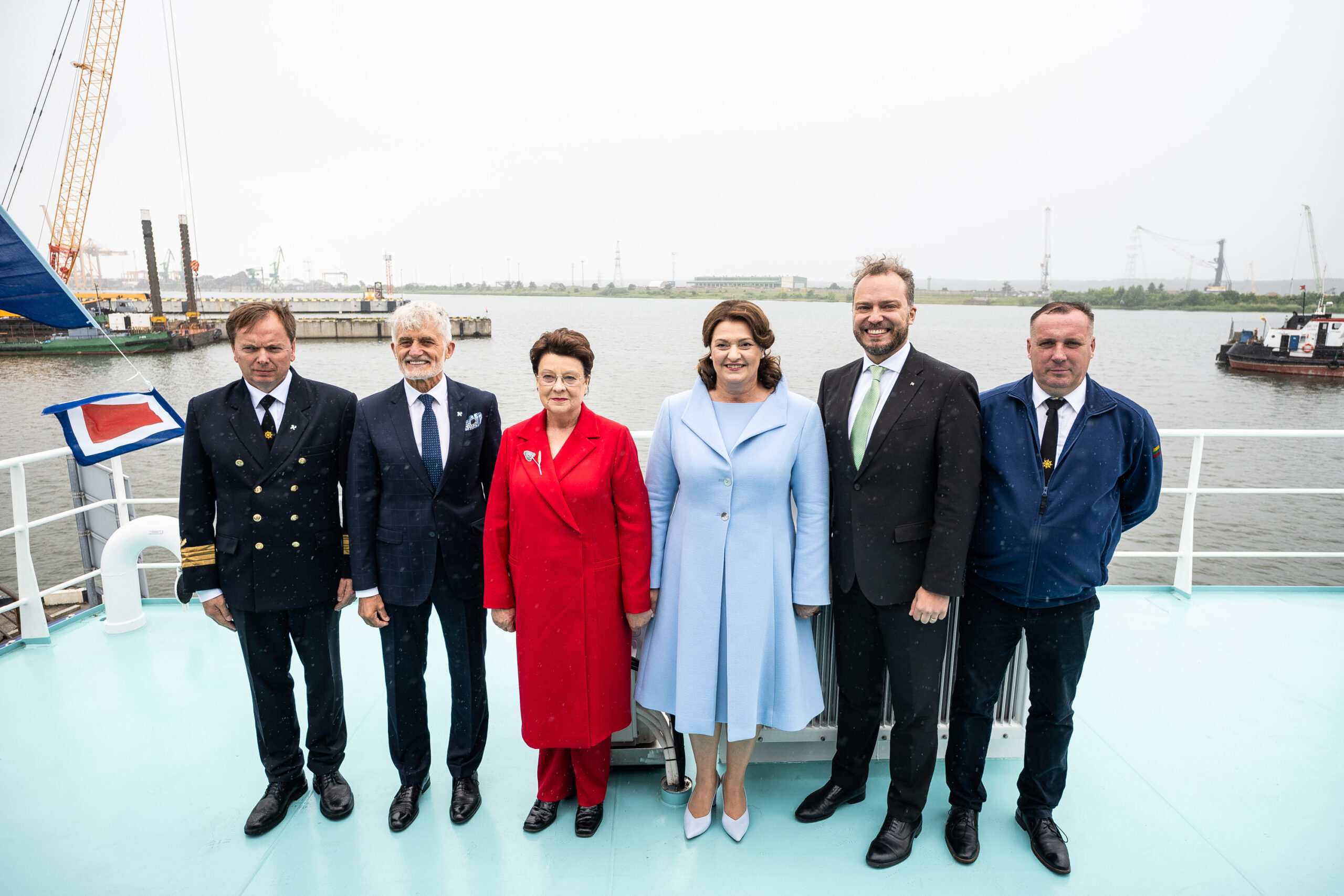
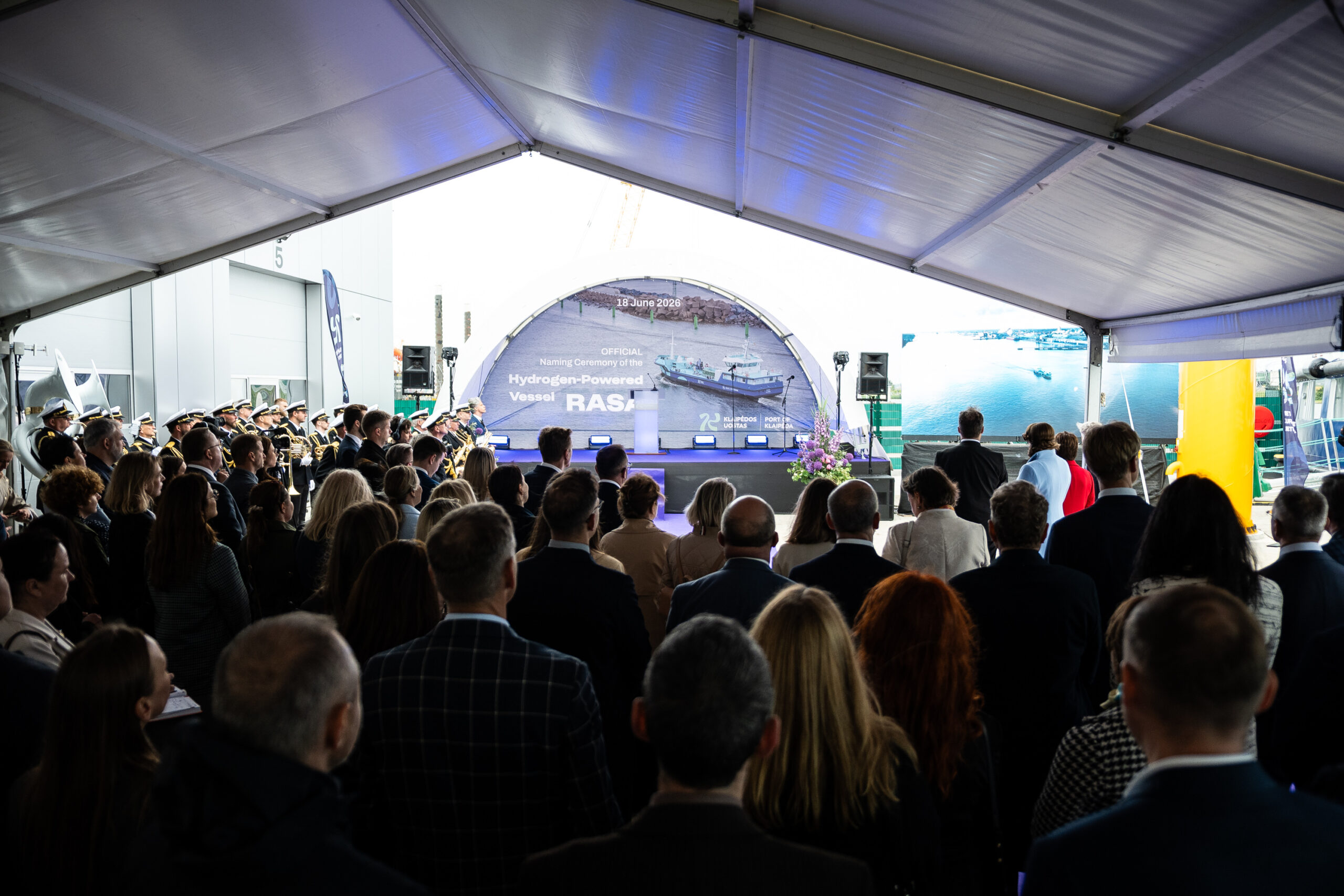
“The journey of Rasa begins in a very harmonious way. In Lithuanian folklore and literature, dew symbolizes purity, life, health and cleanliness. The name Rasa perfectly reflects the vessel’s most important characteristic – leaving no carbon footprint – and its noble mission: to help clean the waters of the Port of Klaipėda while emitting only water vapour, contributing to a better environment for the people of Klaipėda. I congratulate the Port of Klaipėda on Rasa” said Diana Nausėdienė, First Lady of Lithuania.
The vessel has become not only a major technological achievement but also a symbol of cooperation between Lithuania and Estonia.
“This vessel is an excellent example of how Estonia and Lithuania can work together to create solutions that shape the future while strengthening the competitiveness and sustainability of the entire Baltic Sea region. Today, we are witnessing a new beginning. A beginning that will bind our countries even more closely together and that carries with it hope and renewal. Much like the morning dew – Rasa in Lithuanian – which is associated with purity, nature and new beginnings. In both Estonian and Lithuanian culture, nature has always held a special place. Water, springs, dew and the life they sustain have been important elements in the traditions of both Baltic and Finnic peoples. I hope that Rasa will carry these values forward: care for nature, faith in innovation, and the conviction that the most enduring solutions are developed through cooperation,” said Sirje Karis, First Lady of Estonia.
Lithuanian Minister of Transport and Communications Juras Taminskas also welcomed the Lithuanian-Estonian cooperation behind the first project of its kind in the Baltic States and highlighted the significance of this milestone.
“Today in Klaipėda we are christening more than just a vessel – we are marking the beginning of a new era in transport. This is proof that Lithuania can be among the countries that not only follow global transport trends but help shape them. We are launching one of the world’s first hydrogen-powered vessels, and just a few weeks ago we opened Lithuania’s first hydrogen production and refuelling station here in Klaipėda. Together, these developments turn a new page in Lithuania’s story as a maritime nation,” said Minister Juras Taminskas.
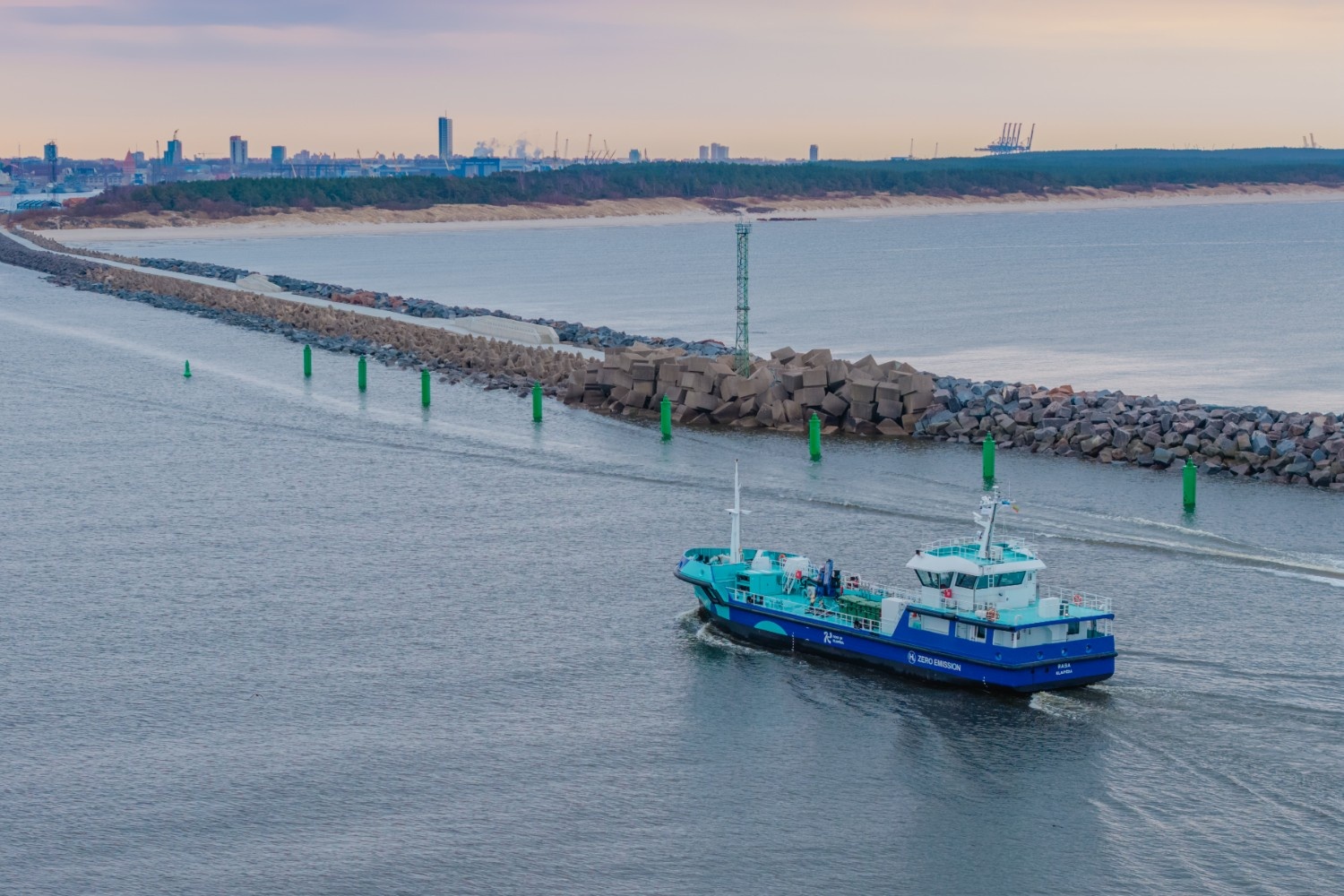
Built to collect ship-generated waste, bilge water and sludge from vessels calling at Klaipėda Port, Rasa is more than a new addition to the port fleet. As first green hydrogen and electric-powered waste collection vessel, it represents a major step towards zero-emission port operations and reinforces Klaipėda Port’s position among Europe’s leading innovators in sustainable maritime transport.
“Rasa began as a bold vision to create cleaner shipping. This vessel is an inspiring story of how steel plates, innovative solutions and thousands of hours of work by professionals in Lithuania and Estonia turned an idea into reality – the world’s first tanker powered by green hydrogen and electricity. Rasa represents a significant shift in shipping, an investment in a cleaner future and a new approach to port operations, where cutting-edge technologies and environmental responsibility become part of everyday activities,” said Algis Latakas, Director General of the Klaipėda Port Authority.
This unique project united Lithuania and Estonia, bringing together the expertise of shipbuilders from both countries. The vessel’s hull and part of its equipment were built at Western Baltic Shipyard, located in the Port of Klaipėda.
“Rasa is much more than an addition to Klaipėda Port’s fleet. It is an innovative project that demonstrates the ability of our countries, the port, and the maritime engineering industries of Lithuania and Estonia to work together towards a common goal – creating an advanced, competitive and sustainable maritime future. As part of the largest maritime engineering group in Lithuania and a member of the international Estonian-owned BLRT Grupp, it was a great honour for us to contribute to a project of such strategic importance and uniqueness. It once again proves that by combining Lithuanian and Estonian engineering expertise, it is possible to develop solutions that meet the highest technological and environmental standards,” said Arnoldas Šileika, CEO of the Western Shipyard Group.
According to Mr. Šileika, projects of this kind also contribute to the development of the regional shipbuilding ecosystem and create opportunities for Lithuania to stand alongside countries capable of designing and building highly specialised vessels that meet evolving market needs.
The construction of Rasa continued in Estonia, where Baltic Workboats, the project’s main contractor and vessel designer, carried out the final outfitting, system integration and testing. This included the installation of the vessel’s advanced hydrogen fuel cell system, engine room equipment, electrical systems and electric propulsion units.
“For us, RASA is certainly a special vessel – she is the first tanker ever built by Baltic Workboats and represents both the largest integration of electrical and battery systems we have undertaken and the first-ever installation of a hydrogen power plant on board a vessel at our shipyard. As is often the case with new and innovative designs, the project brought its share of challenges, but the excellent cooperation with the customer, partners, equipment suppliers, and the classification society once again proved that Baltic Workboats is capable of executing demanding and technically challenging projects to the highest standards. RASA is also a prime example of how, together with our partners from the BLRT Group, we can take on projects and deliver vessels that we would not be able to achieve alone,” says Margus Vanaselja, CEO of the Baltic Workboats.
The vessel’s hydrogen power system – including fuel cells, storage tanks and software – was designed and supplied by project partner Genevos.
“Seeing Rasa come to life is a proud moment for Genevos and for everyone involved in this pioneering project. The vessel demonstrates that hydrogen power is ready to move beyond demonstration and into demanding maritime operations. We are proud to have supplied the hydrogen power system and to support Klaipėda State Seaport Authority in accelerating the transition towards zero-emission port operations. Rasa sets a powerful example for ports and vessel operators worldwide, showing how clean technologies can be deployed today to reduce emissions while maintaining the reliability and performance required at sea,” said Rebecca Sharp, CEO and Co-Founder of Genevos.
The 42-metre-long vessel is designed to receive bilge water, sludge and waste from vessels. It operates with zero emissions, making it completely environmentally friendly. The vessel is equipped with dedicated storage tanks and an advanced bilge water treatment system, allowing treated water to be safely transferred to municipal wastewater treatment facilities.
Powered by green hydrogen produced in Klaipėda Port, Rasa will become not only a symbol of clean shipping but also an important step towards developing Lithuania’s hydrogen economy and a more sustainable future for maritime transport.
The vessel represents an investment of EUR 12 million.


