

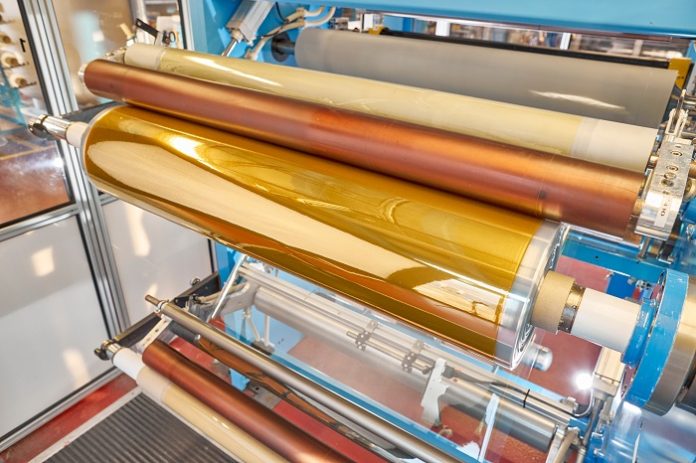
Evonik has started production of a high-performance membrane at its new pilot plant in Marl, North Rhine-Westphalia, Germany. The advanced membrane technology is designed to support the production of more cost-efficient green hydrogen and accelerate the transition toward climate-neutral energy systems.
The new facility enables Evonik to manufacture polymer membranes at a commercial scale, producing enough material annually to support electrolysis systems with a capacity of up to 2.5 gigawatts. This represents nearly one-quarter of Germany’s planned total electrolysis capacity for 2030. As industries worldwide move toward decarbonization, green hydrogen is emerging as a critical solution for reducing carbon emissions and strengthening energy security.
Green Hydrogen: A Key Driver of Industrial Decarbonization
Green hydrogen is produced through electrolysis, where renewable electricity is used to split water into hydrogen and oxygen. The clean energy carrier plays an important role in replacing fossil-based fuels and raw materials across industries, particularly in chemical manufacturing and steel production.
However, despite its environmental advantages, green hydrogen remains more expensive than conventional gray hydrogen, which is produced from fossil sources. Depending on the region, green hydrogen currently costs around two to four times more due to high electricity prices and the investment required for electrolysis infrastructure. To overcome these barriers, innovative electrolysis technologies are becoming increasingly important.
AEM Electrolysis: Enabling Affordable Hydrogen Production
Evonik is addressing these challenges through Anion Exchange Membrane (AEM) electrolysis, an emerging technology that combines efficiency with lower system costs. The company has developed the DURAION® anion-conducting membrane, a critical component that helps unlock the potential of AEM electrolysis. “Our membrane delivers high performance while reducing investment costs, enabling the innovative AEM technology to achieve a breakthrough in hydrogen production,” says Christian Däschlein, Head of the New Growth Area AEM at Evonik’s Innovation Factory. Developed by Evonik’s Innovation Factory together with experts from its High Performance Polymers business line, the membrane has been specifically engineered for advanced hydrogen electrolyzers.
Reducing Costs Through Next-Generation Membrane Technology
AEM electrolysis offers several advantages compared with established hydrogen production technologies. Since the process operates in an alkaline environment, it allows the use of less expensive, non-precious metal materials. According to techno-economic assessments, AEM technology has the potential to reduce investment costs by at least 25 percent. Additionally, the technology can generate hydrogen directly under pressure, reducing the need for additional compression equipment and lowering overall operating costs. The flexibility of AEM electrolysis also makes it well suited for renewable energy sources such as wind and solar power, where electricity supply can fluctuate.
DURAION® Membrane Enhances Efficiency and Safety
The DURAION® membrane combines high ion conductivity with strong chemical and mechanical stability. These properties improve the efficiency, durability, and reliability of electrolysis systems. The membrane also ensures effective separation of hydrogen and oxygen gases, preventing the formation of potentially hazardous explosive mixtures. Designed for high current densities and pressure operation, the membrane supports large-scale electrolyzer applications. Furthermore, Evonik’s production process does not add PFAS substances, supporting the development of more sustainable hydrogen technologies.
Scaling Up for Industrial Hydrogen Applications
The new membrane production facility in Marl marks a major step in Evonik’s journey from laboratory research to continuous industrial-scale manufacturing. The nearly 20-meter-long coating system is among the largest of its kind globally. It produces membrane rolls up to one-meter-wide, enabling their use in large-scale electrolyzers. “Our strength lies in complete backward integration—from the starting molecules to the finished membrane roll. This allows us not only to deliver large volumes but also to ensure excellent product performance with consistently high quality,” explains Däschlein. The facility can also incorporate fabric reinforcement into the membrane, improving its suitability for large-scale hydrogen production systems.
Supporting Global Expansion of AEM Hydrogen Technology
Early manufacturers of AEM electrolyzers are already integrating DURAION® membranes into pilot and demonstration projects. Meanwhile, AEM technology adoption is accelerating, especially in Europe and Asia. To support this growth, Evonik has also opened the Evonik AEM Center Shanghai, its first technology-focused application center in Asia dedicated to AEM electrolysis and hydrogen infrastructure development. At the center, Evonik experts test membranes produced in Marl under real operating conditions alongside customers and partners. The facility strengthens the company’s presence in the rapidly expanding Chinese hydrogen market while supporting global customers. As per the press release, through its new pilot plant and application center, Evonik aims to speed up the industrial deployment of AEM electrolysis and contribute to a more affordable, scalable, and sustainable green hydrogen economy.


