

Aneel has authorized a 645 MW connection to the high-voltage grid for a green hydrogen project in Pecém, Ceará, starting in December 2028. Four other facilities are still awaiting a final assessment from ONS.
Brazil’s first green hydrogen project authorized to connect directly to the high-voltage transmission grid is located at the Pecém Complex in Ceará and will have contracted electricity demand of 645 megawatts (MW) starting in December 2028. The National Electric Energy Agency (Aneel), Brazil’s electricity regulator, cleared grid access for Pecém VDB 1, a company linked to a green ammonia production project developed by Casa dos Ventos.
The decision, published in Brazil’s official gazette on November 10, 2026, marks an infrastructure milestone for the project. The future plant will need to consume large amounts of electricity to produce hydrogen from water. The authorization establishes access to the grid, while the industrial facilities and electrical construction work are still subject to later stages.
645 MW authorization will connect through the Pecém III substation in Caucaia
The Order No. 4,249, issued by Aneel, authorizes Pecém VDB 1 Ltda. to connect to the National Interconnected System’s (SIN) Basic Grid. The connection is planned at the 500-kilovolt (kV) Pecém III substation in Caucaia, in the metropolitan area of Fortaleza.
The 645 MW represents contracted electricity demand, not installed power-generation capacity or the amount of hydrogen produced. The connection point is critical for an industrial consumer of this size, which will need large-scale power to run electrolysis equipment.
The order sets out demand starting in December 2028. Reaching that date alone does not guarantee the start of commercial operations. Actual startup will depend on transmission infrastructure, the company’s facilities, permitting and the project’s other commitments.
The facility is part of the Pecém Green Ammonia Project Industrial Complex. Four other electricity-consuming companies, identified as Pecém VDB 2, VDB 3, VDB 4 and VDB 5, are still awaiting permanent grid-access assessments from the National Electric System Operator (ONS), the regulator said.
Casa dos Ventos took over connection rights previously held by Voltalia
The Pecém VDB 1 project is associated with Casa dos Ventos, a Brazilian renewable energy company. The company acquired Voltalia’s entire stake in the entity responsible for grid access in a transaction reviewed and approved by Brazil’s antitrust authority, Cade, as reported by MegaWhat.
Voltalia originally submitted the request to ONS in February 2026. The acquisition enabled Casa dos Ventos to take over development of the project with the connection rights tied to the asset, whose location suits Pecém’s industrial plans.
The new authorization clears an important regulatory hurdle, but physical access remains contingent on upgrades and adjustments to the power system. The project calls for four transmission-line sections totaling about 3.35 kilometers, transformer equipment and a substation connected to regional infrastructure, the Diário do Nordeste reported.
The planned construction must move forward alongside the operator’s technical determinations and development of the project itself. The timeline for the first connection provides a reference point for preparing this work.
Green ammonia project carries estimated R$25 billion investment, but has yet to be formalized
Casa dos Ventos’ industrial project was presented with a projected investment of R$25 billion, according to Diário do Nordeste. The figure is an estimate for the project and had not yet been formalized by the company when the report was published on November 13.
The company is considering building a facility of about 60 hectares at the Pecém Industrial and Port Complex. The industrial plan involves several stages of development. The 645 MW authorized now refers to the electricity demand of the first unit, Pecém VDB 1, not the total capacity of all the announced phases.
In an institutional announcement about the international green ammonia partnership, Casa dos Ventos outlined potential for the full project of up to 2.4 gigawatts of electrolysis and 960 metric tons of hydrogen per day, across all phases. These figures are part of the company’s earlier projections and remain contingent on industrial development and investment.
The complex is designed to produce green ammonia for industrial markets and export. The company announced a partnership with TransHydrogen Alliance (THA) to develop a supply chain for Europe, routing shipments through the Port of Rotterdam in the Netherlands.
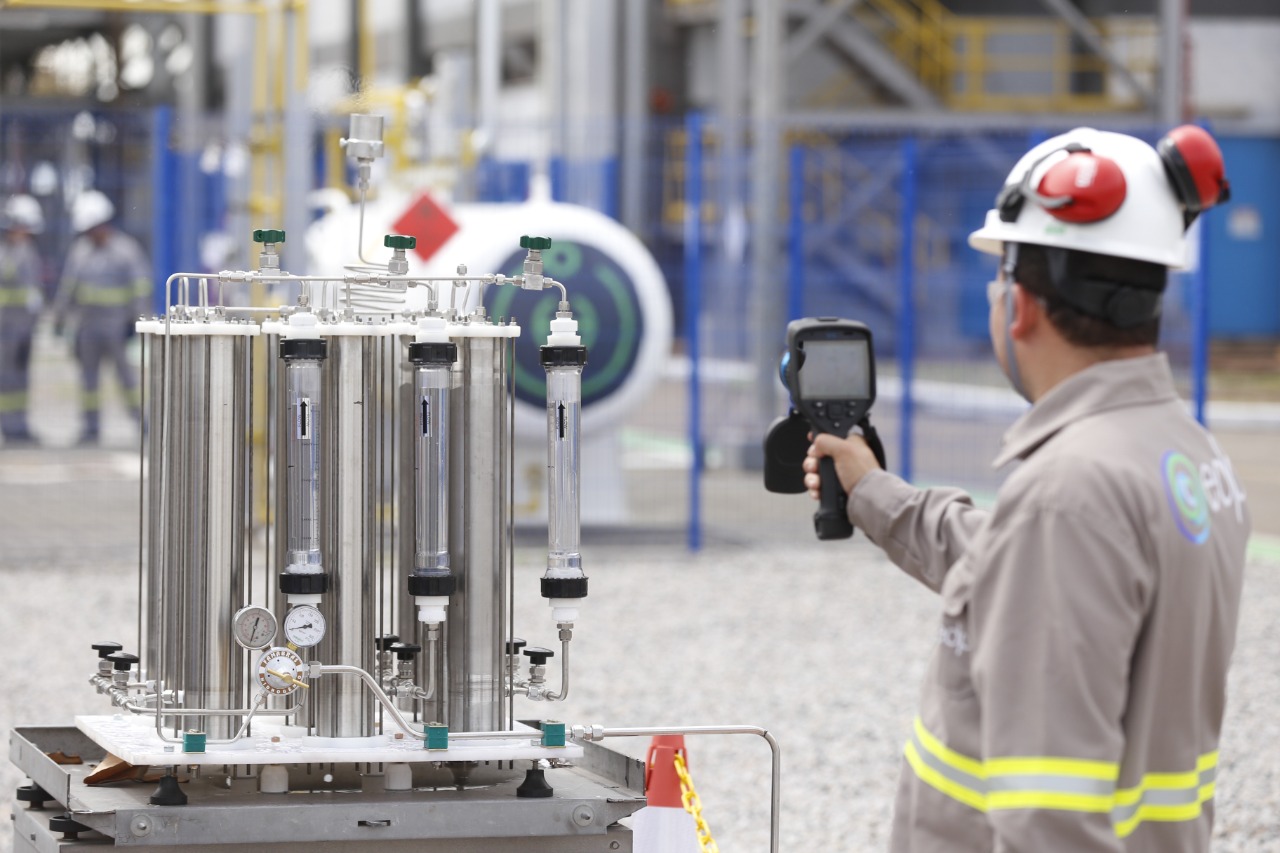
Electrolysis uses water and electricity to produce hydrogen that will be converted into ammonia
The industrial process begins with water electrolysis: equipment called electrolyzers uses electricity to split water into hydrogen and oxygen. When the electricity comes from renewable sources and meets required environmental criteria, the product is classified as green hydrogen.
The hydrogen can then be combined with nitrogen to produce ammonia. The derivative is easier to store and transport in large volumes than pure hydrogen and has applications in the chemical industry, fertilizers and low-carbon energy supply chains.
Operations require a continuous and reliable supply of electricity, even in a system with a growing share of wind and solar power. Identifying the connection point to the 500-kilovolt grid will make it possible to plan for this demand and the upgrades needed to transmission infrastructure.
Another important input is water. In 2024, Casa dos Ventos announced a memorandum of understanding with Utilitas to study supplying up to 1,500 cubic meters per hour of reclaimed water to the project. The proposal calls for additional treatment of wastewater from the Fortaleza metropolitan area, avoiding exclusive reliance on water drawn from natural sources.
That volume was presented as a projected supply under a memorandum, and implementation will depend on the development of the treatment infrastructure and industrial plant.
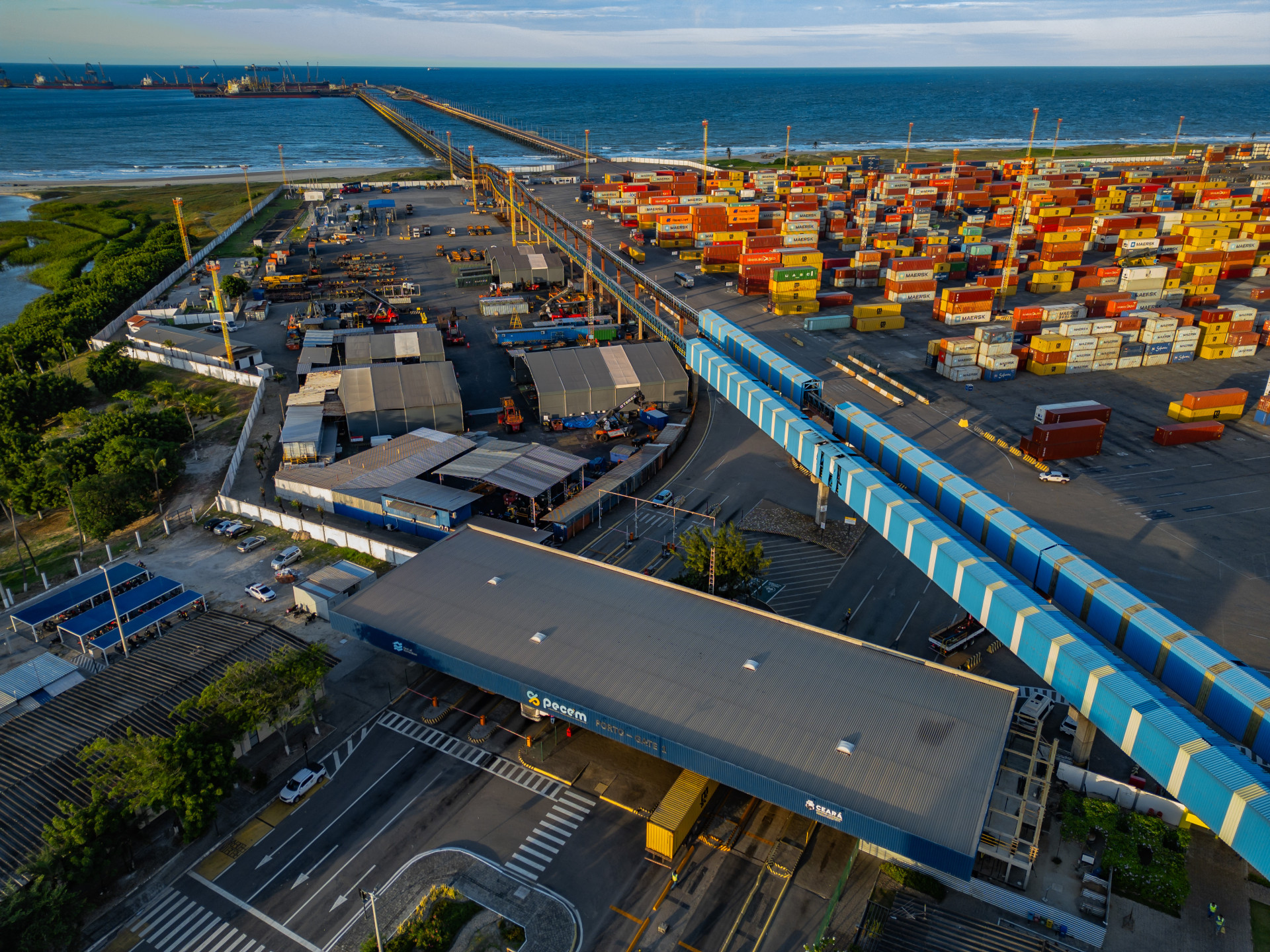
Pecém Port prepares infrastructure projects to transport water, power and green ammonia
Industrial projects also depend on adapting port infrastructure. In May 2026, the Pecém Complex announced that Brazil’s Senate had approved two credit facilities totaling US$123.5 million for the Pecém Verde Program.
The funds are tied to building utility corridors to transport water, power and ammonia between the Ceará Export Processing Zone (ZPE Ceará) and the port terminal, as well as expanding the Multi-Use Terminal and building facilities for ammonia operations.
The financing is for broader infrastructure across the port complex and is separate from Casa dos Ventos’ investment decision for Pecém VDB 1. The ability to accommodate ships and handle derivatives will be crucial to export plans for various companies based in the region.
Next decisions involve electrical infrastructure, four other units and industrial investment
The next milestone for Pecém VDB 1 is turning regulatory approval into an active grid connection, with upgrades to the transmission system, company facilities and other required permits. Demand for 645 MW is expected starting in December 2028, while the National System Operator (ONS), Brazil’s grid operator, continues reviewing the complex’s other four units.
The formalization of the privately funded investment, estimated at R$25 billion, and progress on the industrial plant will also be monitored. With approval from Aneel, Brazil’s electricity regulator, the project has taken a concrete step toward securing the power supply needed for large-scale hydrogen and green ammonia production in Ceará.

