

Early deals agreed
Algiers and Berlin are working together on a hydrogen plan, as discussed at the Algeria-Germany Economic Forum in July 2026, which brought institutions and companies from both countries together in Germany’s capital and resulted in dozens of agreements and memorandums of understanding.
Two such deals were between Algeria’s state-owned oil company Sonatrach and the German engineering firms Bosch and Siemens Energy, both covering green hydrogen. Other German companies expressing an interest include Thyssenkrupp Uhde, VNG, and VDA. Discussions covered engineering and infrastructure, seawater desalination, green hydrogen and ammonia, and the manufacture of related equipment (including electrolysers), and projects linked to the SoutH2 Corridor.
Likewise, Italian and Austrian firms have been engaged, as have investment institutions, with the aim of securing cross-border supply routes. Sonatrach has also undertaken joint feasibility studies with Spain’s Cepsa to explore integrated production and export projects. Analysts say cost and supply pressures have led to Europe’s keen interest in hydrogen.
Mohamed Ghazli, an Algerian international expert on the energy transition based in Germany, said several factors had “exposed the strategic vulnerability of the European market,” including a 40% surge in energy costs and geopolitical tensions affecting shipping through key waterways such as the Strait of Hormuz. “It revealed the extent of Europe’s susceptibility to external shocks and turned European buyers into parties seeking water and energy security to avert severe price shocks. This explains the intensive diplomatic visits and engagement with Algeria.”
Gradual benefits
Some think green hydrogen could help reshape Algeria’s economic and social landscape. “It opens up a new source of foreign currency,” said Prof. Houari Tighersi at the University of Algiers, an economist and former parliamentarian. “It also partially reduces dependence on traditional hydrocarbon exports, particularly if gas exports are redirected towards domestic industry, and part of the energy currently exported is instead converted into hydrogen and derivative products.
“Nevertheless, the positive impact on public finances and the balance of payments will emerge gradually over time. Its decisive effect on the structure of national exports will only become apparent once large-scale commercial production reaches millions of tonnes annually, in accordance with the established timetables.”
In 2022, Algeria launched its National Hydrogen Strategy, with plans to produce and export 30-40 terawatt-hours by 2040 to meet around 10% of European market needs. Under this strategy, 300,000 tonnes of green hydrogen per year would be allocated for domestic use, which would reduce natural gas consumption at domestic power plants and save up to $21bn by 2040.
The National Hydrogen Strategy is based on three stages. The first, from 2023-30, includes pilot projects with capacities ranging from 2MW to 50MW to test production and utilisation technologies. The second stage is a growth and expansion phase from 2030-40, devoted to establishing and developing domestic and international markets. The third stage, from 2040-50, focuses on global competitiveness and full-scale industrialisation, making Algeria a major producer and exporter of clean fuel.
An integrated energy mix is needed to meet the electricity needs of hydrogen production facilities. Solar power is expected to provide around 70% of the electricity required for electrolysis, with wind powering the remaining 30%. This mix should help maintain a continuous energy supply. The required investment to make it happen is estimated at around $25bn by 2040. Future revenues from hydrogen exports have been put at $10bn annually.
Joint projects
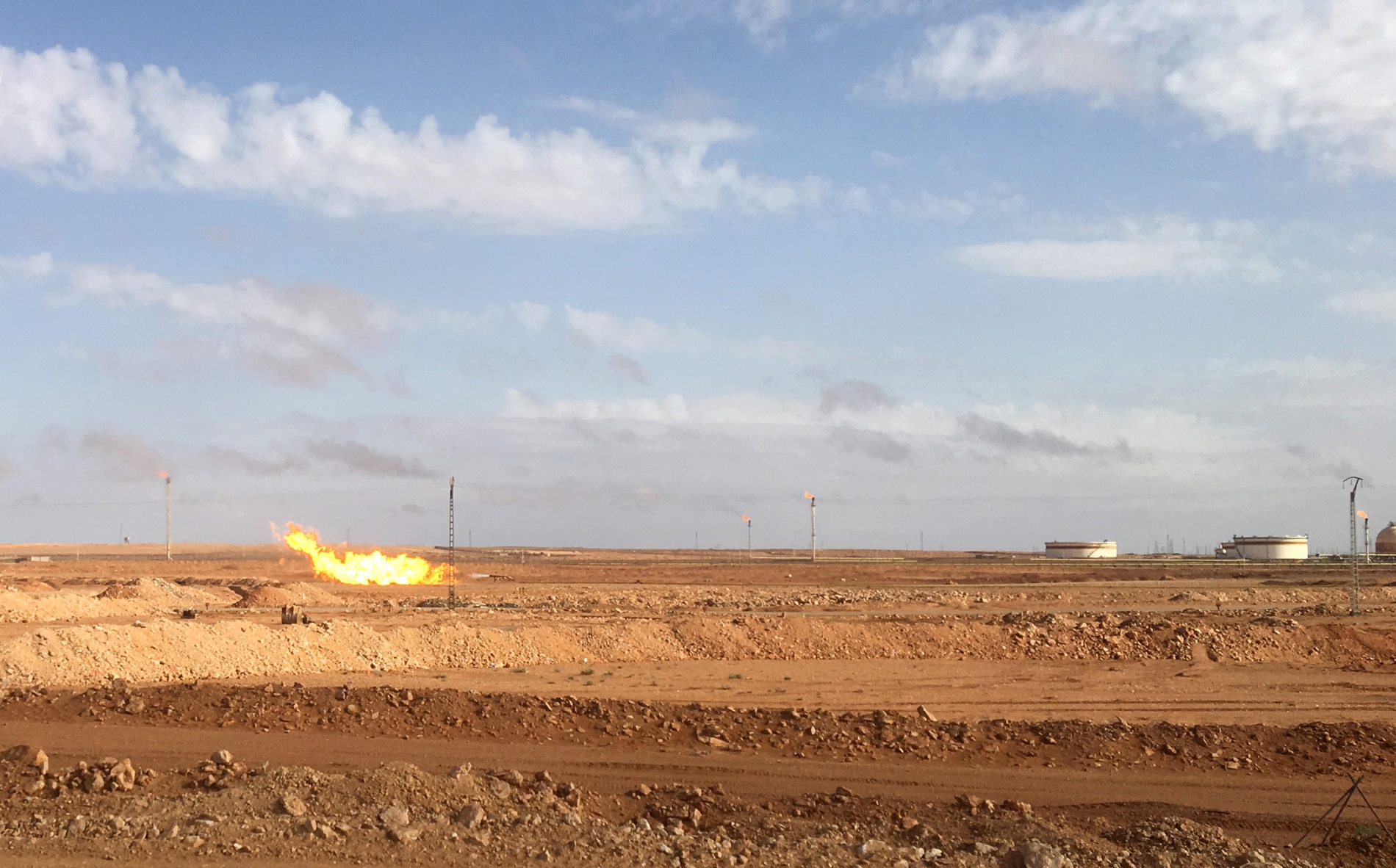
Algiers has launched pilot facilities in cooperation with European industrial groups. Foremost among them is the Hassi R’Mel project, around 550km south of the capital. It uses solar power to produce hydrogen. The project has an annual production goal of 1.5Mt of green hydrogen by 2030, which is equivalent to removing two million polluting vehicles from the roads. Another pilot project with a capacity of up to 50MW has been launched with German financial support of around $40mn.
German firms hold patents and expertise in molecular separation technology. Algeria wants to strengthen its national workforce’s skills and ultimately overcome technological dependence. Tighersi thinks Algeria must address a range of structural challenges first. Foremost among them is the cost of infrastructure for production facilities and transport networks, capital risks in the absence of long-term guarantees, and pressure from global competition.
He proposes long-term supply contracts to secure prices, diversify external markets to mitigate fluctuations in European demand, and develop a hybrid financing model that combines international capital with state funds to spread risk, safeguard the country’s economic decision-making, and consolidate Algeria’s new energy sovereignty. If green hydrogen can help the country become a reliable supplier of clean energy, it would be a win-win situation.


