

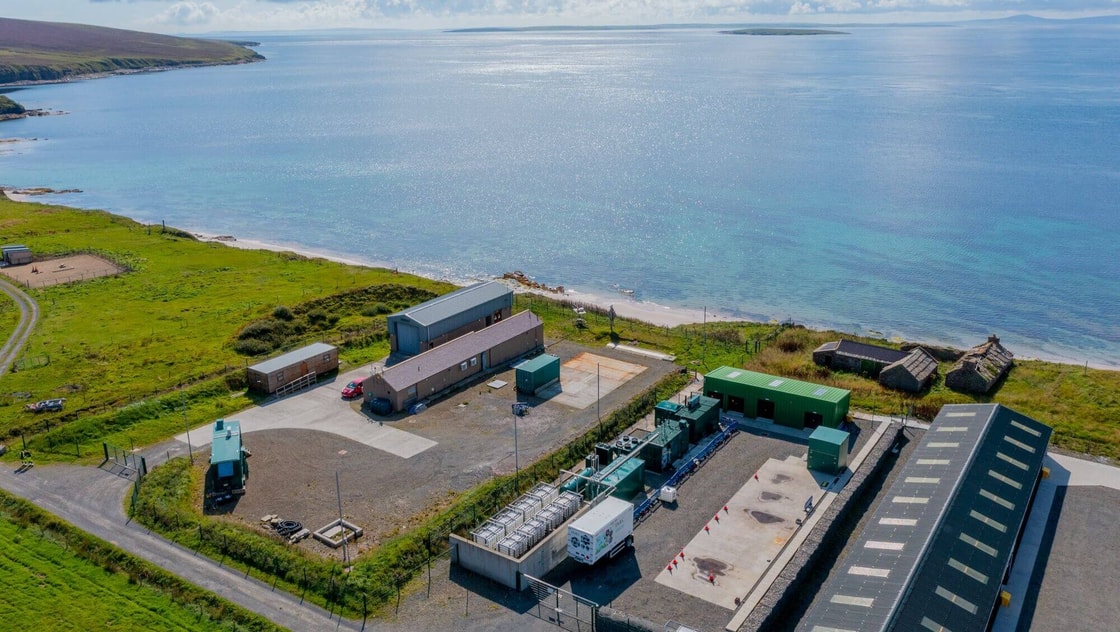
The trial, led by European Marine Energy Centre (EMEC), saw an O2 tidal turbine, vanadium flow batteries, and a 670kW PEM electrolyser installed at an onshore test site on the island of Eday in Orkney.
During periods of high tidal generation, power was used to charge the battery system, supply electricity directly to the electrolyser, and export power to the grid. When generation was low, the battery system discharged power to keep the electrolyser running.
The project was launched in 2020, and received funding from both the EU and the Scottish Government.
EMEC claimed the approach “smoothed out” the cyclical nature of tidal energy to allow on-demand electricity to produce hydrogen, while also providing battery power for onshore operations.
“Running all planned scenarios, responding swiftly to an electrolyser trip and identifying opportunities for greater automation have given us a clear roadmap for optimising future systems,” explained Leonore Van Velzen, Operations and Maintenance Manager at EMEC.
“The trial also highlights an alternative pathway for tidal energy in scenarios where grid export capacity is limited, a likely feature in the future as we transition to a fully renewable energy system.”
EMEC is now exploring potential synthetic fuel production from the hydrogen produced by the system, which could supply aviation and maritime applications.


