

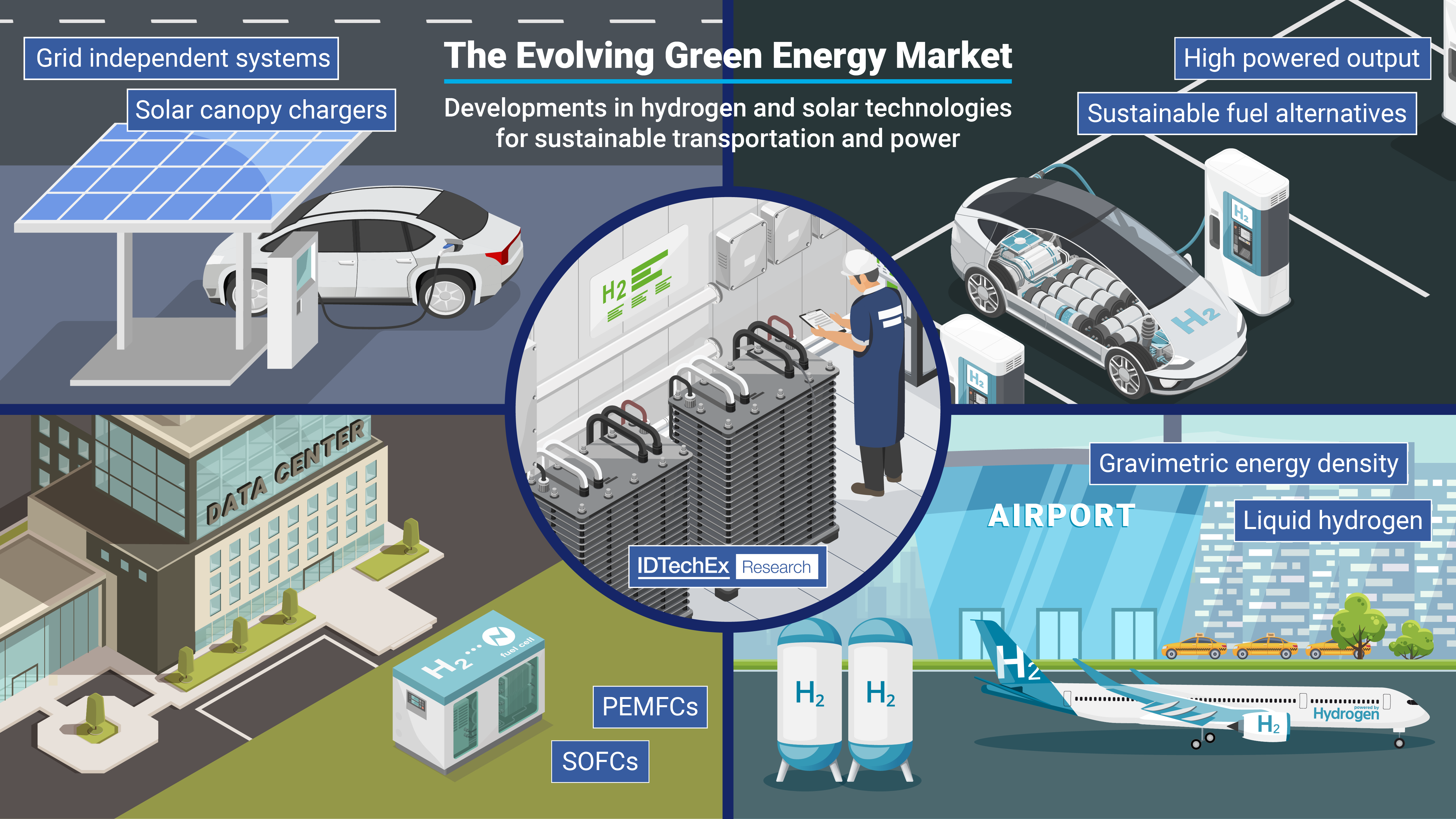
Source: IDTechEx.
Harnessing sun and wind energy for renewable charging within the transport sector
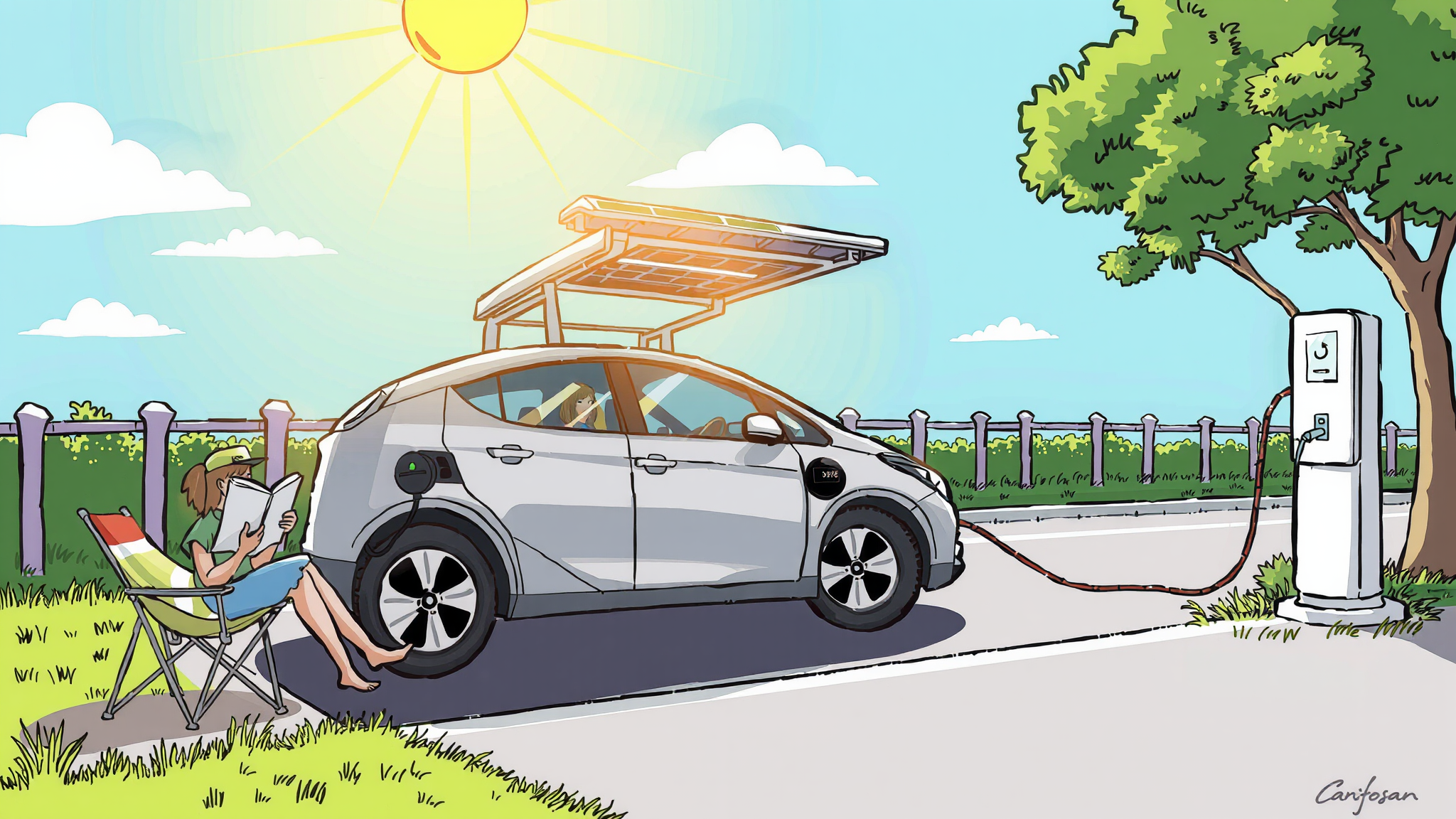
Solar canopy charging carports that are completely independent from the grid could see cars charging simply from being parked underneath solar panels and plugged into a charging outlet. Labelled as the fastest growing source of renewable energy by IDTechEx, solar power can provide cheaper means of generating energy, especially when compared to fossil fuel projects.
‘Top-up charging’, where drivers can recharge little and often, may suit electric vehicles better, as they never have to worry about running too low and struggling to source power. Issues surrounding energy storage and intermittency may arise with solar canopy chargers, which without grid stability, may prove difficult to abate. However, when used mostly as a charge boost, solar canopy charging offers an environmentally friendly and smart way to keep vehicles energized.
Source: IDTechEx.
Wind power, though also a promising means of renewable energy, is currently too expensive and large to feasibly use for electric vehicle charging, according to IDTechEx. However, airborne wind energy (AWE) could be a loophole, which sees a tether-based device being able to harness power from high-altitude winds, while incurring less material costs. AWE can also provide more consistency when compared to solar, given its ability to work even in the dark, and increasing the surface area of the device could increase power generation without affecting the ground footprint.

Source: IDTechEx.
Hydrogen for land and sky transportation
Hydrogen could provide a means of charging up battery electric vehicles, as opposed to fuel-cell electric vehicles, by having external fuel cells produce electricity from outside of the vehicle. Hydrogen chargers could have an integrated battery, but also rely on stored, compressed hydrogen as energy storage. While this could provide a solution to off-grid or temporary power situations, IDTechEx states that the costs of hydrogen charging, especially when using green hydrogen to maximize sustainability, would be very high. However, as renewable energy costs decrease as they become more widely available, hydrogen charging could see a noticeable uptake.

Source: IDTechEx.
The creation of green hydrogen with electrolysis
With the expansion of hydrogen applications in line with increasing decarbonization efforts, green hydrogen in particular is drawing attention as being the most environmentally beneficial in its use. Green hydrogen is produced with water electrolysis, with many different electrolyzer types on the market, each with their own benefits.
Turning hydrogen into electricity
Fuel cells operate with the input of hydrogen fuel and an oxygen source which undergo a chemical reaction that results in the generation of electricity to power an external load, alongside water and heat. Stationary fuel cells refer to this process occurring in a fixed place, either permanently or semi-permanently, and are usually operating within a fuel cell stack as part of a larger system.
Solid oxide fuel cells (SOFCs) are more favoured within stationary applications including industrial power and commercial operations, for continuous generation. Other types such as proton exchange membrane fuel cells (PEMFCs) are more desired within mobile applications such as in the transport sector and are also becoming contenders for back-up power generation in the replacement of diesel generators.


