

UK hydrogen firm GeoPura has secured the largest green hydrogen supply contract in British construction history, providing 2,500 tonnes of fuel to National Highways’ Lower Thames Crossing – the project where a British-made JCB hydrogen-powered digger made its world-first live deployment last year.
The 2,500-tonne supply deal will replace more than 12 million litres of diesel and is projected to cut around 30,000 tonnes of CO2 emissions. GeoPura will manage the full supply chain, covering delivery, storage and on-site distribution throughout the main construction phase.
JCB machine breaks new ground
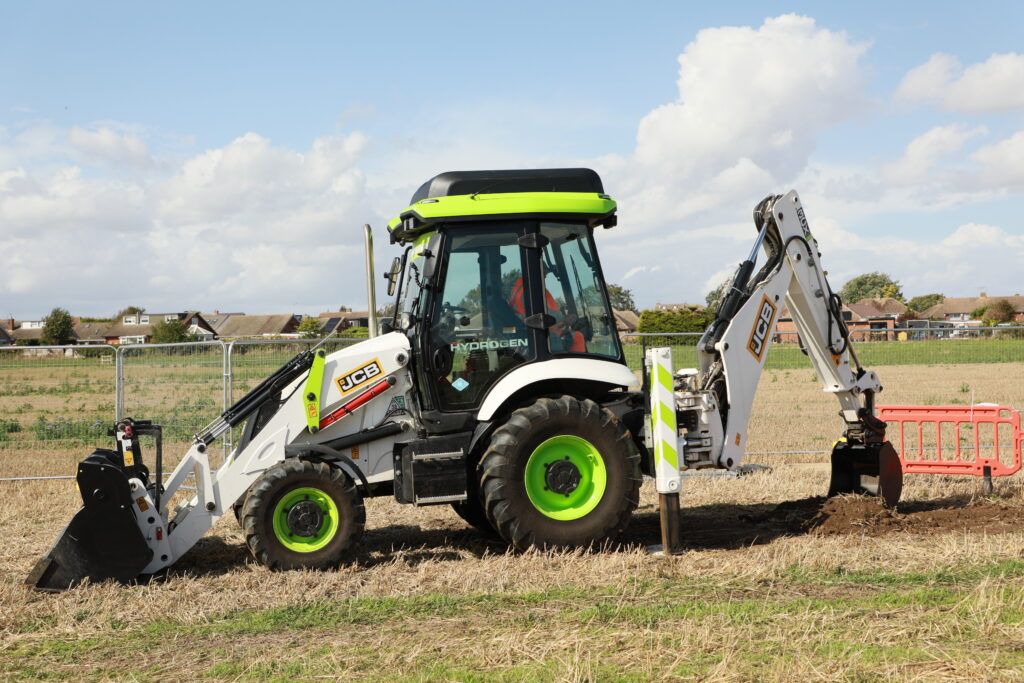
The announcement builds on earlier milestones at the project. In October 2025, a JCB hydrogen-fuelled backhoe loader – the first such machine to be deployed outside a test environment anywhere in the world — was used to carry out ground investigation surveys near Gravesend, Kent.
Operated by Skanska, the Lower Thames Crossing’s delivery partner for the Kent road elements, and supplied by plant hire firm Flannery Plant Hire, the machine ran on hydrogen provided by Ryze. In its first four weeks of operation it saved more than one tonne of CO2 equivalent.
“This is a huge milestone for the construction industry,” said Steve Fox, JCB’s managing director for global major accounts, at the time of that deployment. “For the first time on a major infrastructure project, hydrogen has proven its worth on site as a carbon-neutral fuel in a working JCB construction machine.”
The JCB machine runs on a hydrogen-fuelled internal combustion engine and underwent final testing and validation ahead of planned full production at JCB’s Rocester factory in Staffordshire in 2026.
Scaling up zero-emission machinery
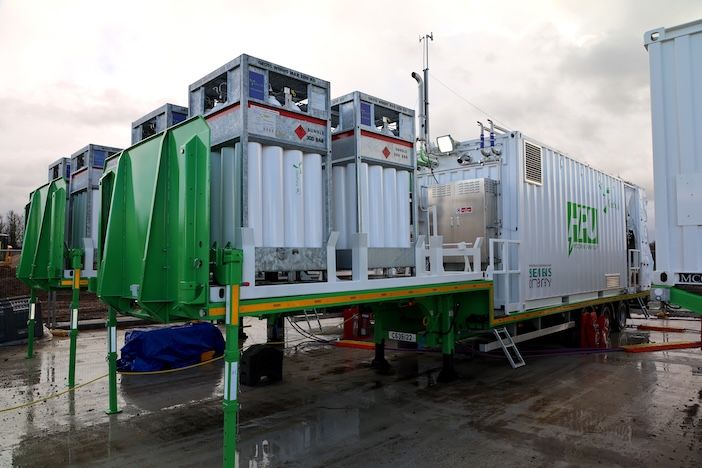
Six GeoPura hydrogen-powered generators are already operating on the project’s Essex worksite, charging batteries used by electric machinery with zero emissions. The scale of the new supply contract is intended to drive wider adoption by requiring the project’s delivery partners º=– three of the largest construction firms in Europe – to invest in hydrogen-powered machinery and build the skills to operate and maintain it.
“We’re extremely proud to be supplying the largest volume of green hydrogen ever contracted for a British construction project,” says Andrew Cunningham, chief executive of GeoPura. “This contract award further strengthens the British hydrogen supply chain, driving both price efficiency and British jobs across this new, exciting industry with tangible deployments.”
GeoPura, which was founded in 2019 and now employs more than 170 people across the UK and Europe, produces green hydrogen via electrolysis powered by locally sourced renewable electricity. Its flagship HyMarnham Power facility in Nottinghamshire — on the site of a former coal-fired power station — is supported by government Hydrogen Allocation Round 1 (HAR1) funding and is expected to reach commercial operation in early 2026.
“By replacing diesel with home-grown hydrogen, we’re not only reducing our own carbon footprint but also helping clean up the construction sector,” says Matt Palmer, executive director for the Lower Thames Crossing. “National Highways is supporting new jobs and skills that will put British businesses and people at the forefront of the growing clean energy sector.”
The Lower Thames Crossing – a new road and tunnel between Kent and Essex designed to ease congestion at the Dartford Crossing – received planning permission in March 2025, with construction expected to start as early as 2026. The project is aiming to eliminate diesel from its worksites entirely by 2027.


