

A South Australia-based pilot project backed by iron ore billionaire Andrew Forrest claims to have achieved sustained green hydrogen generation using photocatalytic water splitting (PWS) – a process that uses only sunlight, water, and a photocatalyst.
A “first-of-its-kind” green hydrogen pilot plant, located in Roseworthy, has been testing the technology of Sparc Hydrogen, a joint venture between Sparc Technologies, MIH2 Pty Ltd – a wholly owned subsidiary of Fortescue Ltd – and the University of Adelaide.
Sparc Hydrogen’s technology uses a patented photocatalytic water splitting reactor technology, which uses a photocatalyst and sunlight to produce green hydrogen directly from water, which can then be used as a clean fuel or feedstock.
Photocatalysis does not require electricity to split water into its component parts of hydrogen and oxygen, while the use of concentrated solar generation improves the technology’s economics.
Andrew Forrest’s Fortescue Future Industries acquired a stake in Sparc Hydrogen back in 2022 in an effort to help accelerate development and commercialisation of the technology which has the potential to decouple hydrogen production from the cost of electricity generation.
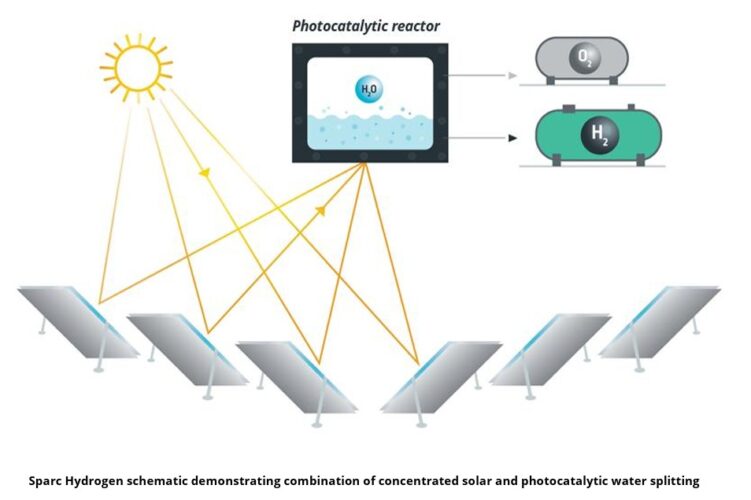
Earlier this month, Sparc Hydrogen announced that it had achieved “sustained” hydrogen generation at the Roseworthy pilot plant, describing it as a “significant milestone” for the company, as well as for the the broader green hydrogen and photocatalytic water splitting industries.
“Successful commissioning of this first-of-its-kind plant is the culmination of over 12 months of hard work since the commencement of the FEED study and positions Sparc Hydrogen at the global forefront of this emerging direct solar-to-hydrogen technology,” Sparc Technologies managing director, Nick O’Loughlin said.
“I congratulate the project team and our partners, Fortescue and the University of Adelaide, on this significant achievement and look forward to showcasing the pilot plant as an example of the simplicity and scalability of Sparc Hydrogen’s reactor technology and how it can potentially unlock low-cost green hydrogen.”
The pilot plant at Roseworthy enables Sparc Hydrogen to test different reactor designs and photocatalyst materials under real-world conditions in order to support previous laboratory testing.
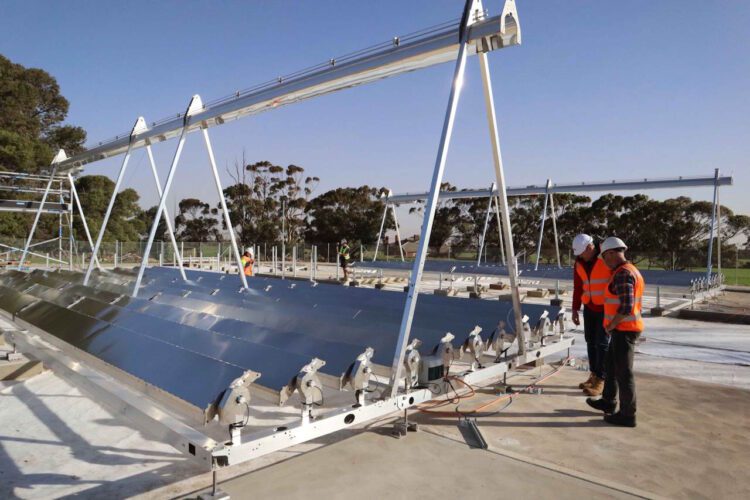
Sparc Hydrogen believes this to be the only such facility for testing and scale-up of PWS under concentrated solar conditions in the world.
With the pilot project’s commissioning complete, Sparc Hydrogen will now focus on testing its reactor technology with an initial focus on benchmarking across a range of solar concentrations, temperatures, and pressure conditions.
Currently, the pilot is using photocatalyst materials that have been provided by Shinshu University in Japan. But Sparc says it is also engaging with other photocatalyst developers with a view to conducting further testing under real-world concentrated solar conditions.
If you would like to join more than 28,000 others and get the latest clean energy news delivered straight to your inbox, for free, please click here to subscribe to our free daily newsletter.


