
![[Exclusive] Clean Hydrogen Power Generation Bidding to Be Limited to Korean Hydrogen Only](https://i1.wp.com/cphoto.asiae.co.kr/listimglink/1/2026032609502291494_1774486222.jpg?w=1920&resize=1920,1267&ssl=1 "[Exclusive] Clean Hydrogen Power Generation Bidding to Be Limited to Korean Hydrogen Only")
Administrative Notice Next Month, Main Bidding to Be Announced in June
Bidding Expected to Be Limited to Hydrogen Co-firing and Hydrogen-Exclusive Generation
Participation Likely Restricted to Domestic Hydrogen Fuel Only
Aimed at Energy Sec
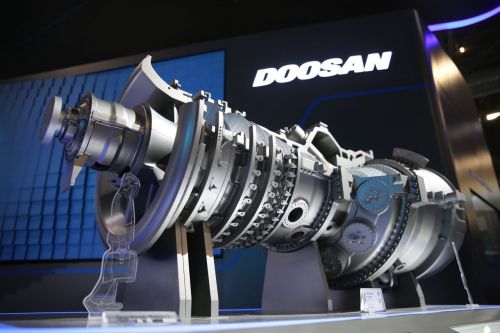
Model of hydrogen turbine exhibited by Doosan Enerbility at CES2024. Doosan Enerbility
View original image
In order to strengthen energy security, the government plans to strictly limit the range of fuel sources to domestically produced hydrogen for the clean hydrogen power generation bidding that will resume in the first half of this year. In response to the recent escalation of global supply chain crises, such as the situation in the Middle East, the system is being designed so that only power plants using domestically produced hydrogen can participate, aiming to enhance energy self-sufficiency.
According to the energy industry on March 26, the Ministry of Climate, Energy and Environment is expected to announce the hydrogen power generation bidding volume next month, followed by the main bidding process in June.
This marks the resumption of the process after an eight-month hiatus, following the abrupt cancellation of the bid in October last year due to “policy consistency” concerns. An official from the Ministry of Climate, Energy and Environment stated, “Once the official notice is finalized after the administrative pre-announcement next month, bidding will likely take place around June.”
At the time, the government suspended the bidding, judging that the coal-ammonia co-firing method was at odds with the 2040 policy to phase out coal power generation. Accordingly, this round of bidding is expected to be limited to hydrogen co-firing and hydrogen-only power generation.
In particular, the government has taken a bold step, mandating the use of domestically produced fuel for power generation in order to secure competitiveness in domestic hydrogen production technologies such as water electrolysis. A government source explained, “Given the heightened energy security risks due to the recent situation in the Middle East, the system is being designed so that, in effect, only power plants using domestically produced hydrogen fuel can participate in the bidding.”
![[Exclusive] Clean Hydrogen Power Generation Bidding to Be Limited to Korean Hydrogen Only](https://cphoto.asiae.co.kr/listimglink/1/2026032609212791322_1774484487.jpg)
View original image
The government also plans to grant additional points for Grade 1 clean hydrogen, thereby promoting the production of green hydrogen. Hydrogen is classified into Grades 1 to 4 based on the amount of carbon dioxide emitted during production, and renewable energy is typically required to achieve Grade 1 certification. Regarding this, an official from the Ministry of Climate, Energy and Environment said, “We are formulating policies to expand the domestic green hydrogen ecosystem,” adding, “However, nothing has been decided in detail yet.”
As news spreads about the government’s preferential policy for domestically produced green hydrogen, companies seeking to participate in the clean hydrogen power generation bidding market are now under pressure. An industry official noted, “There is not much domestic green hydrogen production,” and added, “Power generation companies will need to establish supply plans for green hydrogen as well.”
Consequently, the government is reportedly considering allowing up to six years of preparation time from contract award to the actual operation of the power plant.
The Clean Hydrogen Power Generation Mandate requires entities such as Korea Electric Power Corporation to purchase a certain proportion of electricity generated from clean hydrogen, and was implemented in 2024 alongside the clean hydrogen grading system. This initiative aims to convert existing thermal power plants to clean energy and revitalize the domestic hydrogen industry.
Clean Hydrogen Power Generation Market: Prioritizing Quality Over Scale
With the government planning to re-announce the competitive bidding for the clean hydrogen power generation market, which was canceled in October last year, within the first half of this year, domestic hydrogen production and power generation companies are expected to accelerate their activities.
In particular, since the government intends to restrict participation to those using domestically produced hydrogen to strengthen energy security and invigorate the domestic industrial ecosystem, interest in the green hydrogen business is expected to rise. It is known that Hyundai Motor Group’s 1GW-scale water electrolysis project in Saemangeum, Gunsan, North Jeolla Province, is attracting considerable interest.
According to energy industry sources on March 26, the ministry plans to issue an administrative pre-announcement of the annual hydrogen power generation purchase volume next month. Most expect that the purchase volume to be announced by the government this time will be significantly reduced compared to previous rounds.
In 2024, the government opened the world’s first clean hydrogen power generation bidding market with a volume of 6,500 GWh, but only 750 GWh—just 11.5% of the total—were actually awarded. Last year’s bidding volume was just 3,000 GWh, half of the previous year’s, and even this was rendered void when the bidding was canceled in October.
The lackluster results of the clean hydrogen power generation bidding are due to the high price of hydrogen and unstable supply, which make the business case uncertain. For example, Korea South-East Power (Samcheok Green Power), which was awarded a contract using the coal-ammonia co-firing method in 2024, is seeking to change its supply source from Saudi Arabia to India, departing from the original plan.
![[Exclusive] Clean Hydrogen Power Generation Bidding to Be Limited to Korean Hydrogen Only](https://cphoto.asiae.co.kr/listimglink/1/2026032609212891323_1774484488.jpg)
View original image
It is inevitable that the pace of growth in the domestic clean hydrogen power generation market will be adjusted. A government source explained, “Instead of focusing on scale, the policy direction is to strengthen the domestic green hydrogen ecosystem and build substance in the market.”
The government is reportedly planning to limit participation in clean hydrogen bidding to green hydrogen produced domestically. This is expected to both expand domestic renewable energy and strengthen the green hydrogen ecosystem. The government is also taking into account the growing sense of crisis over energy security due to the worsening situation in the Middle East.
Currently, most hydrogen distributed in Korea is byproduct hydrogen from petrochemical processes or gray hydrogen produced by reforming liquefied natural gas (LNG), both of which depend on petroleum or LNG. In contrast, green hydrogen is produced using electricity from renewable sources such as solar and wind, enabling energy self-sufficiency.
The problem is that green hydrogen is much more expensive than gray or blue hydrogen. At present, the domestic production cost of green hydrogen is about 15,000 won per kilogram, which is three to four times higher than that of gray hydrogen. The government expects that as the cost of renewable energy, such as solar power, decreases and large-scale production facilities are built, the price of green hydrogen will eventually drop.
Hyundai Motor Group’s ‘1GW-Scale’ Green Hydrogen Project Attracts Attention
Companies hoping to participate in the competitive bidding for clean hydrogen power generation now face the challenge of securing domestically produced green hydrogen. The largest green hydrogen production facility in Korea is the “Samsung C&T Gimcheon Green Hydrogen Production Facility,” which was completed on March 25. This facility receives electricity from an 8.3 MW solar power plant and uses a 10 MW water electrolysis system to produce 230 tons of green hydrogen annually. Previously, the largest facility was the 3.3 MW green hydrogen facility in Haengwon-dong, Jeju.
Industry attention is focused on Hyundai Motor Group’s hydrogen project in Saemangeum.
On February 1, Hyundai Motor Group announced plans to invest 1 trillion won in constructing a 200 MW water electrolysis plant that will produce clean hydrogen using abundant local renewable energy. The company also plans to build a 1GW-scale water electrolysis facility in the future. Typically, a 100 MW water electrolysis facility can produce 1,300 tons of hydrogen annually, while a 1GW facility would yield 13,000 tons.
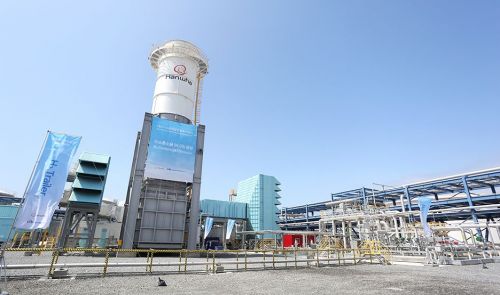
Hydrogen turbine demonstration site at Hanwha Impact Daesan Plant. Hanwha Impact
View original image
When the new clean hydrogen power generation bidding market opens, both public and private power generation companies operating LNG power plants are expected to show interest. Among private companies, POSCO International, SK Innovation E&S, and Hanwha Impact have been pursuing hydrogen co-firing and hydrogen-only power generation projects.
In particular, POSCO International, which operates the Incheon LNG Power Plants Units 3 and 4, received approval for a change in its power generation business from the Ministry of Trade, Industry and Energy (formerly the Ministry of Trade, Industry and Energy) in 2024, with the condition that it would convert the aging LNG power plants to hydrogen co-firing.
Hot Picks Today
“Mortgage Rates Exceed 7% for First Time in 3 Y…
POSCO International stated, “If the clean hydrogen power generation market bidding proceeds as planned this year, we aim to begin commercial hydrogen co-firing operations by 2031.” Hanwha Impact has completed the demonstration of a hydrogen-only turbine powered 100% by hydrogen.
This content was produced with the assistance of AI translation services.
© The Asia Business Daily(www.asiae.co.kr). All rights reserved.


