

Converted natural gas infrastructure anchors Germany’s hydrogen core network
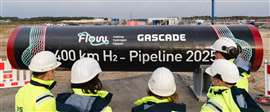 Gascade said it puts 400 kilometers of hydrogen core network into operation. (Image: Gascade)
Gascade Gastransport GmbH has reached a major milestone in the development of Germany’s hydrogen infrastructure, bringing about 400 kilometers of converted natural gas pipelines into operation for hydrogen transport.
The initial filling of the first pipeline sections under the Flow – making hydrogen happen program establishes a north-south hydrogen corridor from the Baltic Sea region to Saxony-Anhalt. The newly commissioned infrastructure forms a central component of Germany’s hydrogen core network and is now available to the market, laying the groundwork for the country’s hydrogen ramp-up.
Gascade said the project is internationally unique in demonstrating how existing large-diameter gas transmission assets can be repurposed quickly and cost-effectively for hydrogen service. By converting existing infrastructure, the company aims to provide planning certainty for industrial customers while supporting efforts to reduce CO₂ emissions across German industry.
“With the successful conversion of 400 kilometers of pipeline, we reliably provide large-scale and central hydrogen infrastructure,” said Ulrich Benterbusch, managing director at Gascade. “Converting existing natural gas pipelines with a diameter of 1.4 meters to hydrogen is a technical pioneering achievement. This project is a strong signal for the German hydrogen economy and the industrial location of eastern Germany.”
The Flow program creates a hydrogen backbone that connects production, import and consumption centers. According to Christoph von dem Bussche, managing director at Gascade, the project is designed from the outset to support both domestic supply and international integration.
“Flow – making hydrogen happen is more than a technical project. It is a promise for the future,” von dem Bussche said. “In 2025 we are creating the conditions to receive hydrogen from the European Baltic Sea region, international hydrogen imports via the port of Rostock, as well as green hydrogen produced on the Baltic coast, especially at the Lubmin site.”
Von dem Bussche added that cross-border connectivity is a central element of the strategy. “From the get-go, we are considering the connection to our European neighbors. Because only together can we succeed in building a strong cross-border hydrogen economy,” he said.
The now-operational section of Flow marks the first phase of a broader buildout. By 2029, Gascade plans to extend the hydrogen core network to major industrial hubs in southern Germany. As part of the program, additional pipeline routes to Poland and the Czech Republic are planned, along with connections toward Bavaria and Austria, through a combination of further conversions and new pipeline construction.


