

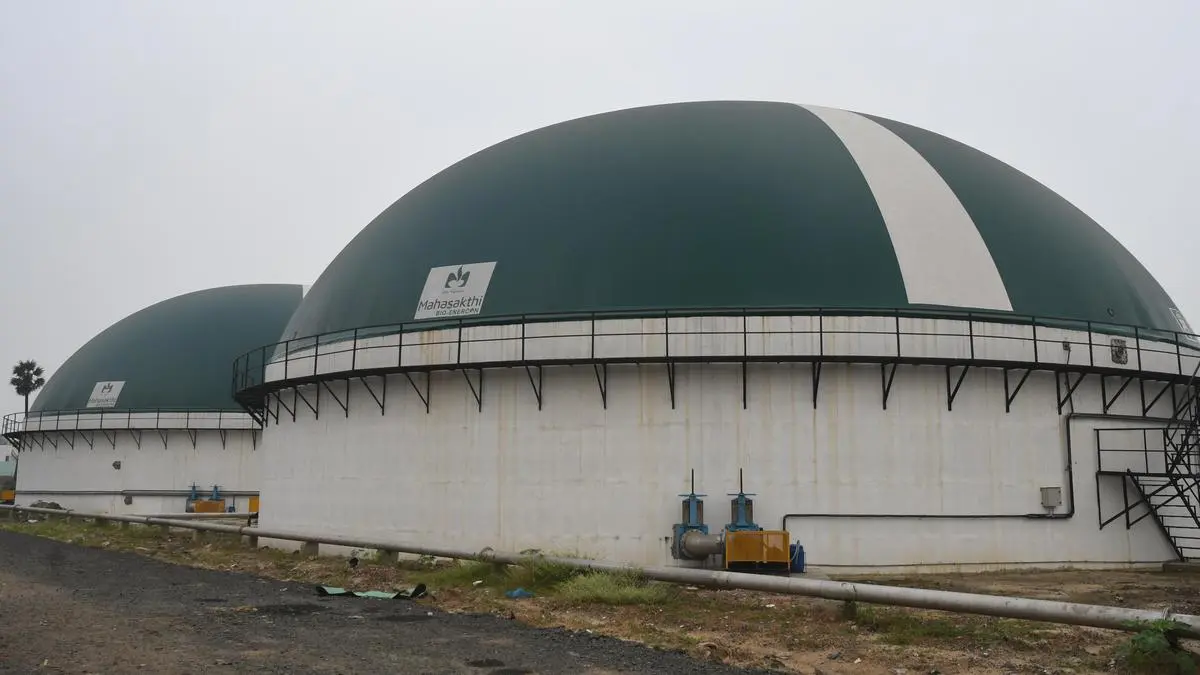
Compressed bio gas offers a compelling combination of energy security and environmental benefits
| Photo Credit:
JOTHI RAMALINGAM B
As geopolitical tensions in West Asia continue to unsettle global energy markets, India is once again confronted with a structural vulnerability — dependence on imported cooking fuel.
Energy experts and policymakers argue that India must move beyond a single-fuel approach and adopt a diversified, multi-fuel cooking energy strategy one that leverages domestic resources, enhances resilience, and reduces import dependence.
At the forefront of this transition is compressed bio gas (CBG). Produced from agricultural residue, cattle dung, and municipal waste, CBG offers a compelling combination of energy security and environmental benefits. With an estimated potential of 60-70 million tonnes annually, it can significantly offset natural gas imports while also addressing the persistent issue of farm waste burning.
CBG also supports rural economic development. It generates organic fertilizer as a by-product and creates additional income streams for farmers, effectively transforming waste into value. Under the Sustainable Alternative Towards Affordable Transportation initiative, which targets the establishment of 5,000 CBG plants, the sector is gradually gaining momentum, though scaling remains a challenge.
Ethanol presents another viable pathway, particularly for agrarian regions. Backed by India’s well-established sugar industry, ethanol-based cooking solutions can be deployed using existing cooperative networks. While ethanol has a lower energy density compared to LPG, advancements in high-efficiency stoves have made it a practical option without compromising cooking performance.
In urban India, the expansion of Piped Natural Gas (PNG) networks is reshaping cooking energy access. Experts suggest blending domestically produced CBG into city gas networks could strengthen resilience while maximising the use of existing infrastructure.
Another emerging option is Dimethyl Ether (DME), which is being evaluated as a transitional fuel. DME can be blended with LPG up to 20 per cent without requiring any modifications to existing stoves or distribution systems. This makes it a practical “drop-in” solution that can reduce LPG imports in the short term without disrupting consumers.
Looking ahead, green hydrogen is being explored as a long-term, transformative solution. Pilot projects, including those demonstrated by IIT Bombay researchers, are showcasing decentralised systems where solar energy is converted into hydrogen for cooking at the village level.
By adopting a diversified fuel strategy and leveraging domestic resources, the country has an opportunity to build a cleaner, more secure, and inclusive energy future — one that reaches every household.
The writer is Managing Director, Samarth SSK Ltd, and Co-Chairperson of the Sugar Bioenergy Forum
Published on March 23, 2026


