

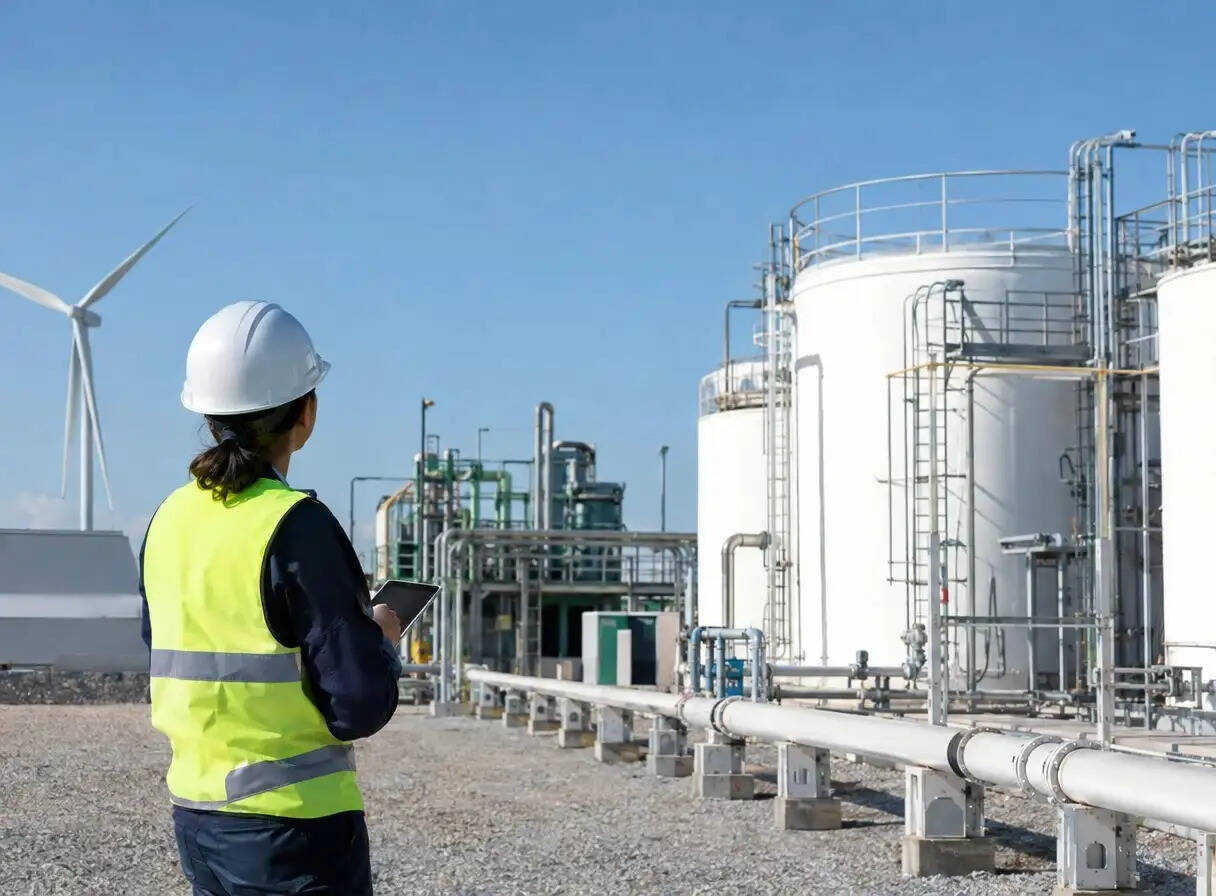
Green hydrogen and green ammonia are attracting extraordinary attention, yet the market is still being built one contract at a time. That is the central message of an opinion piece by Indian Chemical News, which argues that the gap between headline ambition and bankable demand remains wide despite the sector’s momentum.The debate matters because hydrogen and ammonia sit at the intersection of energy security, industrial decarbonisation and trade policy. Governments have set targets, exporters are chasing new markets and developers are racing to secure projects. But the article makes clear that enthusiasm alone does not create a durable market. For buyers, the decisive question is not whether a product is green, but whether it is reliable, affordable and usable at scale.Demand is emerging, but only in pocketsThe clearest demand is still coming from sectors that already use hydrogen or ammonia in large volumes. Fertiliser production remains the biggest anchor market, while refining is another immediate outlet. Early shipping applications are also beginning to take shape as vessel owners and fuel suppliers test ammonia-ready systems and bunkering arrangements.According to the Indian Chemical News analysis, the global project pipeline is large on paper, with thousands of announcements and substantial planned capacity in renewable and low-carbon ammonia. Yet the conversion rate from announcement to final investment decision remains low. In many recent snapshots, fewer than a tenth of proposed renewable ammonia projects have reached a committed stage, underscoring how cautious lenders and customers remain.China has already moved ahead of many other markets in operational capacity, with several large renewable ammonia plants coming on stream or nearing start-up. In Saudi Arabia, the NEOM project is moving through commissioning and is targeting first green ammonia output around 2027 under long-term offtake arrangements. These examples show that commercial movement is possible, but only where scale, policy backing and buyer commitment line up.India’s offtake story is improving, but still earlyIndia has also begun to translate policy into demand signals. The National Green Hydrogen Mission has helped generate commitments for hydrogen-equivalent volumes, with much of the interest linked to exports and a smaller share tied to domestic fertiliser use. The article cites commitments of about 555,610 tonnes a year by late 2026, reflecting the growing role of export markets such as Japan, South Korea and Europe.That momentum is being reinforced by mechanisms such as the SIGHT programme and by bilateral purchase structures that help bridge the cost gap between green molecules and conventional alternatives. H2Global-style auctions, along with deals involving players such as AM Green and Uniper, are being used to convert interest into multi-year purchase agreements. The pattern is important: demand becomes real only when a buyer is willing to sign for volume, price and duration.Why buyers are still hesitantThe article argues that the problem is not a lack of theoretical use cases. Rather, it is the difficulty of making the economics work for end users. Fertiliser makers, refiners, shipping companies and industrial consumers want clarity on delivered cost, supply reliability, contract length and inflation protection. They also need confidence that certification systems will recognise the product across markets.That caution is understandable. Green hydrogen and ammonia are still more expensive than grey alternatives in most places, and blue hydrogen can remain a cheaper bridge in some regions. Project developers have therefore had to contend with delayed financing, postponed construction schedules and, in some cases, outright cancellations. The article notes that many projects have been announced with fanfare, but only a limited share has moved beyond the planning stage.The real bottleneck is credibilityFor developers, the challenge is no longer simply to announce capacity. They must demonstrate that the technology will work consistently at commercial scale, that renewable power and water supplies are secure, and that the plant can operate with acceptable efficiency. For derivatives such as e-methanol and e-SAF, access to certified biogenic carbon dioxide is also crucial.Financing is equally important. Long-term project viability depends on credible cost structures, access to sustainability-linked capital, and support from policy tools such as tax credits, production incentives or contracts for difference. Without those mechanisms, even well-intentioned projects can struggle to secure debt or equity on workable terms.The article also stresses that short or conditional memorandums of understanding are not enough. Industrial customers need binding, multi-year offtake contracts with defined volumes, quality standards and pricing formulas. In other words, the market needs commercial discipline, not just strategic intent.Policy will decide how fast the market scalesGovernment action remains the decisive variable. Where public agencies aggregate demand, offer incentives or create purchase mechanisms, the market tends to move faster. Where regulation is unclear and infrastructure is missing, projects stall. That is why the development of hydrogen and ammonia markets is not just a technology story but a policy and industrial policy story as well.The article points out that the most immediate substitution opportunity lies in existing ammonia and hydrogen use, especially in fertiliser and refinery operations. Newer applications such as green steel, maritime fuels, e-SAF and power generation may eventually become major markets, but they are still at different stages of technical and commercial readiness. They should therefore grow alongside, rather than replace, the established industrial base.A market built on balance-sheet logicThe broader conclusion is that buyers are not purchasing symbolism. They are buying an industrial input that must fit operations, budgets and compliance obligations at the same time. That means developers must speak the language of cost, delivery, bankability and resilience, not only the language of transition and sustainability.Until those fundamentals are clearer, demand will remain selective and fragile. The market is real, but it is still being shaped by policy support, financing design and practical buyer confidence. As the Indian Chemical News piece argues, the sector is moving from aspiration to execution, but the distance between the two is still large enough to determine which projects become real molecules and which remain only announcements.


