

Green hydrogen is considered one of the most important energy sources of the future. It is produced by splitting water using electricity from renewable sources and is expected to play a significant role in reducing greenhouse gas emissions in industries that are difficult to electrify directly. These include steel and fertilizer production, petroleum refining and the production of alternative transportation fuels.
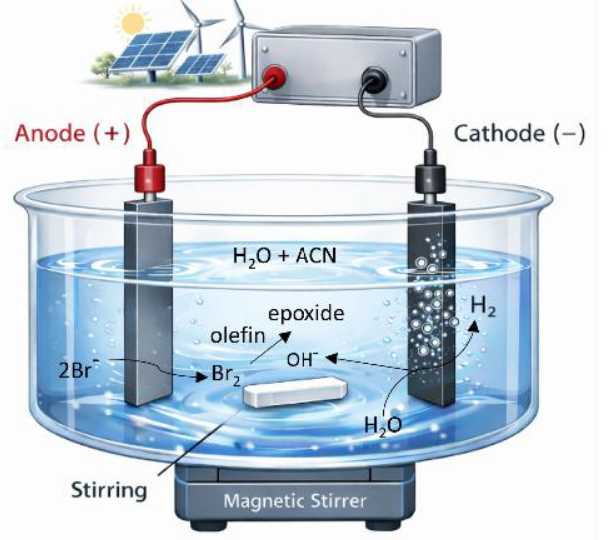
Schematic illustration of the electrosynthesis process that produces hydrogen and epoxide
(Illustration: From the study)
“We approached this challenge by rethinking the water-splitting process. Our goal was to replace the oxygen normally produced alongside hydrogen with another product of much higher value – an epoxide,” Rothschild explained. “Epoxides are essential building blocks in the production of polymers, coatings, adhesives, pharmaceuticals, and many other products.
“In the experiments presented in our paper, we demonstrate 98% efficiency both in hydrogen generation and in the parallel reaction that produces the epoxide. In other words, almost all the electrical charge drove the desired electrochemical reactions, with only 2% lost to competing processes. Moreover, the current density we achieved is compatible with large-scale industrial electrolysis.”
The Technion said the new process builds on a family of earlier technologies developed by Rothschild and his colleagues, all of which share a common principle: separating the electrochemical reaction that produces hydrogen from the one that produces oxygen. This separation forms the basis of membrane-free electrolysis, a technology that represents a major breakthrough in hydrogen production.
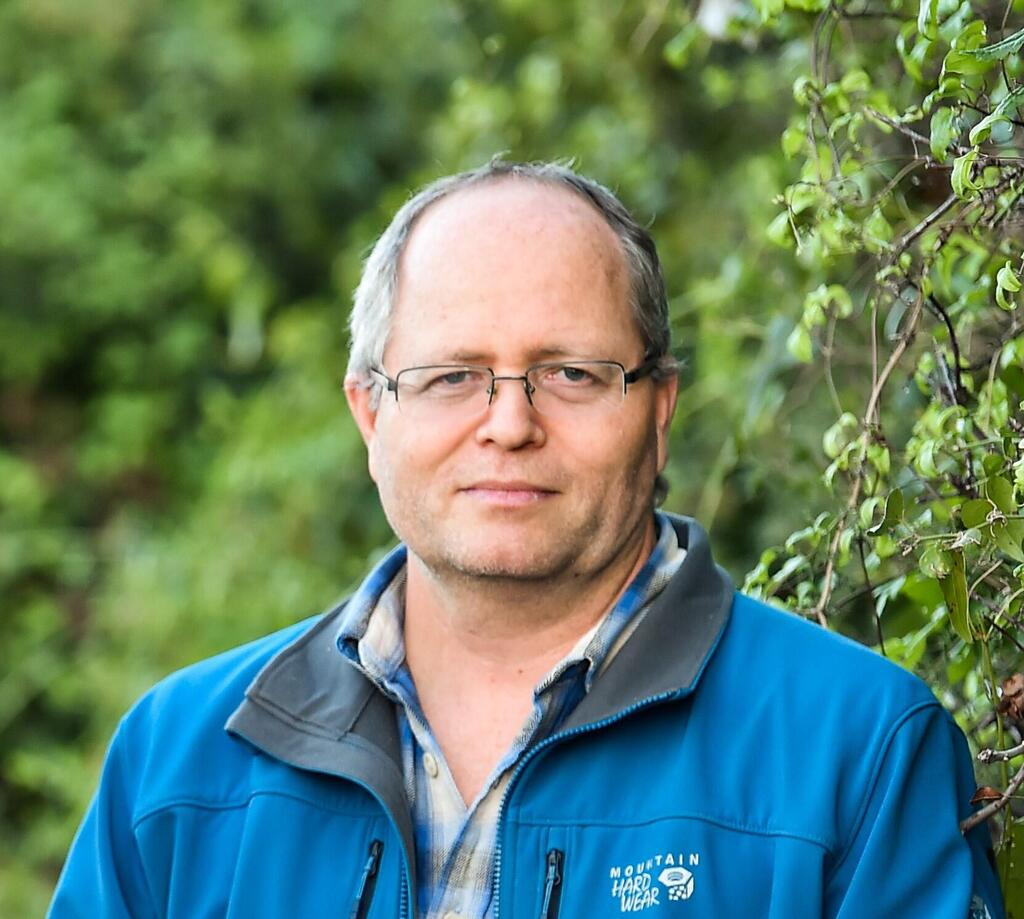
Photo: Technion spokesperson’s office
(Photo: Technion spokesperson’s office)
One of the earlier technologies in this family has been successfully implemented by H2Pro, a company developing hydrogen production technology. The latest development emerged from groundbreaking research supported by the European Research Council (ERC).
According to Ruan, one of the leading researchers on the team who conceived and developed the innovative process, “Our achievement goes beyond a single new electrode or an isolated chemical reaction. It represents a conceptual shift in which all the different components of the operating environment — the electrodes, the mediator, the solvent environment and the operating configuration — work together.
“By optimizing the entire system, we succeeded in producing both hydrogen and epoxide efficiently without the need for a membrane separating the electrodes.”
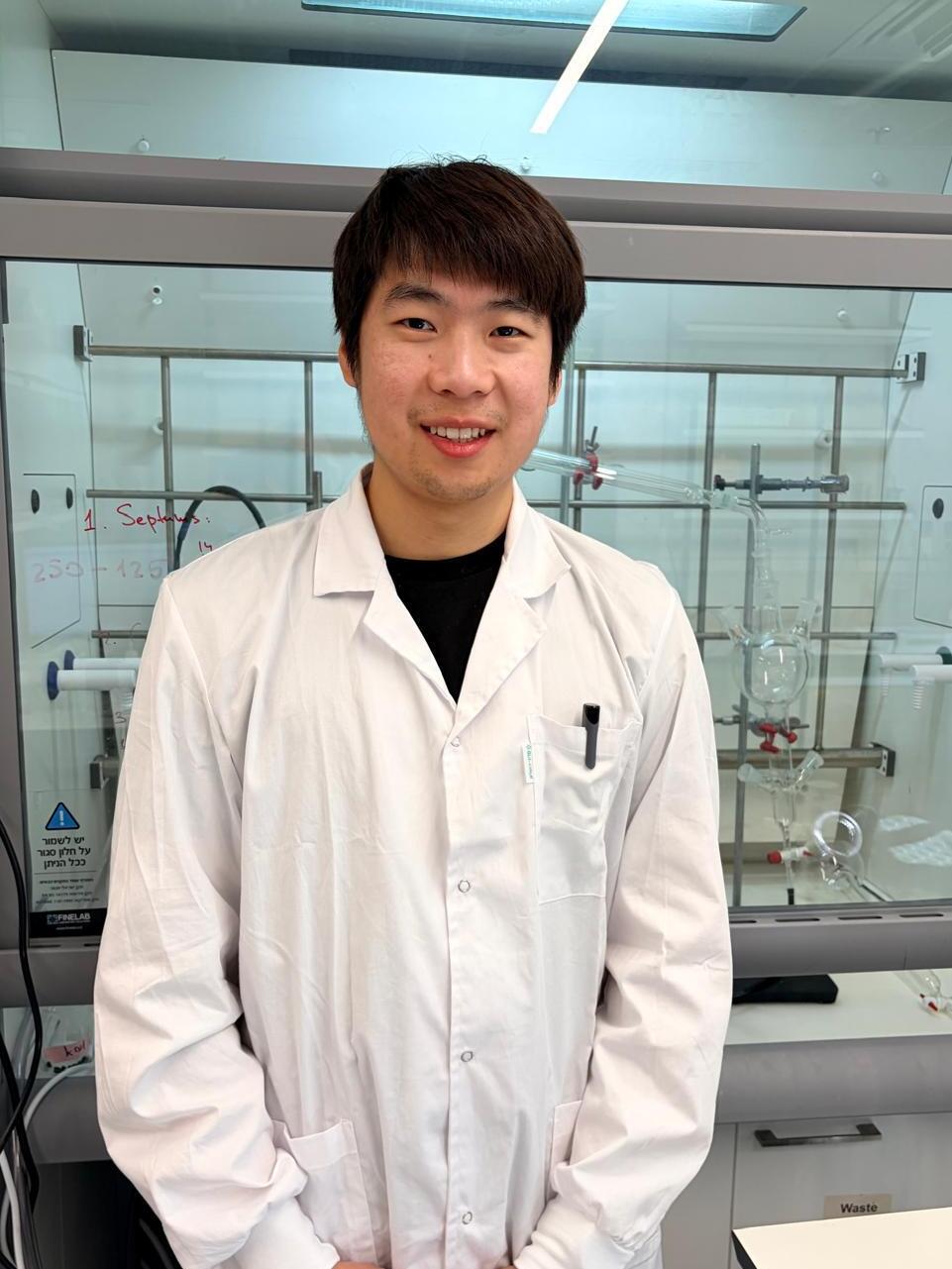
Dr. Guilin Ruan
(Photo: Technion spokesperson’s office)
Rothschild heads the Technion’s Sustainability Frontier and is a faculty member in the Department of Materials Science and Engineering. He is also a member of the Stewart and Lynda Resnick Sustainability Center for Catalysis and the Nancy and Stephen Grand Technion Energy Program.
The research was funded by the European Research Council through the H2Bro project, following Rothschild’s receipt of the prestigious ERC Advanced Grant in 2023. The work is also associated with the interuniversity Waste to Value research initiative, funded by Israel’s Planning and Budgeting Committee of the Council for Higher Education. The researchers also acknowledged the Israel National Institute for Energy Storage (INIES).


