

Steyr is currently involved in a research project exploring the viability of hydrogen-powered tractors alongside on-farm hydrogen production.
The aim of the Hytrac research project is to demonstrate a practical pathway towards low-carbon agricultural mechanisation and greater farm energy independence.
The project is being led by Vienna University of Technology (TU Wien), with Steyr one of multiple project partners involved.
The integrated hydrogen energy system being examined would combine hydrogen-powered tractor technology with on-farm fuel storage and refuelling infrastructure.
Key project technologies include a hydrogen internal combustion engine (H2 ICE) and an advanced electric power-split electric continuously variable transmission (eCVT).
Hydrogen engines
Building from the Steyr FCtrac, the Hytrac represents further exploration of hydrogen-powered agricultural equipment.
The FCtrac was unveiled in July 2024 after collaborative efforts with TU Wien, making the Hytrac a clear successor to that concept machine.
The new project is focused around combining hydrogen power with an electric power-split eCVT, which is developed by Austrian high-tech engineering group VDS Holding GmbH.
The project aims to create a fully integrated smart energy system linked to hydrogen production, storage and refuelling infrastructure for increased practicality and efficiency.
Based on a Steyr Expert (a tractor offering 100-140hp from a 4.5L four-cylinder FPT NEF Stage V engine), the research tractor will use a direct-injection H2 ICE.
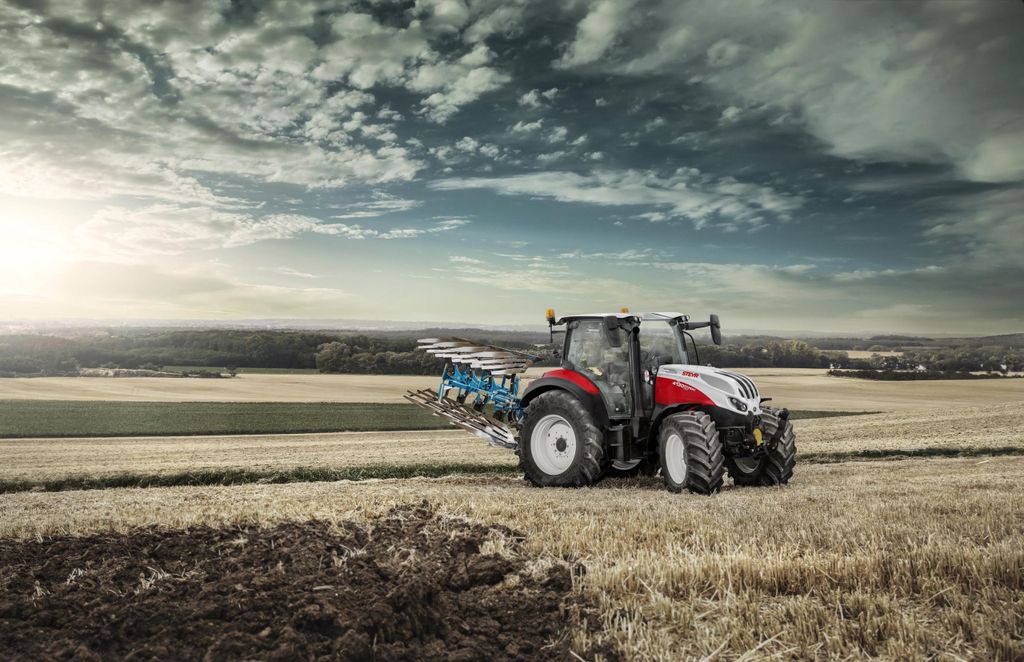
A Steyr Expert, the tractor which the Hytrac is based on. Source: CNH
The project aims to provide continuous power comparable to that of the donor vehicle while aiming at zero emission standards.
Implements attached to the Hytrac can be powered electrically by the tractor’s high-voltage battery, which is developed by Voltfactory GmbH.
According to Steyr, “benefits of the design include zero-emission operation at the point of use, high working efficiency and extended operating times, matching the needs of modern agriculture”.
On-farm fuel production
The project aims to allow practical on-farm hydrogen production through existing energy generation resources.
These energy generation resources include biomass from plant residues, wind and photovoltaics (turning sunlight directly into electricity, which is distinctly different from solar, as that includes thermal paneling that captures heat for warming water).
According to Steyr, the project also aims to enable “(artificial intelligence) AI-optimised intelligent energy management, using load profiles, user data and predictive control integrated into this smart Energy Hub” to aid fuel production meet demand.
It added that the system “delivers both carbon abatement and energy independence to farmers”.
“By combining vehicle development and intelligent energy management, the Hytrac project demonstrates Steyr’s commitment to exploring practical pathways towards a sustainable future for agricultural mechanisation,” it said.
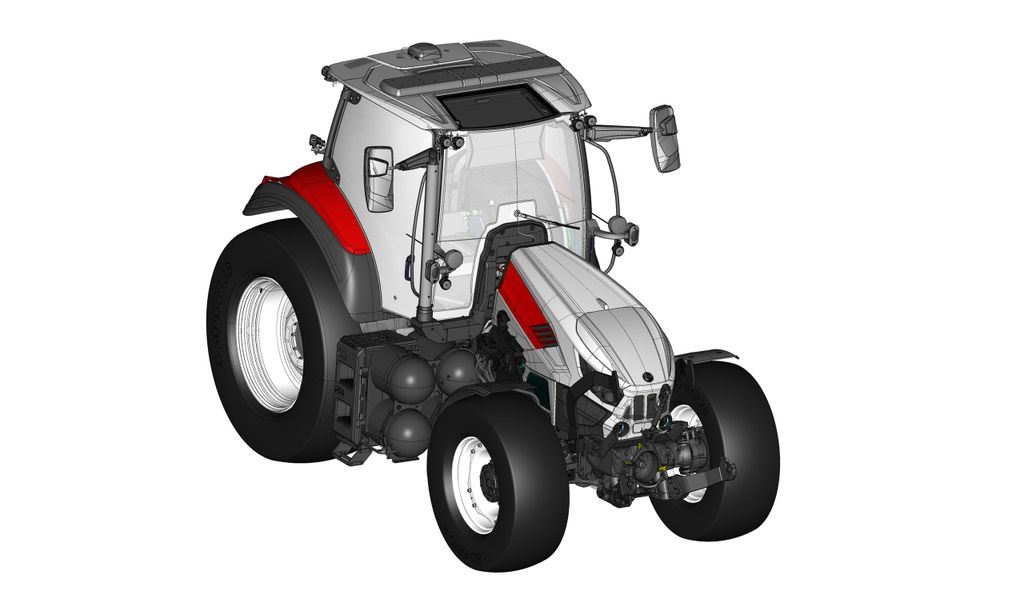
What appears to be hydrogen tanks can be seen underneath the steps up to the cab. Source: CNH
Assistant professor at the Institute of Powertrain and Automotive Technology at TU Wien, Johannes Konrad spoke about the importance of the research project.
Prof. Konrad said: “The Hytrac project enables us to analyse the interaction between hydrogen-powered agricultural machinery, energy infrastructure and farm operations under real-world conditions.
“This systems approach is essential to understanding how hydrogen technologies can contribute to future carbon abatement in agriculture.”
Why hydrogen?
Hydrogen is being explored as a fuel source as agricultural machinery is difficult to power with electricity and batteries.
While small electric tractors that can work for roughly four hours are available, there is not currently an electric alternative to a 250hp tractor pulling a heavy implement for the day.
Hydrogen stores more energy per kg than diesel, with roughly 120 Megajoules (Mj, equivalent to 1 million joules) per kg compared to diesel’s 43-46Mj per kg.
The catch when it comes to hydrogen is the sheer physical volume of it.
Due to hydrogen being extremely light and having poor volumetric energy density, large, high-pressure tanks are required to host the fuel.
Fendt hid these tanks in a mushroom-like increased size roof on the cab in its hydrogen project tractor, titled Helios.
In Fendt’s case, these tanks are incredibly heavy and their location in the roof poses a tipping hazard on uneven surfaces.
While hydrogen could be produced on farms for H2 ICE tractors, there is currently no infrastructure built to support this and would also require significant investment.
While Steyr tractors are not often seen in Ireland, as part of the CNH umbrella, any technology developed for the white brand will surely come to Case IH and New Holland machinery.
Steyr has been used experimentally by CNH recently, who explored the concept of an armoured Terrus CVT tractor in collaboration with Mehler Protection.


