

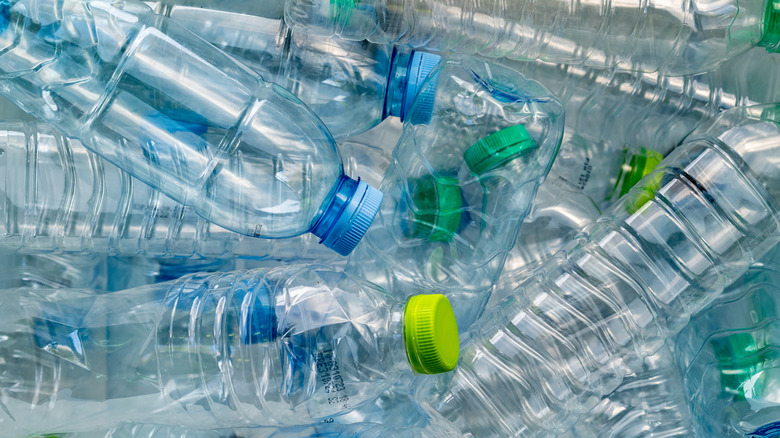
Plastic is everywhere. Tens of millions of tons of plastic enter the environment each year. Plastic is accumulating in human bodies, and could be associated with cardiovascular ailments and neurological conditions like dementia. It has even contaminated the rain. Despite these grave concerns, plastic is not going anywhere. Plastic waste is expected to nearly triple by 2060 without major policy changes. A new solution could address two problems by turning unwanted plastic into valuable green hydrogen.
Researchers at Cambridge developed a solar-powered system that takes in polyethylene terephthalate (PET) bottles, often used for water bottles, and puts out hydrogen and other useful chemicals. First, the plastic is ground to tiny bits, mixed with potassium hydroxide, and heated at 176 degrees Fahrenheit for three days. This breaks down the PET, releasing ethylene glycol, one of its basic building blocks. The researchers then filter out any remaining PET and feed the liquid solution into the solar panel reactor.
These solar panels don’t generate power. They produce a chemical reaction called photoreforming. A photocatalyst coating absorbs sunlight and uses it to produce hydrogen. The researchers first tested small panels, then built a 10.8-square-foot outdoor reactor made from four larger panels. A follow-up test using PET showed the same basic process could produce hydrogen on a larger scale.
The hydrogen problem this solar panel breakthrough could solve
Hydrogen is currently in high demand. It’s used to refine oil and produce steel, methanol, and ammonia. Yet, only about 1% of global production is low-emissions hydrogen. Most is fossil fuel-based, including in the U.S., which generates nearly all of its hydrogen by breaking down natural gas, releasing an enormous amount of CO2 into the atmosphere. Being able to produce green hydrogen with no emissions would significantly cut back the carbon footprint created by its demand.
Industry leaders see the benefit of switching to hydrogen if it becomes commercially viable. The problem is that green hydrogen is hard to produce, which is why scientists are working to make it more practical. Water electrolysis is one approach. It uses electricity to split water into hydrogen and oxygen. The Cambridge team says splitting water takes a lot of energy, and part of the reaction happens slowly. Breaking down plastic is another option, usually using heat to release hydrogen. The team says it requires a lot of energy, and it can be hard to control what is produced.
To bring down cost and improve stability, the researchers say they’ll need to figure out how to capture more sunlight, how to absorb more visible light, and how to make the photocatalysts last longer. They know the chemistry works. They want to see it happen at a larger scale. There’s also one hanging thread they might be able to pull: a solar panel that produces electricity while turning plastic into hydrogen. The device being tested absorbs just UV light, which could leave the rest of the spectrum to generate electricity. Researchers have not said if they’ll actively explore it.


