

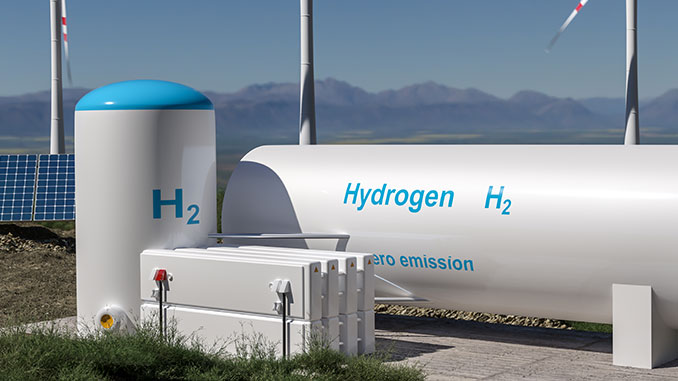
 The Hydrogen Council’s “Global Hydrogen Compass” report builds on nearly a decade of detailed reporting in collaboration with McKinsey & Company examines where the hydrogen industry stands today, unpacks lessons learned from the first wave of mature clean hydrogen projects, and explores the impact clean hydrogen can have in strengthening energy security and resilience, enabling industrial growth, and unlocking deep decarbonization.
Key findings from the report:
Hydrogen has a renewed strategic value in enabling system-wide resilience and industrial growth alongside decarbonization
The drivers of hydrogen uptake are shifting as energy security, resilience, and industrial growth have gained importance alongside decarbonization. The combination of drivers varies by geography: over 60% of committed investment is in regions where security and growth match or exceed decarbonization as primary motivations. Localized clean hydrogen and derivative production could enable import-dependent nations to diversify energy and feedstock supply and develop strategic reserves. By providing alternative sourcing for agricultural and industrial bases, these solutions may reduce supply chain and critical mineral dependencies while shielding food and fuel systems from price spikes and shortages.
As ever more power is supplied by renewables, which now account for nearly 34% of global power generation, the role of demand-response assets like electrolyzers and fuel cells to accelerate renewables integration may become more important. Hydrogen can enable cost savings via long-duration storage, reduced curtailment, and cost-effective transport of energy over long distances. Beyond supporting the energy transition, hydrogen also supports industrial growth as a vector for clean molecule production and new technology supply chains across mobility and industrial applications.
Investment and capacity continue to grow with majority of increases in China and Europe
This year, committed clean hydrogen investment increased to $130 billion, corresponding to 6.9 Mtpa of committed capacity across over 570 projects, of which 90% are under construction or operational. Operational capacity grew 70% to approximately 1.7 Mtpa and is projected to reach about 3.8 Mtpa next year as projects under construction come online.
China leads on renewable hydrogen: it accounts for over half of global committed renewable hydrogen capacity and the majority of new operational renewable capacity since 2025. Since 2020, annual growth in operational capacity in China has been double the global average in all other regions.
Europe now follows as the second-largest region by committed investment, and leads in overall project count. Investment grew by 35% in Europe, supported by the transposition of RED III transport targets in several Member States. The U.S. continues to lead in low carbon deployment, making up over 75% of committed low-carbon capacity globally.
Implementing existing policies could nearly double firm demand by 2030
Hydrogen ecosystems are forming where supply, demand, and infrastructure connect under the right market-forming conditions to create viable business cases. Several such ecosystems are emerging, driven in part by the EU’s RED III transport transposition, China’s 15th five-year plan, the United States’ energy incentives and the Gulf Coast’s optimal export positioning, and India’s renewable hydrogen and ammonia support mechanisms.
By 2030, 6 Mtpa of demand is supported by policies already in force (e.g., RED III transport quotas transposed into national law, ETS/ CBAM as currently implemented). The majority of this demand is matched to supply, with 4.2 Mtpa of binding offtake contracted, 75% of which for existing hydrogen uses like refining and ammonia.
In addition to these 6 Mtpa, another 5 Mtpa of demand could materialize if existing policies are fully implemented (e.g., RED III industry targets are transposed across the EU Member States) although timing and execution of policies would dictate whether such demand could still materialize by 2030.
Access the full report here


