

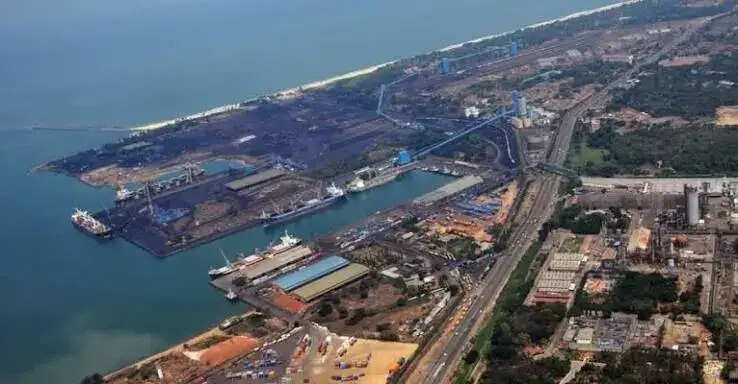
Odisha charts ambitious path to industrial leadershipAs India intensifies its focus on sustainable industrial development, Odisha is setting new benchmarks by fusing traditional strengths in ports and refining with cutting-edge green hydrogen and petrochemical infrastructure. The state’s comprehensive approach seeks to establish it as a premier destination for both domestic and global investors in chemicals, petrochemicals, fertilizers, and emerging green technologies.Strategic land and port infrastructure underpinning growthOdisha’s drive to become an industrial powerhouse is anchored by its strategic coastal geography. The state has proactively earmarked extensive, contiguous land parcels along its industrial corridors, aligning with the central government’s Plug and Play Chemical Park Scheme, announced in the 2026 Union Budget. While the challenge-based selection guidelines are pending, Odisha’s readiness is evident in its robust proposal pipeline, leveraging the presence of established anchor units like Indian Oil Corporation’s (IOCL) 15 million metric tonnes per annum (MMTPA) refinery and the proposed dual-feed cracker at Paradip. These facilities assure investors of consistent feedstock, seamless port access, and a suite of incentives tailored to the chemical sector.Notably, emerging clusters at Gopalpur and Dhamra are attracting major chemical players such as UPL, Deepak Nitrate, and SRF, underscoring Odisha’s growing appeal. The state’s port-led model is also drawing comparisons with global benchmarks like Singapore’s Jurong Petrochemicals Complex, reflecting Odisha’s ambition to become a leading Asian chemical hub.Integrated clusters and anchor investments drive sector diversificationBuilding on deep-water port connectivity, Odisha is nurturing world-class industrial clusters that co-locate chemicals, petrochemicals, green fuels, and downstream manufacturing. The Paradip Petroleum, Chemicals and Petrochemicals Investment Region (PCPIR) serves as a focal point, supported by IOCL’s refinery and attracting investments from companies such as Numaligarh Refinery, Laxmi Organic, SMVD Polypack, and Dhunseri Ventures. Plastic manufacturing is being strengthened through a dedicated 200-acre plastics park near Paradip, anchored by IOCL, ensuring reliable supply of essential polymers and resins.The state has also invested in technical support infrastructure, such as the CIPET Plastics Product Evaluation Centre, which provides design, testing, and technical support to park tenants. Upstream, the region around Gopalpur is being developed as a green hydrogen and ammonia hub, with companies like ACME Clean Energy, Avaada Green H2, Ocior Energy, and Torrent Green Hydrogen establishing facilities to tap into the anticipated surge in global demand for clean fuels.Investor confidence bolstered by land, water, and skilled workforceOdisha’s high investment conversion rates are underpinned by a proactive approach to investor assurance. Large, ready-to-move industrial land parcels, especially near major ports, are complemented by fast-tracked approvals via the GO-SWIFT single-window clearance platform. Special Economic Zones (SEZs) such as the Tata Steel SEZ near Gopalpur, with over 1,400 acres of pre-approved land, further enhance ease of entry for investors.A critical advantage lies in Odisha’s abundant water resources—home to nearly 11% of India’s surface water. Major industrial clusters benefit from perennial rivers like the Mahanadi and Rushikulya and are supported by dedicated projects such as the upcoming 300 MLD in-stream water storage at Paradip. To address skill requirements, Odisha has established a robust technical education pipeline with premier institutions like IIT Bhubaneswar, NIT Rourkela, and CIPET, alongside targeted skilling initiatives by the Odisha Skill Development Authority, ensuring a steady supply of industry-ready talent for chemical and allied sectors.Green transition: carbon capture and sustainable manufacturingAs capital-intensive sectors like chemicals and fertilizers face mounting pressure to decarbonise, Odisha is integrating Carbon Capture, Utilization, and Storage (CCUS) into future industrial planning. The state is monitoring global advancements in CCUS and has plans to leverage industrial clusters at Paradip and Angul as demonstration sites for large-scale implementation. Recent investments include ReNew E-Fuels’ plan to establish a 300 kilotonnes per annum carbon capture unit, reflecting Odisha’s early-mover status.To institutionalise these efforts, the Vikshit Odisha Vision Document for 2036/2047 outlines seven interventions for decarbonisation and green energy transition, including the formation of a cross-departmental task force to coordinate on emerging technologies like carbon sinks and CCUS. Odisha’s industries are already pioneering low-carbon practices, with several metallurgical companies adopting Direct Reduced Iron (DRI) processes that utilise syngas instead of conventional fossil fuels.Pioneering green hydrogen and solar manufacturing ecosystemOdisha’s ambitions in green manufacturing are also evident in its aggressive green hydrogen targets—aiming for 3 MMTPA of production by 2036. This is supported by a policy framework that offers manufacturers incentives such as concessional land rates, exemptions on stamp duty and electricity duty, and reimbursement of power tariffs and state GST. The policy is designed to foster the creation of integrated green hydrogen ecosystems, encompassing production, utilisation, and export.Major manufacturers like Waaree, Luminous, Sova Solar, and Inox Solar are setting up solar module units in the state, with combined planned capacity exceeding 40 GW. This positions Odisha as a linchpin for India’s solar supply chain, supporting energy sustainability and lowering the carbon footprint of industrial growth.Building a domestic supply chain for green technologyRecognising the rising demand for green hydrogen components, Odisha is promoting local manufacturing of key equipment such as electrolysers and gas processing units. The IPR-2022 policy classifies green energy equipment as a thrust sector, unlocking the highest tier of incentives for investors. Firms like Waaree Clean Energy Solutions and Surya International Enterprise are among those responding to this opportunity, with plans to manufacture hydrogen electrolysers within the state.Implications and outlook: Odisha’s industrial futureOdisha’s integrated strategy—melding port infrastructure, world-class industrial clusters, and forward-looking green policies—positions it as a frontrunner in India’s industrial transformation. The state’s proactive stance on investor facilitation, water security, skill development, and decarbonisation is attracting a diverse set of global and domestic players.With the continued evolution of national and international mandates such as the Carbon Border Adjustment Mechanism, Odisha’s early investments in green hydrogen, CCUS, and solar manufacturing are expected to yield long-term dividends. As the state leverages its natural resources and policy framework, it stands poised to set benchmarks for sustainable industrialisation in India and beyond.


