

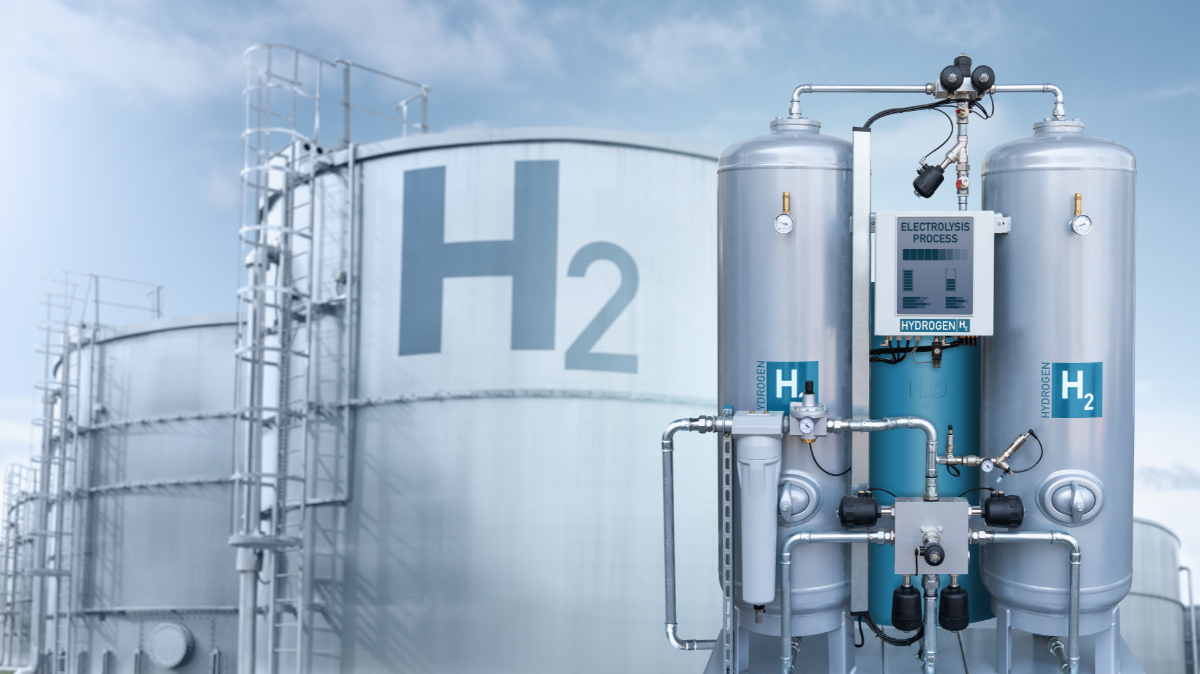
Stock image for referential purposes only
The Australian government has shortlisted seven green hydrogen derivative projects with a combined capacity of 2.18GW under the second round of its Hydrogen Headstart programme, despite reducing the scheme’s funding allocation by half. The programme is being administered through the Australian Renewable Energy Agency (ARENA).
{alcircleadd}
The selected projects have now been invited to submit full applications for 10-year production subsidies, although the exact credit rates are yet to be disclosed. Most of the shortlisted developments are focused on producing hydrogen-based fuels and chemicals for sectors such as alumina refinery applications, shipping, aviation, fertilisers and metals.
Discover: The Gulf aluminium market risks, China impact, alumina supply, carbon costs, and logistics disruptions shaping pricing and trade in Gulf Disruption Roadmap
Funding reduced as government tightens spending
Originally launched with a funding pool of AUD 2 billion (USD 1.45 billion), the second Hydrogen Headstart round has now been revised to AUD 1 billion (USD 724 million) as part of the government’s broader fiscal savings measures.
The decision follows mixed outcomes from the first funding round announced in 2023, where six projects were shortlisted but only two eventually secured commitments worth AUD 1.2 billion (USD 868 million) after several developers withdrew amid weaker-than-expected hydrogen demand.
Despite concerns surrounding Australia’s hydrogen strategy, Darren Miller, ARENA Chief Executive Officer, maintained that the newly shortlisted projects are aligned with future industrial demand.
“Renewable hydrogen is a complex, capital-intensive industry and progress takes time, but it is a critical enabler of industrial decarbonisation, particularly for hard-to-abate sectors,” he stated.
In the alumina category, the Gladstone Green Hydrogen project in Queensland aims to supply hydrogen for alumina refining operations. The 120MW development is being pursued by Sumitomo Corporation and Rio Tinto subsidiary Summit Hydro.
The project is expected to produce nearly 200,000 tonnes of hydrogen annually for use at Rio Tinto’s alumina refinery, highlighting the growing role of hydrogen in decarbonising aluminium production.
Don’t miss out- Buyers are looking for your products on our B2B platform
Projects target shipping fuels, fertilisers and metals
Some of the shortlisted projects are:
Abel Energy-led Bell Bay Powerfuels project in Tasmania: Aims to produce 300,000 tonnes of methanol annually using 300MW of electrolysis. The fuel is intended for aviation and shipping applications.
European Energy Australia’s South East Queensland Power-to-X project: Plans to produce an initial green methanol through 150MW of electrolysis, with future expansion potential reaching 3.6GW.
Portland Renewable Fuels in Victoria by Hamr Energy: Aims to combine 220MW of electrolysis with biomass-derived syngas to manufacture low-carbon methanol.
HIF Global’s HIF Tasmania e-Fuel project in Burnie, Tasmania: Plans to produce nearly 210,000 tonnes of e-methanol annually from 140MW of electrolysis capacity.
Green ammonia projects gain traction
Large-scale green ammonia and industrial hydrogen developments also feature prominently in the shortlist.
The Murchison Green Hydrogen Project Stage 1B in Western Australia, being developed by a subsidiary of Copenhagen Infrastructure Partners, represents the second 500MW phase of a planned 1.5GW green ammonia project.
The Perdaman Helios project by Perdaman Chemicals and Fertilisers in Karratha intends to use 750MW of electrolysis to support low-carbon urea production exceeding two million tonnes annually.
The revised Hydrogen Headstart programme reflects a more selective and commercially focused approach by the Australian government as the global hydrogen sector adjusts to slower-than-anticipated market uptake.
Despite the reduced funds, the shortlisted developments indicate continued commitment to policy support for hydrogen applications related to industrial decarbonisation, sustainable fuels and lower-carbon metals production.
Must read: Key industry individuals share their thoughts on the ALuminium LeaderSpeak 2026



