

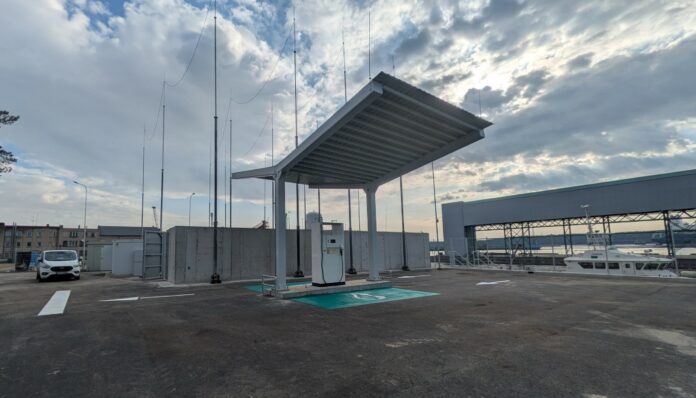
The Port of Klaipėda has reached the final stage of its green hydrogen project, receiving the construction completion certificate for the station and clearing the last formal milestone before production commences.
Final equipment installation works are currently underway, with green hydrogen production expected to begin within weeks and regular operations planned to be fully established by mid-year.
Algis Latakas, CEO of the Klaipėda State Seaport Authority, described the certification as tangible confirmation that Lithuania’s first green hydrogen production facility is on the verge of becoming operational, positioning the Port of Klaipėda as the first green hydrogen producer in Lithuania and among the first in the Baltic states.
The station will use a polymer electrolyte membrane electrolyser to produce clean fuel, with an annual output capacity of approximately 127 tonnes of hydrogen at full capacity.
The facility is designed as open infrastructure, accessible to the broader transport and logistics market.
Initial applications will include fuelling a newly built hydrogen-powered waste collection vessel commissioned by the Port Authority and a Toyota Mirai passenger car acquired for the project.
The Port Authority, together with LTG Group, Klaipėda Stevedoring Company Bega and Volvo Lietuva, is also exploring the use of green hydrogen in road freight transport, railway operations and various port activities.
The project forms part of a wider hydrogen ecosystem being developed in Klaipėda, where the fuel will be made available for passenger cars and heavy-duty transport in addition to maritime applications.
It is financed under the Economic Recovery and Resilience Plan Next Generation Lithuania, with total costs estimated at approximately EUR€12 million, of which around EUR€6 million is covered by EU funds through the NextGenerationEU recovery and resilience facility.


