

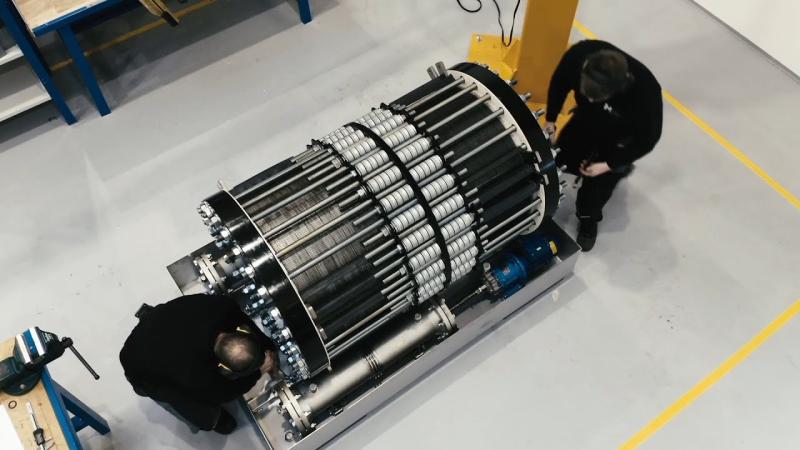
Green Hydrogen Electrolyzer Systems Market
Green Hydrogen Electrolyzer Systems Market Growth Outlook 2026 to 2032: US$6.48 Billion Market Expands as Renewable Hydrogen Moves from Policy Ambition to Industrial Equipment Deployment
The global Green Hydrogen Electrolyzer Systems Market is entering a decisive scale-up phase as renewable hydrogen shifts from demonstration projects into industrial equipment platforms for refining, ammonia, methanol, steel, mobility, grid balancing, and power-to-X fuels. According to Global Report Store, the market was valued at US$6.48 billion in 2025 and is projected to reach US$24.92 billion by 2032, growing at a 21.24% CAGR during 2026 to 2032. The largest technology segment in 2025 was Alkaline Electrolyzer Systems, the largest system-scale segment was Above 20 MW, the largest end-use segment was Refining, Ammonia and Methanol, and Asia-Pacific was the largest regional market. Europe is identified as the fastest strategic growth region, China as the largest country opportunity, and Germany as the highest regulatory quality market.
Request Exclusive Sample: https://www.globalreportsstore.com/request-sample/1640/
The market is expanding because industrial buyers are moving beyond pilot-scale hydrogen and are now evaluating complete electrolyzer systems that include stacks, power electronics, balance of plant, controls, safety systems, water systems, and integration support. The International Energy Agency’s 2025 hydrogen review shows that electrolyzer installed capacity reached an estimated 4.9 GW in 2025, while announced electrolyzer projects for 2030 reached 439 GW and announced manufacturing capacity reached 186 GW per year. This gap between installed capacity and announced ambition shows both the opportunity and the execution risk.
Among the target countries with published values, the United States generated US$1.29 billion in 2025 and is projected to reach US$4.51 billion by 2032. Germany generated US$0.67 billion in 2025 and is projected to reach US$2.71 billion by 2032. Japan generated US$0.22 billion in 2025 and is projected to reach US$0.98 billion by 2032. The public report preview lists the United Kingdom, France, and South Korea in the regional table of contents, but it does not publish standalone market values for those countries.
Market Disruption: The Electrolyzer Market Is Being Reshaped by Project Conversion, Not Only Technology Choice
The biggest disruption in the green hydrogen electrolyzer systems market is the widening gap between announced hydrogen ambitions and projects that reach final investment decision, construction, and commissioning. The market already has strong policy support, visible industrial demand, and expanding manufacturing plans. The harder problem is converting project pipelines into bankable orders.
This is changing the buying logic. Customers are no longer selecting electrolyzers only by stack chemistry. They are assessing full system cost, electrical efficiency, dynamic response, modularity, maintenance requirements, balance-of-plant simplicity, warranty confidence, grid integration, water treatment, commissioning support, and supplier bankability. The U.S. Department of Energy’s electrolysis assessment also highlights that cost reduction depends on manufacturing scale, balance-of-plant cost reduction, and system optimization with clean power resources, not just electrochemical performance.
Policy is powerful but fragmented. The U.S. uses clean hydrogen tax credits, Europe uses RFNBO qualification rules and Hydrogen Bank auctions, Japan is building support through its Hydrogen Society Promotion Act, and India uses manufacturing and production incentives. This creates a global growth market, but suppliers must manage region-specific subsidy rules, power-sourcing requirements, offtake structures, and certification expectations.
Recent Developments in the Last 6 Months Strengthening Green Hydrogen Electrolyzer Demand
1. Plug Power won a 275 MW FEED contract for Hy2gen’s Courant project in Québec
On April 2, 2026, Plug Power announced that it had been awarded the Front-End Engineering Design contract to supply a 275 MW GenEco PEM electrolyzer system for Hy2gen Canada’s Courant decarbonized ammonium nitrate project in Baie-Comeau, Québec. This is one of Plug’s largest electrolyzer project awards to date and shows that large PEM systems are advancing through the industrial project funnel.
The development matters because FEED awards often become the bridge between project concept and firm equipment procurement. For electrolyzer suppliers, early engineering wins can shape plant design, power integration, water systems, and future supply scope.
2. thyssenkrupp nucera secured a 300 MW electrolyzer supply deal for Moeve’s Onuba project
In March 2026, thyssenkrupp nucera announced that it would supply 15 standardized 20 MW electrolyzer units, equal to 300 MW, for the first phase of Moeve’s Onuba green hydrogen project in Huelva, Spain. Moeve had announced the project’s final investment decision earlier in March, marking a major step for one of Southern Europe’s largest green hydrogen plants.
This is highly relevant for the market because it confirms the commercial value of standardized 20 MW building blocks. Large industrial customers increasingly want modular systems that can be deployed in repeatable blocks while reducing project engineering risk.
3. Plug completed installation of 100 MW PEM electrolyzers at Galp’s Sines refinery
On January 23, 2026, Plug Power announced that it had completed installation of 100 MW of PEM GenEco electrolyzers at Galp’s Sines refinery in Portugal. Plug stated that all ten arrays had been delivered and installed on site, marking a major milestone in one of Europe’s largest renewable hydrogen projects.
This development is important because the market needs proof of physical delivery, not only announcements. A 100 MW refinery-linked installation gives developers, lenders, and industrial customers a stronger reference point for future large-scale projects.
4. Nel moved forward with 1 GW of next-generation pressurized alkaline production capacity
Nel’s 2025 annual report confirmed that prototype testing of its next-generation pressurized alkaline electrolyzer progressed successfully and that construction of a 1 GW production line at Herøya had been initiated, with commercial launch planned for the first half of 2026. The company also announced a final investment decision to industrialize the platform, supported by EU Innovation Fund backing.
This matters because alkaline technology remains the largest segment today, and manufacturing industrialization will be central to lowering cost and improving delivery confidence.
5. European Commission launched IF25 Hydrogen Auction with EUR 1.3 billion budget
The European Commission launched the third Innovation Fund auction for hydrogen production under the European Hydrogen Bank with a EUR 1.3 billion budget. The auction supports RFNBO hydrogen and, for the first time, electrolytic low-carbon hydrogen, with a new topic for suppliers of hydrogen to maritime or aviation offtakers.
This development reinforces Europe’s position as the fastest strategic growth region. Auction-backed support helps narrow the cost gap between renewable hydrogen and conventional hydrogen, improving project economics and the order environment for electrolyzer suppliers.
Market Segmentation Analysis: Two Segments Creating the Strongest Commercial Pull
Alkaline Electrolyzer Systems: Largest Technology Segment and the Cost-Sensitive Scale Leader
Alkaline Electrolyzer Systems generated US$2.72 billion in 2025, representing 42.0% of market revenue, and are projected to reach US$9.12 billion by 2032. This makes alkaline the largest technology segment in the Green Hydrogen Electrolyzer Systems Market. Its leadership comes from technology maturity, large-format system familiarity, lower cost positioning, and suitability for industrial projects where developers prioritize proven scale and cost discipline.
Alkaline systems are especially relevant for refinery, ammonia, methanol, and large industrial hydrogen projects where project owners need dependable hydrogen volumes rather than only maximum dynamic response. The segment is also supported by suppliers that are standardizing modules and expanding manufacturing capacity. thyssenkrupp nucera’s 20 MW standardized units and Nel’s next-generation pressurized alkaline platform both show how the market is moving toward repeatable industrial building blocks.
The segment’s next growth phase will depend on cost reduction, higher current density, pressure performance, better integration with variable renewable power, and improved balance-of-plant design. Buyers will reward suppliers that can deliver low total installed cost per MW, predictable service life, and bankable warranties.
Above 20 MW Systems: Largest Scale Segment and the Core Industrial Decarbonization Platform
Above 20 MW systems generated US$3.14 billion in 2025 and are projected to reach US$14.01 billion by 2032. This is the largest system-scale segment because the current market is being pulled by industrial decarbonization, refining, ammonia, methanol, power-to-X, and export-fuel projects rather than small distributed hydrogen use cases.
This segment has strong buying intent because industrial users need hydrogen at volumes that can affect real process emissions. A refinery, ammonia plant, steel project, or e-fuels facility cannot depend on lab-scale systems. It needs high-availability equipment, electrical integration, water treatment, safety design, compression planning, project engineering, and long-term operating support.
Recent market developments confirm the direction. Plug’s 100 MW Sines installation, Plug’s 275 MW Hy2gen FEED contract, and thyssenkrupp nucera’s 300 MW Moeve supply deal all point to a market where competition is shifting toward 100 MW and 300 MW class systems.
Regional Analysis: North America, Europe, and Asia-Pacific Define the Market Expansion Roadmap
North America and the United States: High-Value Demand with a Mixed Hydrogen Pathway
North America generated US$1.62 billion in 2025 and is projected to reach US$5.87 billion by 2032. The region remains important because of industrial hydrogen demand, renewable power availability, project development expertise, and strong policy support.
The United States generated US$1.29 billion in 2025 and is projected to reach US$4.51 billion by 2032. U.S. growth is supported by clean hydrogen incentives, refinery and industrial decarbonization demand, and a strong ecosystem of developers, OEMs, EPC providers, and hydrogen offtakers. The market’s pure electrolyzer upside is moderated by the role of alternative low-carbon hydrogen pathways, including CCUS-equipped hydrogen, but the country remains one of the most commercially significant electrolyzer markets.
Accelera’s 35 MW PEM electrolyzer system for Linde’s Niagara Falls facility also shows how U.S. projects are moving into larger industrial references. The system is powered by renewable hydroelectric energy and supports hydrogen production for industrial decarbonization.
Europe, Germany, the United Kingdom, and France: Regulation-Led Growth and Strong Industrial Decarbonization Demand
Europe generated US$2.11 billion in 2025 and is projected to reach US$9.01 billion by 2032, making it one of the most important regions for large electrolyzer system orders. Europe’s demand is supported by RFNBO rules, the European Hydrogen Bank, industrial decarbonization, and green hydrogen auction mechanisms.
Germany generated US$0.67 billion in 2025 and is projected to reach US$2.71 billion by 2032. Germany is the highest regulatory quality market because it combines industrial hydrogen demand, advanced engineering capability, renewable hydrogen policy, and hydrogen infrastructure planning. Germany’s National Hydrogen Strategy is designed to support the market ramp-up of hydrogen, and the country is also developing a hydrogen core network to support efficient infrastructure buildout.
The public report preview lists the United Kingdom and France in the regional table of contents but does not publish standalone market values for those countries. Both remain strategically important. The UK’s Hydrogen Allocation Rounds provide revenue support through the Hydrogen Production Business Model, while France updated its national decarbonized hydrogen strategy in 2025 to support the country’s hydrogen sector and industrial transition.
Asia-Pacific, Japan, South Korea, and China: Largest Regional Market and Strongest Scale Advantage
Asia-Pacific generated US$2.48 billion in 2025 and is projected to reach US$9.76 billion by 2032, making it the largest regional market. The region’s strength comes from China’s project scale, India’s green hydrogen mission, Japan’s structured hydrogen policy, and broader industrial demand for clean hydrogen.
China generated US$1.36 billion in 2025 and is projected to reach US$5.54 billion by 2032, making it the largest country opportunity. China benefits from clean-energy deployment scale, manufacturing strength, and visible renewable electrolysis project rollout.
Japan generated US$0.22 billion in 2025 and is projected to reach US$0.98 billion by 2032. Japan is smaller in pure electrolyzer deployment than China, but it remains highly strategic because of the Hydrogen Society Promotion Act and broader GX-linked transition support. Japan’s Hydrogen Society Promotion Act was enacted to support hydrogen utilization businesses and reduce the cost gap between hydrogen and conventional fuels.
The public preview lists South Korea in the Asia-Pacific table of contents but does not publish a standalone revenue value. South Korea remains strategically relevant because of its hydrogen economy policy direction, clean hydrogen power market development, industrial base, and strong technology-manufacturing environment.
Purchase This Exclusive Report: https://www.globalreportsstore.com/checkout/1640/
Competitive Landscape and Company Profiles
Siemens Energy
Siemens Energy is one of the most important industrial players in green hydrogen electrolyzer systems because it combines large-project capability, manufacturing scale, and engineering integration. Together with Air Liquide, Siemens Energy opened an electrolyzer production facility in Berlin designed to bring at least 3 GW per year of electrolysis capacity to market by 2025.
Its strength lies in industrial manufacturing, automation, and integration into major energy and industrial projects. As electrolyzer systems move into larger project classes, suppliers with proven industrial execution capability will have a strong advantage.
Nel Hydrogen
Nel is a major electrolyzer supplier with both alkaline and PEM capability. Its 2025 annual report confirmed progress on next-generation pressurized alkaline electrolyzer technology and the start of construction for a 1 GW production line at Herøya, with commercial launch planned for the first half of 2026.
Nel’s value proposition is built around technology breadth, manufacturing industrialization, and product standardization. This positions the company well in a market where project developers need both scale and bankability.
Plug Power
Plug Power is increasingly visible as a large-format PEM electrolyzer systems supplier. The company completed installation of 100 MW of PEM electrolyzers at Galp’s Sines refinery in January 2026 and won a 275 MW FEED contract for Hy2gen’s Courant project in April 2026.
Plug’s strength is its ability to compete in 100 MW plus industrial projects where PEM’s compact footprint, dynamic response, and renewable-pairing potential matter. Its recent wins give it stronger credibility in refinery and chemicals-linked hydrogen projects.
thyssenkrupp nucera
thyssenkrupp nucera remains one of the strongest large-scale alkaline electrolyzer suppliers. Its March 2026 agreement to supply 15 standardized 20 MW electrolyzer units for Moeve’s Onuba project highlights its position in large, industrially anchored green hydrogen systems.
The company’s strategy is closely aligned with the market’s move toward standardized, bankable, modular alkaline systems that can be deployed in 20 MW, 100 MW, and 300 MW class projects.
Accelera by Cummins
Accelera by Cummins is strategically important because it brings industrial engineering, manufacturing discipline, and commercial credibility into the PEM electrolyzer market. Its 35 MW PEM electrolyzer system for Linde’s Niagara Falls facility is Accelera’s largest electrolyzer system to date and is powered by renewable hydroelectric energy.
Accelera’s role is especially relevant in North America, where industrial green hydrogen projects need suppliers that can support reliable production, project integration, and long-term service.
Analyst View: Green Hydrogen Electrolyzers Are Becoming a Heavy Industrial Systems Market
The Green Hydrogen Electrolyzer Systems Market is no longer defined only by clean-energy ambition. It is becoming a heavy industrial systems market where scale, bankability, manufacturing discipline, integration capability, and cost reduction decide commercial success.
The strongest opportunities will come from alkaline electrolyzers, PEM systems, above 20 MW system blocks, refining, ammonia, methanol, steel, industrial feedstocks, and power-to-X export fuels. Asia-Pacific will lead in scale, Europe will lead in regulation-backed market formation, and North America will remain a high-value market supported by industrial demand and policy incentives.
For organizations evaluating investment, procurement, partnerships, project development, technology sourcing, or market entry, the message is clear: the next phase of green hydrogen value creation will favor suppliers and developers that can convert announcements into commissioned systems. Electrolyzer systems that are easier to finance, easier to integrate, easier to maintain, and easier to standardize will capture the strongest growth through 2032.
Media Contact
Global Reports Store
Office No. 301, Sairam IT Park, Hadapsar, Pune 411028
Email: sales@globalreportsstore.com
About Global Report Store
Global Report Store provides structured market intelligence, revenue analysis, competitive benchmarking, and strategic industry research for organizations evaluating growth opportunities across energy, power, chemicals, materials, infrastructure, transportation, semiconductors, healthcare, and industrial technology markets. The Green Hydrogen Electrolyzer Systems Market Opportunity, Competitive Positioning, and Revenue Outlook to 2032 report is developed to help growth-focused organizations understand market size, technology demand, system-scale growth, end-use opportunity, regional outlook, policy impact, company positioning, and commercial potential across the global renewable hydrogen equipment ecosystem.
This release was published on openPR.


