

Today’s ESG Updates
- China and India Scale Green Hydrogen: Both countries are rapidly expanding state-backed hydrogen production with major subsidies and aggressive cost reductions.
- UK Eases EV Charging Access: New rules will allow pavement charging installations for homes without driveways to support cheaper EV use.
- Queensland Invests in Biofuels: Australia is funding renewable diesel production to cut reliance on imported fossil fuels.
- Wales Pylon Project Faces Lawsuit: Farmers are suing over a large renewable grid expansion project, citing land and biosecurity concerns.
China and India expand green hydrogen production with state support
China and India are increasing green hydrogen production, while the West has backed away from its green hydrogen goals due to cost constraints. Both Asian countries are using political will and state intervention to force market growth.
China invested $3.7 billion in green hydrogen production last year. According to Rystad projections, China will reach 2.6 million tons of annual capacity by 2031, backed by $26 billion in investment. The average cost of production in China is $4 per kilogram, but in some places it is only $2 per kilogram.
India is focusing on aggregating domestic demand via $2.1 billion in subsidies and state-run reverse auctions. The country’s goal is to reach 5 million tons of green hydrogen per year by 2030. India cut production costs from $5 to $3 a kilogram and plans to reach $2 by 2032.
***
Further reading: China, India place strategic bets on clean energy out of favour in the West
Klimado – Navigating climate complexity just got easier. Klimado offers a user-friendly platform for tracking local and global environmental shifts, making it an essential tool for climate-aware individuals and organizations.
UK eases EV charging rules to boost home electrification and cut energy costs
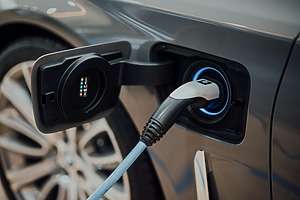
The UK government plans to introduce legislation this summer that will allow households without off-street parking to install charging “gullies” in pavements. These gullies will not require planning permission, enabling EV owners to run charging cables from their homes to the street. The reason behind the legislation is the price of charging: home charging is significantly cheaper than public charging because domestic energy is taxed at a 5% VAT rate, compared to 20% for public charging points.
Energy Secretary Ed Miliband emphasized that transitioning to solar panels, heat pumps, and EVs is essential for reducing the UK’s dependence on volatile global fossil fuel markets. The government intends to simplify the installation process for air-source heat pumps and expand access to plug-in solar systems for low-income households through the “Warm Homes Plan.”
***
Further reading: Shake-up will help UK motorists without driveways to charge EVs
Related Articles
Here is a list of articles selected by our Editorial Board that have gained significant interest from the public:
Queensland funds renewable diesel project to strengthen fuel security

The Queensland government is investing A$25 million ($18 million) in a renewable diesel project to reduce reliance on imported fuel. The U.S.-Israeli war on Iran has caused high fuel prices and a lack of supplies, which is the reason behind the decision. The Queensland government is investing in production facilities at Brisbane’s Lytton refinery, managed by Ampol. It will turn waste, vegetable oils, and animal fats into fuel. It plans to produce 20 million liters of renewable diesel per year, starting in 2028.
The government views biofuels as a priority and aims to produce hundreds of millions of liters by the early next decade. The 20 million liters of biofuel will be equivalent to approximately 125,000 barrels of oil, roughly 10% of Australia’s daily consumption of around 1 million barrels.
***
Further reading: Australia’s Queensland invests in biodiesel to cut reliance on fuel imports
Welsh farmers sue energy developer over pylon route and biosecurity allegations
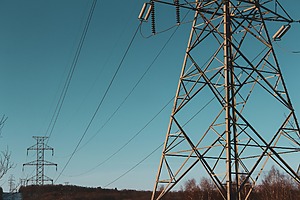
A group of 500 Welsh farmers, represented by the farming collective “Justice for Wales” and the Welsh Countryside Charity (CPRW), has initiated a High Court claim against the energy developer Green Gen Cymru, part of the Bute Energy group. The lawsuit alleges that the company engaged in the intimidation of landowners, unlawfully entered private property without consent or warning, and showed a disregard for biosecurity. Farmers cite concerns that agents brought dirty tires and boots onto land, potentially spreading livestock diseases such as bovine TB and sheep scab.
The company plans to construct three new electricity pylon routes across Carmarthenshire, Ceredigion, and Powys to connect offshore wind farms to the Welsh mainland and Shropshire. The infrastructure is intended to update Wales’s electricity grid to support the national target of 100% renewable electricity by 2035. This proposed pylon plan spans 125 miles (200km).
***
Further reading: Welsh farmers launch landmark claim against ‘intimidating’ pylon firm
Editor’s Note: The opinions expressed here by the authors are their own, not those of impakter.com — In the Cover Photo: Shanghai, China. Cover Photo Credit: krzhck


