

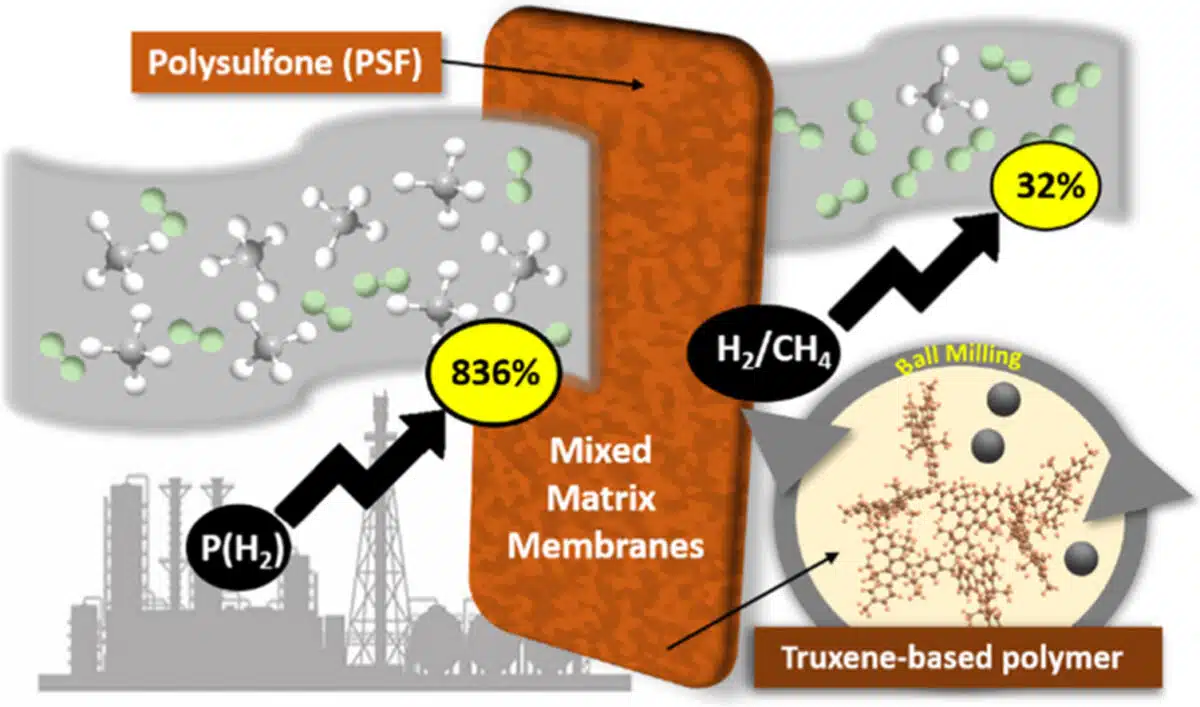
A team from ICMM-CSIC has developed a new membrane that makes hydrogen purification much faster and more precise. With permeability up by 800% and selectivity improved by 30%, the breakthrough tackles a major challenge in using hydrogen at scale.
Hydrogen is already everywhere in industry, from refining to chemical production, and it’s starting to play a bigger role in energy storage. The catch is that even if it’s relatively easy to produce, getting it pure enough for use is still complicated and costly.
That’s where membranes come in. These materials act like ultra-fine filters at the molecular level, but getting them to work both quickly and accurately has always been tricky…until now.
A Smarter Way To Filter Hydrogen
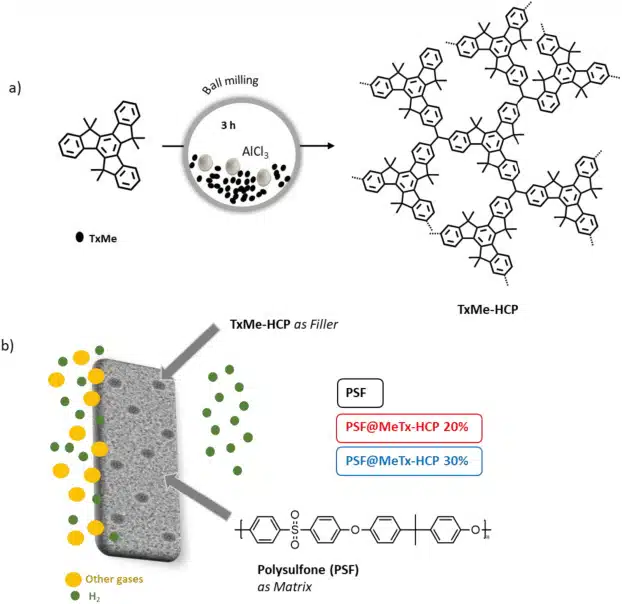
Researchers started with polysulfone, a material already used in commercial membranes for its reliability. They then added a specially designed porous component that creates a network of tiny channels inside the structure.
These channels are just the right size to let hydrogen molecules slip through while blocking bigger ones like methane or carbon dioxide.
“We take advantage of those pores, their voids, to discriminate between gas molecules, allowing the small ones to pass through,” explained Eva Maya, who works at ICMM-CSIC and led the study as first author.
According to the Journal of Membrane Science, this setup improves how well the membrane can separate gases without slowing everything down.
Beating A Classic Limitation
In gas separation, there’s usually a compromise: if you make a membrane faster and more permeable, it becomes less precise and less selective, and the other way around. In a press release, the ICMM-CSIC team stated that they managed to improve both at once.
“The membrane must withstand hydrogen pressure while also having a certain elastic component. Additionally, we need it to be capable of separating gases while allowing high permeability—that is, a high flow of the gas we are targeting, in this case, hydrogen,” explained the Maya.
And the numbers speak for themselves: 800% higher permeability and 30% better selectivity. As stated by the scientists, that’s a rare combination and a big deal for technologies that rely on efficient gas separation.
How Does This New Membrane Work?
The way the membrane is produced is also part of the story. Using a mechanochemical synthesis method, the team reduced the need for solvents and energy use. As Eva Maya pointed out, production time drops significantly compared to conventional methods.
“We complete a synthesis in three hours that traditionally takes three days,” she added.
As reported by ICMM-CSIC, these improvements make the technology more realistic for industrial use, where speed, cost, and environmental impact all matter. This could be especially useful in industries like petrochemicals, where hydrogen is widely used but needs careful purification.
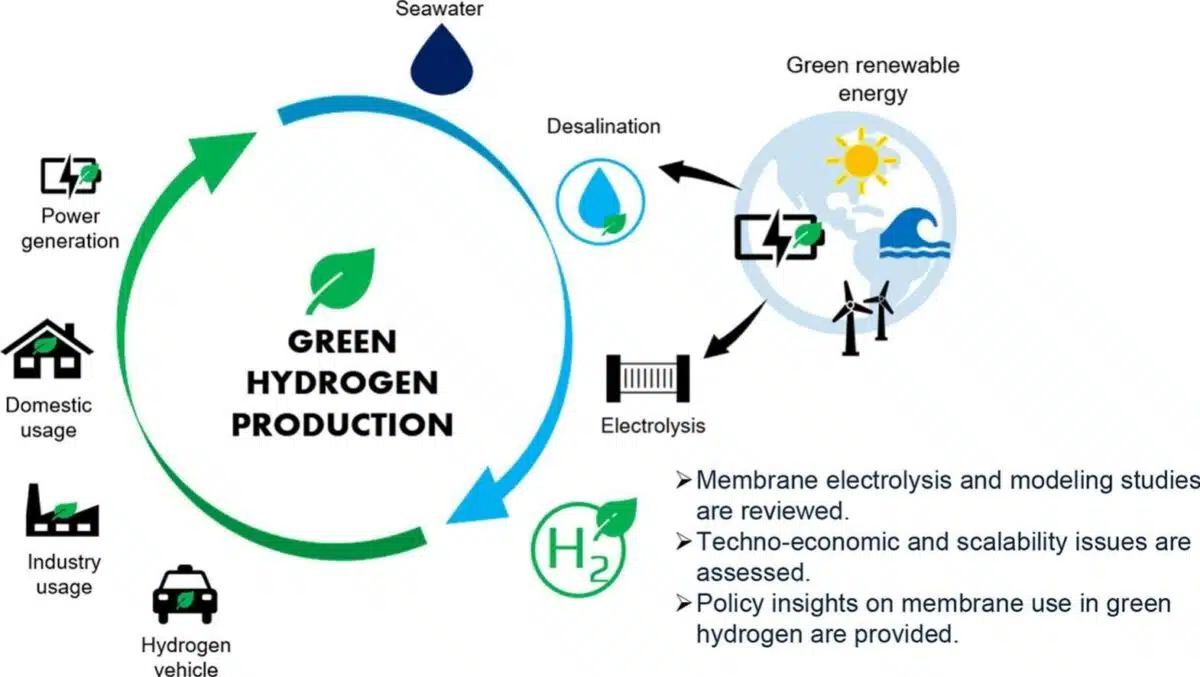
It also fits into broader efforts in Europe to develop cleaner hydrogen systems, including green hydrogen, where purification is still a necessary step before the gas can be stored or used.
“Our approach is very attractive for practical industrial applications because it reduces the synthesis time of porous fillers and mitigates the use of toxic solvents, which in turn minimizes hazardous waste,” she noted.


