

Hype around “green” hydrogen has been a perennial feature of energy crises, and the current one is no exception. Oil and gas prices rise following a supply shock, causing hydrogen to resurface in people’s imaginations – but investment in it is limited and interest fades once fossil fuel prices normalize. The fact is, investing in a green hydrogen project is a 10- to 20-year bet on high oil and gas prices.
The 1973 and 1979 oil crises popularized the idea of a hydrogen car as countries like Japan and the US sought alternatives to now-pricey gasoline. But oil prices fell, and hydrogen didn’t take off. In the 2000s, the narrative of a “hydrogen economy” replacing oil picked up alongside rising oil prices. Once again, to no avail. Japan’s post-Fukushima push for a “hydrogen society” has seen little progress because of poor economics for the green molecule.
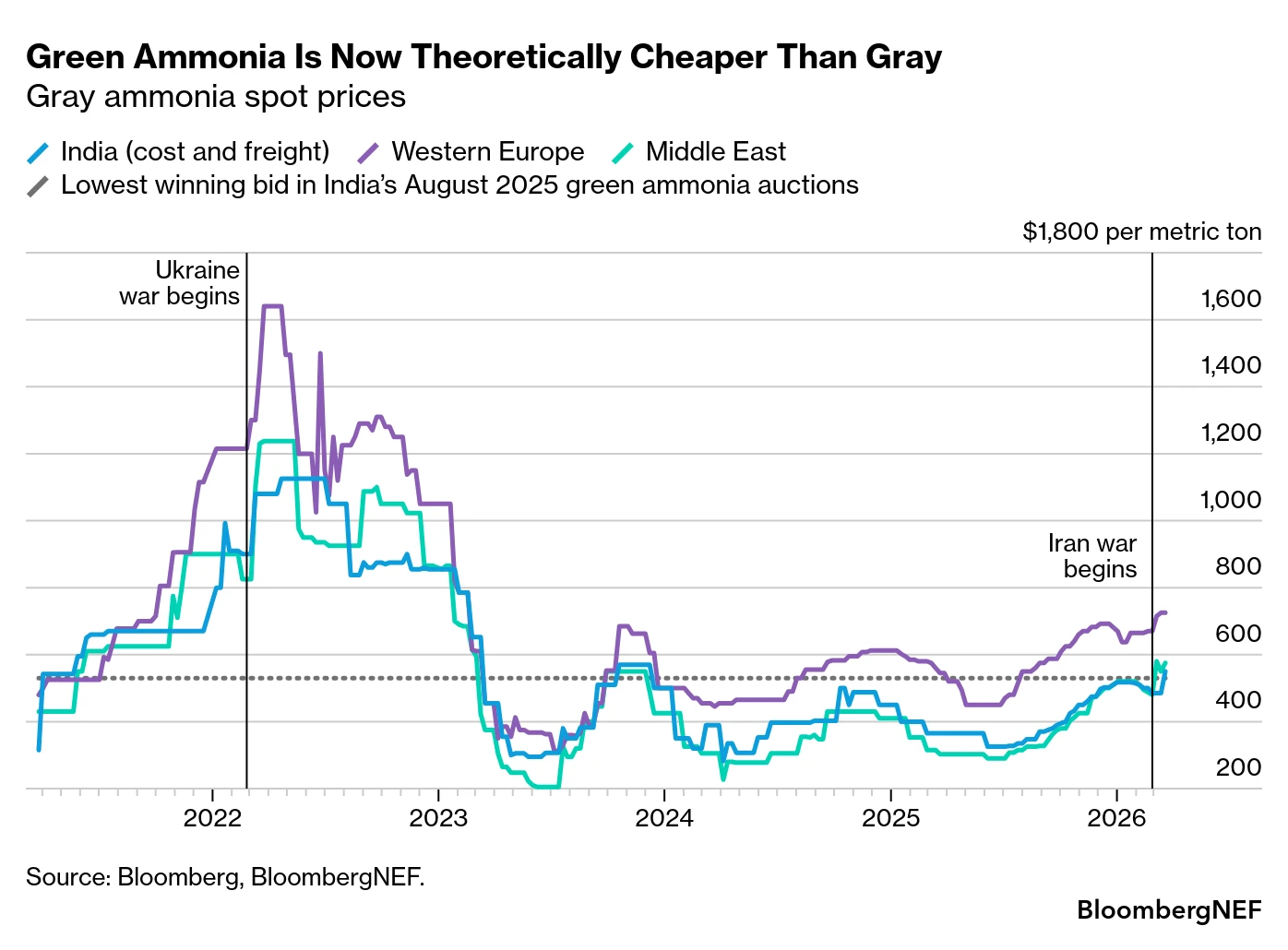
More recently, the European Union’s 2022 response to the war in Ukraine – the REPowerEU Strategy – called for producing 10 million metric tons of green hydrogen made from renewable electricity in the EU by 2030 and importing another 10 million to reduce dependence on Russian energy and nitrogen fertilizers. Prices of ammonia, a compound of hydrogen and nitrogen and the precursor for such fertilizers, more than tripled between July 2021 and April 2022. But BNEF expects Europe to meet just one-eighth of its REPowerEU production target.
This time is no different
History is likely to repeat itself once again in the case of the Iran-war-induced energy shock – unless the affected governments put money on the table, as might be happening in China (more on that below).
The argument in favor of green hydrogen is typically that pricy natural gas makes gas-derived “gray” hydrogen and ammonia so costly that it would be cheaper to build green hydrogen projects. This was true in 2022 and is starting to happen right now.
The flaw in this argument is that an investor would have to believe gas prices will stay high for the entire 10- to 20-year economic life of their green hydrogen project. If past prices are any guide, that is unlikely.
This helps explain why the high ammonia prices in the wake of the Ukraine war have spurred few final investment decisions in green hydrogen projects. With ammonia prices well below their 2022 peaks, it’s hard to see how 2026 would be any different, even if prices keep rising and stay high for many months.
Europe will not be an exception
One place that gets reminded of its vulnerability each time there is an energy shock is Europe. European leaders have responded to the Iran war by emphasizing energy security and resilience, while some analysts and industry groups argue the crisis strengthens the case for alternatives such as hydrogen and synthetic fuels.
Calls for green hydrogen would be more believable if Europe were on track to meet its existing hydrogen targets. The biggest such target is the Renewable Energy Directive (RED III)’s mandate to use green hydrogen in industry and transport. It should create at least 2.1 million tons per year (Mt/year) of green hydrogen demand in 2030 and 2.8Mt/year in 2035, from near zero today – if met. However, only a few EU member states are on track to meet their 2030 quotas.
Europe is also considering loosening penalties for missing the green hydrogen-based fuel quotas in the ReFuelEU Aviation Regulation, according to the newspaper Politico. The EU has denied such plans in comments for newspaper Hydrogen Insight, but fuel suppliers and airlines are clearly worried about meeting the so-called “e-SAF” mandate.
If Europe is failing to meet its existing and legally binding quotas, it’s hard to believe that it would meet any hypothetical new targets in response to the Iran war.
Replacing Middle East with Middle East
One last irony is that Europe plans to import some of its green ammonia from the Middle East, undermining the argument that using green ammonia reduces dependence on Middle Eastern energy imports.
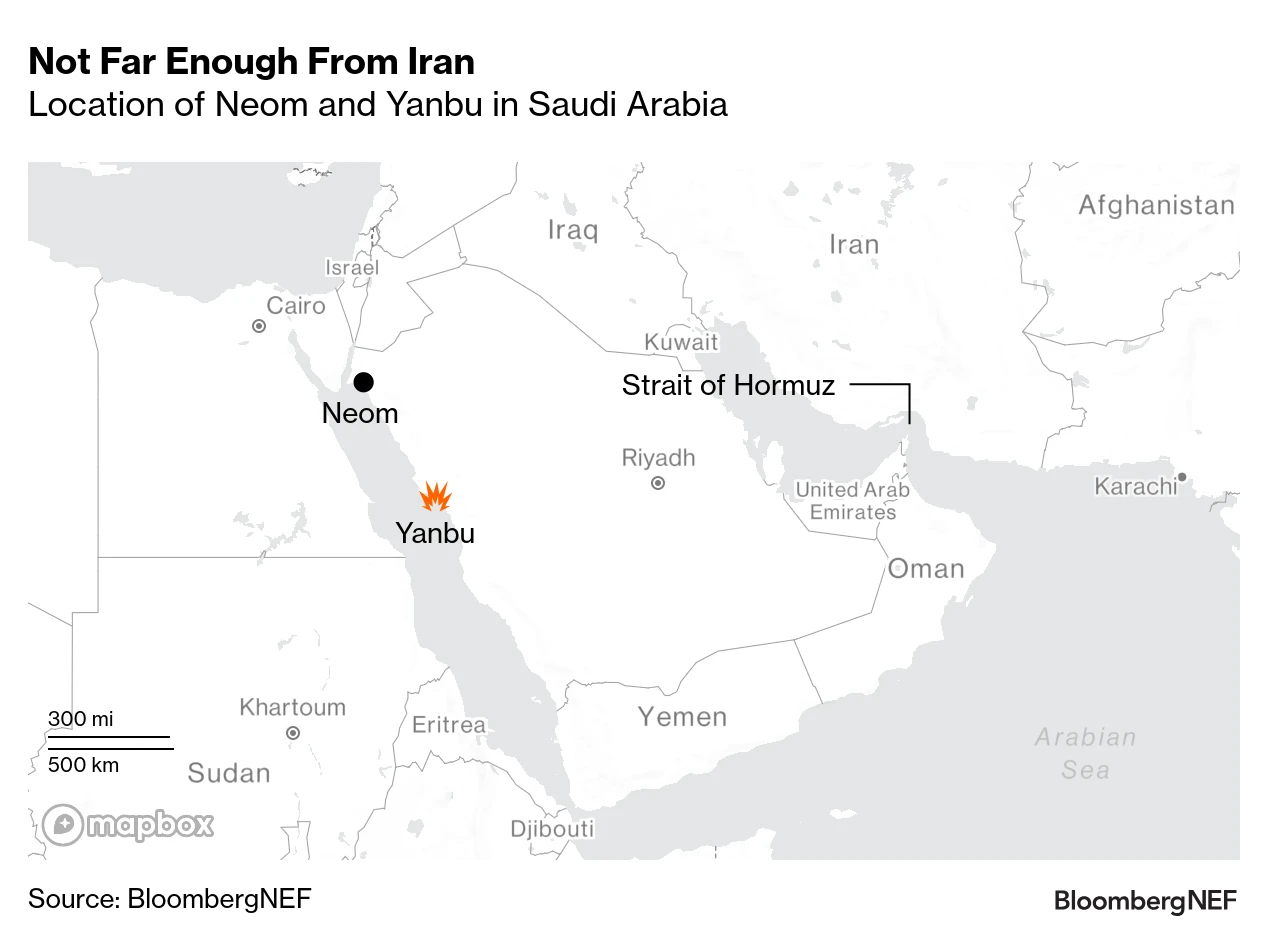
The largest green ammonia project under development with export plans to Europe, Saudi Arabia’s Neom, is not immune from Iranian attacks despite being on the Red Sea coast, on the other side of the Arabian Peninsula from the Strait of Hormuz. The Red Sea port of Yanbu, where an even larger export-oriented project is being planned, was attacked in March by a drone and a ballistic missile.
Relying on Middle Eastern clean ammonia and hydrogen may be one of the lower-cost routes to decarbonize Europe’s fuel and fertilizer demand, but it is not a strongly diversified energy security strategy. Investors may notice that now more than before.
China could be an exception
One place where a credible policy push may be underway is China. China is heavily reliant on oil and gas imports from the Middle East. It imports up to 75% of its oil and is the world’s largest importer of natural gas. It also consumes 90% of Iran’s oil exports. This month, the Chinese government announced plans for a low-carbon transition fund to provide direct financial support for the development of domestic green hydrogen and derived fuels such as green ammonia and methanol. Large-scale green hydrogen use for coal substitution and green fuel production is also a pillar of China’s 15th Five-Year Plan; see China’s 15th Five-Year Plan: Pivot for Quality.
To accelerate the sector’s growth, China must combine financial support with consumption incentives. To that end, the government has drafted a proposal for green hydrogen and biofuel quotas for the industrial and transport sectors, which could provide a crucial boost to green fuel demand. If the measures work – a big if – then China could be an exception to the recurring energy shock-induced hydrogen hype, by overcoming the hardest investment barriers.
Another exception could be project developers and offtakers who were on the fence and to whom the Iran war has given the final impetus needed to make an investment. The justification such entities would give themselves and their investors would be that green ammonia improves security of supply – but such entities will be few and far between without a policy push.
The Iran war could strengthen resolve
That said, the EU and other jurisdictions – such as India – may see their resolve strengthened due to the Iran war energy shock, coming on the heels of 2022’s energy crisis.
If governments come to believe that the Iran conflict will lead to elevated gas prices in the long term, they may act. If that happens, it could be the moment that green hydrogen demand gets unshackled. The more likely scenario is that mainstream green hydrogen discussions will die back until the next energy crisis.


