

Green hydrogen has emerged as a cornerstone of the global energy transition, offering a clean and sustainable alternative to fossil fuel-based hydrogen production. Produced through the electrolysis of water using renewable energy sources such as solar and wind, green hydrogen plays a critical role in decarbonizing industries like steel, chemicals, transportation, and power generation.
However, despite its environmental advantages, the production cost of green hydrogen remains one of the biggest challenges limiting its widespread adoption. A detailed analysis of green hydrogen production cost reveals a complex cost structure involving capital investment, operational expenses, energy inputs, and technological considerations.
Green Hydrogen Production Process Overview
Green hydrogen is primarily produced through the electrolysis of water, where electricity generated from renewable sources splits water into hydrogen and oxygen. According to Procurement Resource’s cost analysis framework, the production process involves:
Water purification and supply
Electrolysis using advanced electrolyzers
Hydrogen separation and storage
Compression and transportation
Request a Free Sample:- https://www.procurementresource.com/production-cost-report-store/green-hydrogen/request-sample
This process is energy-intensive and highly dependent on electricity availability and cost, making renewable energy pricing a crucial factor in overall production economics.
Cost Structure of Green Hydrogen Production
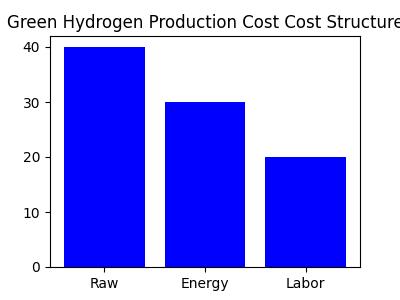
A comprehensive production cost analysis highlights two major components:
1. Capital Expenditure (CAPEX)
Capital costs include:
Electrolyzer systems (largest cost component)
Renewable energy infrastructure (solar/wind plants)
Storage and compression units
Plant construction and engineering costs
Procurement Resource emphasizes that electrolyzer technology and plant design significantly influence initial investment costs, which can vary depending on scale and location.
2. Operating Expenditure (OPEX)
Operating costs include:
Electricity consumption
Water usage and treatment
Labor and maintenance
Logistics and transportation
Among these, electricity is the single largest cost driver, accounting for a substantial share of total production expenses.
Key Factors Influencing Green Hydrogen Production Cost
1. Electricity Cost (Primary Driver)
The cost of renewable electricity plays a dominant role in determining the levelized cost of hydrogen (LCOH). Lower renewable energy prices directly reduce production costs, while high electricity tariffs significantly increase them.
Studies indicate that electricity alone can contribute a major portion of total production costs, making access to low-cost renewable energy critical for cost competitiveness.
Green Hydrogen Production Cost:- https://www.procurementresource.com/production-cost-report-store/green-hydrogen
2. Electrolyzer Efficiency and Technology
Electrolyzers are at the heart of hydrogen production. Their efficiency, durability, and cost determine both CAPEX and OPEX.
Advanced technologies improve energy efficiency
Large-scale deployment reduces unit costs
Innovation is expected to lower costs significantly over time
3. Scale of Production
Economies of scale play a vital role in cost reduction:
Large-scale plants benefit from lower per-unit costs
Bulk procurement of equipment reduces capital expenses
Higher production volumes improve operational efficiency
Procurement Resource’s analysis highlights that cost optimization is closely tied to plant scale and process design.
4. Location and Resource Availability
Geographical factors significantly impact production cost:
Regions with abundant solar or wind energy have lower electricity costs
Availability of water resources influences operational efficiency
Infrastructure and logistics affect transportation costs
Countries with strong renewable energy potential are expected to lead in cost-competitive green hydrogen production.
5. Policy and Incentives
Government support plays a crucial role in shaping cost dynamics:
Subsidies and tax credits reduce capital burden
Renewable energy policies lower electricity costs
Carbon pricing improves competitiveness against fossil fuels
Policy-driven incentives are essential to accelerate cost reduction and market adoption.
Current Cost Scenario
Currently, green hydrogen production costs remain higher than conventional hydrogen (grey or blue hydrogen). Estimates suggest:
Green hydrogen cost range: approximately $3.5-$6.0 per kg depending on region and technology
Electricity costs and electrolyzer expenses remain the primary contributors
This cost gap is one of the main barriers to large-scale adoption, particularly in price-sensitive industries.
Cost Reduction Trends
Despite current challenges, green hydrogen production costs are expected to decline significantly due to:
1. Falling Renewable Energy Prices
Solar and wind energy costs have been decreasing steadily, directly impacting hydrogen production economics.
2. Technological Advancements
Improved electrolyzer efficiency and manufacturing scale will reduce capital and operating costs.
3. Infrastructure Development
Expansion of hydrogen infrastructure, including storage and transportation, will improve cost efficiency.
4. Policy Support and Investments
Government initiatives and global investments are accelerating innovation and cost optimization.
Future projections suggest that green hydrogen could achieve cost competitiveness with fossil-based hydrogen in the coming decades.
Challenges in Cost Reduction
While the outlook is promising, several challenges remain:
High upfront capital investment
Limited infrastructure for storage and distribution
Intermittency of renewable energy sources
Supply chain constraints for electrolyzer components
These factors continue to impact the pace of cost reduction.
Strategic Insights for Industry Stakeholders
For investors, manufacturers, and procurement professionals, understanding green hydrogen production cost is essential for strategic planning.
Key Recommendations:
Invest in renewable energy integration to reduce electricity costs
Adopt advanced electrolyzer technologies for efficiency gains
Focus on large-scale production to leverage economies of scale
Monitor policy developments for incentives and subsidies
Procurement Resource’s cost analysis framework provides valuable insights into optimizing production economics and improving profitability.
Future Outlook
The future of green hydrogen looks promising, with strong global momentum toward decarbonization. As technology improves and renewable energy becomes more affordable, production costs are expected to decline significantly.
Key expectations include:
Gradual reduction in production cost over the next decade
Increased adoption across industrial sectors
Expansion of global hydrogen trade markets
Green hydrogen is poised to become a key pillar of the clean energy economy, provided cost barriers are effectively addressed.
Conclusion
Green hydrogen represents a transformative solution for achieving global sustainability goals. However, its widespread adoption depends heavily on reducing production costs through technological innovation, renewable energy integration, and supportive policy frameworks.
A detailed cost analysis highlights that while current costs remain high, ongoing advancements and investments are paving the way for a more competitive and scalable green hydrogen market. As the industry evolves, stakeholders who strategically manage production costs will gain a significant competitive advantage in the emerging hydrogen economy.
Contact Us:
Company Name:Procurement Resource
Contact Person: Ashish Sharma
Email: sales@procurementresource.com
Location: 30 North Gould Street, Sheridan, WY 82801, USA
Phone:
UK: +44 7537171117
USA: +1 307 363 1045
Asia-Pacific: +91 1203185500
Procurement Resource ensures that our clients remain at the vanguard of their industries by providing actionable procurement intelligence with the help of our expert analysts, researchers, and domain experts. Our team of highly seasoned analysts undertake extensive research to provide our customers with the latest and up-to-date market reports, cost-models, price analysis, benchmarking, and category insights, which aid in simplifying the procurement process for our clientele. We work with a diverse range of procurement teams across industries to get real-time data and insights that can be effectively implemented by our customers. We also track the prices and production costs of an extensive range of goods and commodities, thus, providing you with the updated and reliable data. We, at Procurement Resource, with the help of the latest and cutting-edge techniques in the industry, help our clients understand the supply chain, procurement, and industry climate, so that they can form strategies which ensure their optimum growth.
This release was published on openPR.


