

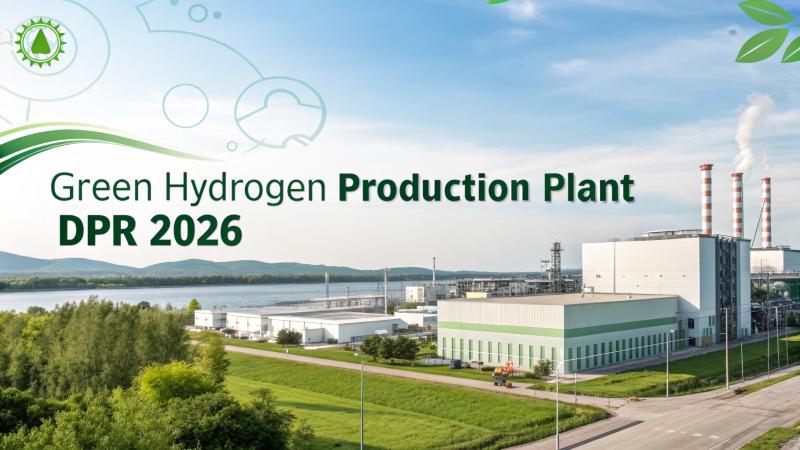
The global energy sector stands at an inflection point driven by the imperative to decarbonize industrial processes, reduce greenhouse gas emissions, and transition from fossil fuel dependence to sustainable, zero-emission energy carriers. At the forefront stands green hydrogen-a transformative fuel produced using renewable energy sources such as solar or wind power to split water into hydrogen and oxygen through electrolysis. Unlike conventional hydrogen production relying on fossil fuels through steam methane reforming, green hydrogen generates absolutely zero carbon emissions during production, making it environmentally superior and a cornerstone technology for achieving global climate objectives. Green hydrogen is increasingly viewed as a key solution for decarbonizing hard-to-abate sectors including heavy industry, long-haul transportation, aviation, maritime shipping, and chemical manufacturing where direct electrification remains challenging. Industries are actively shifting toward green hydrogen to reduce carbon footprints, comply with stringent environmental regulations, and decrease reliance on volatile fossil fuel markets. Government policies worldwide support green hydrogen development through production incentives, infrastructure investment programs, and mandated adoption targets-establishing green hydrogen manufacturing plants as strategically compelling investment opportunities for energy companies and sustainability-focused investors.
Request for a Sample Report: https://www.imarcgroup.com/green-hydrogen-manufacturing-plant-project-report/requestsample
Market Overview and Growth Drivers
The green hydrogen market is experiencing accelerating growth driven by converging forces reshaping global energy systems. The global green hydrogen market size was valued at USD 2477.8 Million in 2025. According to IMARC Group estimates, the market is expected to reach USD 68,257.40 Million by 2034, exhibiting a CAGR of 44.6% from 2026 to 2034. Mitsubishi Heavy Industries and Chevron are developing a plant in Utah through ACES Delta scheduled for mid-2025 operations accelerating clean energy adoption.
India is actively increasing green hydrogen production to reduce energy imports and support industrial sustainability. In July 2024, Tecnimont and NEXTCHEM launched GAIL’s first green hydrogen plant in Vijaipur featuring a 10 MW electrolysis unit producing 4.3 Tons daily, supporting India’s National Green Hydrogen Mission. In March 2024, India inaugurated its first green hydrogen plant in stainless steel at Jindal Stainless-an off-grid facility powered by solar reducing 2,700 metric tons of CO2 annually. Rising industrial decarbonization initiatives see industries adopting green hydrogen to lower emissions, aligning with sustainability targets. With supportive government policies including India’s National Green Hydrogen Mission providing financial incentives, combined with technological advancements in electrolyzer efficiency, green hydrogen is emerging as a critical solution for sustainable industrial growth globally.
Plant Capacity & Production Scale
The proposed green hydrogen manufacturing facility is planned with an annual production capacity ranging between 10,000 and 50,000 metric tons, allowing producers to benefit from large-scale operations while maintaining flexibility for future expansion.
This scalable capacity supports cost optimization in raw material sourcing, hydrogen compression, storage, and distribution. The plant is well-positioned to cater to high-growth sectors such as refining, fertilizers, power generation, mobility, steel, and chemical processing. With modular electrolyzer systems, capacity expansion can be achieved through phased investments without major infrastructure disruption.
Financial Feasibility & Profitability Outlook
The green hydrogen project offers strong financial potential driven by the global shift toward clean energy.
Estimated Profitability Benchmarks:
• Gross Profit Margin: 25%-35%
• Net Profit Margin: 10%-15%
These margins are supported by:
• Conversion of low-cost renewable electricity into high-value clean hydrogen
• Growing industrial and mobility demand for decarbonized fuels
• Government incentives, carbon credits, and renewable energy subsidies
• Rising compliance requirements for low-emission energy sources
• Long-term offtake agreements with industrial buyers
With proven electrolyzer technologies, policy-backed clean energy mandates, and localized renewable power sourcing, the project delivers attractive ROI and long-term revenue stability.
Operating Cost Structure
The operating cost framework of the green hydrogen plant is mainly distributed across:
• Raw Materials: 60-70% of OpEx
• Utilities: 10-15% of OpEx
Capital Investment Requirements
Establishing a green hydrogen plant requires strategic capital investment across critical categories:
Land and Site Development: Selection of optimal location with reliable access to renewable energy sources-particularly solar or wind power essential for powering electrolysis-represents the foundational criterion. Availability of deionized water supply, proximity to power transmission infrastructure, and logistics channels facilitating hydrogen distribution are critical. The site must comply with environmental regulations, zoning laws, and offer adequate land for electrolyzer installations, compression, storage, and future expansion.
Machinery and Equipment: Specialized machinery for PEM electrolysis represents the largest capital expenditure. Essential equipment includes:
• Electrolyzers: PEM electrolysis systems splitting water molecules into hydrogen and oxygen using renewable electricity, representing core production technology
• Electrolyte Power Supplies: Power conditioning equipment converting renewable electricity into precisely controlled DC power for electrolysis
• Purification Units: Gas separation and purification systems removing residual oxygen and moisture ensuring ultra-high purity
• Gas Analyzers: Real-time analytical instruments monitoring hydrogen purity, oxygen content, and quality parameters
• Dew Point Meters: Precision moisture measurement instruments ensuring hydrogen dryness specifications critical for storage
• Leak Detectors: Safety monitoring systems continuously detecting hydrogen leaks throughout production and storage infrastructure
• DI Water Units: Deionized water production systems providing ultrapure water feedstock essential for electrolysis efficiency
Civil Works and Other Costs: Production buildings housing electrolyzers with ventilation managing hydrogen atmosphere safety, water treatment infrastructure, hydrogen compression and storage facilities, quality control laboratories, and comprehensive safety infrastructure including detection systems and emergency protocols. Pre-operative costs include engineering design, commissioning, operator training, permits, working capital, and contingency provisions.
Buy Now: https://www.imarcgroup.com/checkout?id=20566&method=2175
Production Process and Technical Requirements
Green hydrogen production through PEM electrolysis requires substantial inputs. For each ton of green hydrogen produced, approximately 50,000 kWh of renewable electricity and 15 tons of deionized water are required, underscoring the critical importance of securing reliable, cost-effective renewable energy supply and water treatment capabilities. The production process involves water purification to deionized specifications, renewable energy generation from solar or wind sources, electrolysis splitting water molecules, hydrogen purification removing residual impurities, and compression and storage preparing products for distribution. Raw material costs-primarily electricity and deionized water-constitute substantial expenditures, making energy cost management through renewable energy integration and water availability crucial for economic viability. Engaging renewable energy providers through long-term power purchase agreements and implementing efficient water treatment help mitigate pricing risks.
Major Applications and Market Segments
Power Generation: Green hydrogen serves as energy storage medium and dispatchable power generation fuel, enabling grid balancing and renewable energy integration.
Transportation: Hydrogen fuel cells power zero-emission vehicles including buses, trucks, trains, and ships, providing long-range capability and rapid refueling.
Industrial Processing: Steel production, chemical manufacturing, refining operations, and energy-intensive industries utilize green hydrogen replacing fossil fuel-derived hydrogen.
Heating Applications: Residential and commercial heating systems provide decarbonized thermal energy supporting building sector emissions reduction.
Why Invest in Green Hydrogen Manufacturing?
Zero-Emission Production: Green hydrogen generates absolutely zero carbon emissions during production, providing environmentally superior alternative to fossil fuel-derived hydrogen.
Growing Industrial Demand: Hard-to-abate sectors including steel, chemicals, refining, and heavy transportation increasingly require green hydrogen for decarbonization mandates.
Government Policy Support: National hydrogen strategies, production incentives including India’s National Green Hydrogen Mission, and infrastructure investment programs provide strong frameworks.
Renewable Energy Integration: Leveraging abundant and increasingly cost-competitive solar and wind energy for electrolysis creates sustainable production economics.
Energy Security: Domestic green hydrogen production reduces reliance on imported fossil fuels, enhancing national energy independence.
Industry Leadership
The global green hydrogen industry is driven by companies possessing advanced electrolyzer technologies and large-scale production infrastructure. Key players include:
• Air Liquide S.A.
• Air Products and Chemicals Inc.
• Enapter AG
• Green Hydrogen Systems A/S
• Linde plc
• Nel ASA
• Ørsted A/S
• Plug Power Inc.
• Siemens Energy AG
• Uniper SE (Fortum Oyj)
These companies are engaged in electrolyzer development, renewable energy integration, hydrogen storage and transportation solutions, operating large-scale facilities across Europe, North America, and Asia.
Ask an Analyst: https://www.imarcgroup.com/request?type=report&id=20566&flag=C
Recent Industry Developments
April 2025: Egypt and France agreed to build a green hydrogen production plant near Ras Shokair through partnership between Red Sea Ports Authority, New and Renewable Energy Authority, and Green Fuel Alliance. The three-phase project will cost €7 billion and produce one million tonnes annually.
April 2025: Honeywell launched Honeywell Protonium, an AI and ML-powered technology suite boosting efficiency and scalability of green hydrogen production, addressing challenges including power intermittency and high production costs through predictive control algorithms.
March 2025: India’s Shipping Ministry announced Kandla Port will begin green hydrogen manufacturing in June 2025 using a 1 MW electrolyser, scaling to 10 MW. The plant will produce 18 kg per hour or 80-90 tons annually.
February 2025: Himachal Pradesh launched North India’s first green hydrogen plant utilizing renewable energy, strengthening India’s market supporting the 500 GW non-fossil fuel target by 2030 and net-zero goal by 2070.
December 2024: Axpo and partners launched construction of a 2 MW green hydrogen plant in Burglen, Switzerland, operational by 2026, supplying Lake Lucerne’s first hydrogen vessel and replacing over one million liters of diesel.
Conclusion
The green hydrogen sector presents a strategically positioned investment at the intersection of renewable energy advancement, industrial decarbonization, and global climate objectives. With zero-emission production providing environmentally superior alternatives, growing industrial demand from hard-to-abate sectors, strong government policy support through national hydrogen strategies and production incentives including India’s National Green Hydrogen Mission, renewable energy integration leveraging cost-competitive solar and wind power, energy security benefits reducing fossil fuel reliance, proven PEM electrolysis technologies, and accelerating global deployment with projects like NEOM’s 2.2 GW facility and Egypt-France’s €7 billion plant producing one million tonnes annually, establishing a green hydrogen plant offers compelling long-term returns. The combination of expanding renewable energy capacity, tightening industrial emissions regulations compelling hydrogen adoption, technological advances improving electrolyzer efficiency, massive infrastructure investment programs, and critical role in achieving net-zero emission targets creates an enduring value proposition for energy companies, industrial processors, and sustainability-focused investors committed to the transformative hydrogen economy reshaping global energy systems.
About IMARC Group
IMARC Group is a global management consulting firm that helps the world’s most ambitious changemakers to create a lasting impact. The company excels in understanding its clients’ business priorities and delivering tailored solutions that drive meaningful outcomes. We provide a comprehensive suite of market entry and expansion services. Our offerings include thorough market assessment, feasibility studies, company incorporation assistance, factory setup support, regulatory approvals and licensing navigation, branding, marketing and sales strategies, competitive landscape and benchmarking analyses, pricing and cost research, and procurement research.
Contact Us:
IMARC Group
134 N 4th St. Brooklyn, NY 11249, USA
Email: sales@imarcgroup.com
Tel No:(D) +91 120 433 0800
United States: (+1-201971-6302)
This release was published on openPR.


