

Thank you for taking the time to speak with us today. As you’re aware, Japan is currently facing a demographic crisis. By 2040, projections suggest that 30% of municipalities may effectively “disappear” due to population decline. In response, the Cabinet has introduced a new initiative called “Regional Revitalization 2.0.” How do you view the importance of revitalizing regional economies in relation to addressing this demographic challenge? And what role does Tokyo’s centralization play in this issue?
To tackle this question, I think it’s helpful to break it down. Fundamentally, the population decline in Japan stems from a sense of uncertainty among the younger generation—those who are now entering the life stage of marriage and raising children. Without a strong belief in stable future income and standard of living, they are understandably hesitant to start families.
Our research shows a significant gap between the household income levels of those who had children 20 years ago and those having their first child today. The income threshold required to feel secure enough to raise a child has risen dramatically—far more than inflation can explain.
Why is that? Well, about 20 years ago, people in their 30s grew up during a period of economic growth. Even if their income was modest, there was confidence that both society and personal earnings would grow over time. But today’s 30-year-olds were raised during Japan’s “lost decades”—a prolonged period of economic stagnation. That formative experience shapes their worldview. They don’t expect automatic income growth, and that deeply influences decisions about marriage and childbearing.
So, unless society as a whole can return to growth, the solution must lie in enabling individuals to personally increase their income through effort. We must rebuild social confidence. In Yamanashi, we’re promoting a model where “if you work hard, it pays off.” We emphasize three key pillars: skill development (skill-up), corporate performance improvement (profit-up), and corresponding wage increases (wage-up). We’re embedding this mindset and structure into the fabric of our regional economy and culture.
Ideally, this should be a national movement. But even if population policy and regional revitalization are often treated as separate issues, in our case they’re closely connected. We’re demonstrating results in Yamanashi and hope to influence national direction.

Yamanashi leads the world in green hydrogen innovation at the Tokyo Stock Exchange ceremony
Yamanashi has led Japan in introducing smaller class sizes and has also implemented digital transformation programs such as “Digi-Support Yamanashi” and leadership development initiatives. Can you elaborate on these efforts to foster future talent?
Certainly. Among the “three ups,” skill development is foundational. A key challenge we face is that many companies in Yamanashi—particularly small and medium-sized enterprises—view employee upskilling as a personal matter, not a business priority. We’re working to change that mindset, encouraging employers to see skill development and wage growth as core management issues.
To support this, we’ve created a public platform called Career-Up University. It’s open to all businesses, especially those without in-house training capacity. Through this, the prefectural government directly offers professional training services for working adults.
At the same time, we place great importance on long-term human capital investment. For example, we provide small-class education from grades one to six to ensure personalized learning environments. We’re also introducing “international early childhood education” to help children grow with a global perspective from a young age.
We further promote international exchange programs for middle and high school students, giving them hands-on experiences with peers from other countries to understand both commonalities and differences.
Through small class sizes and customized learning, our goal is to offer tailored education that nurtures each child’s unique potential. Historically, Japan has struggled to provide such services due to financial constraints, but here in Yamanashi, we treat investment in education as a top priority—one that will drive our long-term development.
Yamanashi is also emerging as a leader in hydrogen energy. Can you explain your strategic vision for hydrogen in shaping the region’s economic transformation?
Governor Nagasaki: Yamanashi’s main industry is precision machinery and electronics. We’re now encouraging these companies to expand into three promising growth sectors: medical devices, aerospace and defense, and green hydrogen.
Hydrogen, in particular, has tremendous potential as a next-generation energy source. Yamanashi University has a long history of research in fuel cells. Building on that, we’ve developed Japan’s most advanced P2G (Power-to-Gas) hydrogen production system at Mt. Yoneshiro.
Interestingly, this began by accident. During the economic bubble, the land was intended for housing—but after the bubble burst, it sat unused. Eventually, we installed solar panels. To avoid wasting that electricity, we explored storage methods and arrived at hydrogen as a solution.
The result is a PEM-type electrolyzer system that splits water into hydrogen using electricity. It has three major advantages:
- High responsiveness to power fluctuations, making it ideal for solar and wind energy.
- Compact design—everything fits into a single container.
- Safety and ease of use—no hazardous chemicals involved.
Because of this, hydrogen production systems can be installed right where hydrogen is needed—even potentially in individual households someday.
We’re currently exploring international collaborations. For example, we’re in talks with a company interested in using green hydrogen to produce fertilizer. We’re also speaking with regional governments in Korea and India, particularly Uttar Pradesh, to explore joint development or technology exchange around hydrogen infrastructure.
In March next year, Yamanashi will host the International Hydrogen Summit, bringing together stakeholders to help shape the future of hydrogen society. We’d love to have your magazine cover it!
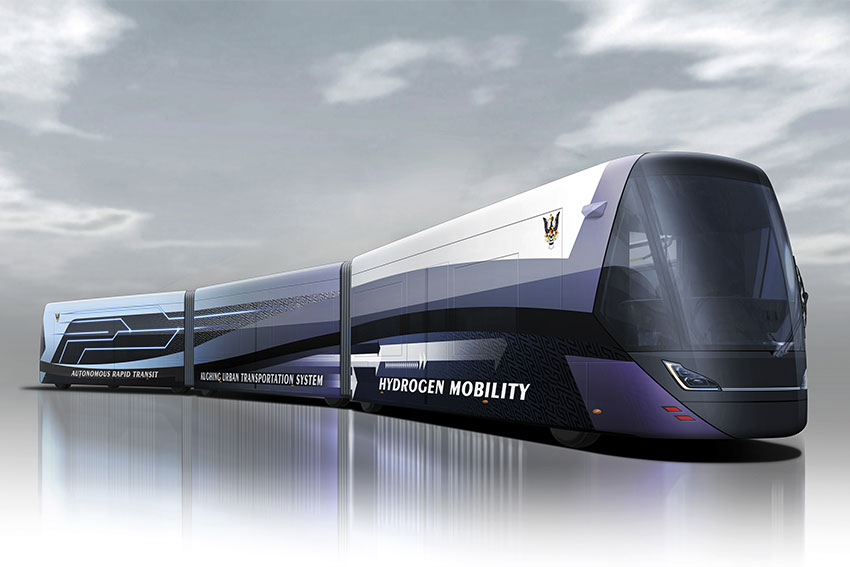
Fuji Tram glides on smooth rubber tires, reading white lines with cameras for precise guidance—no rails required
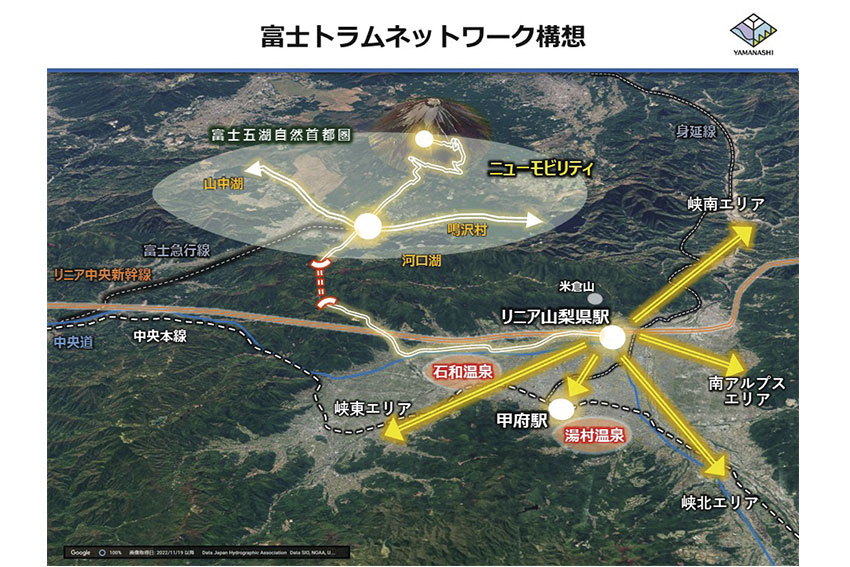
Opening New Routes to Mt. Fuji and Yamanashi
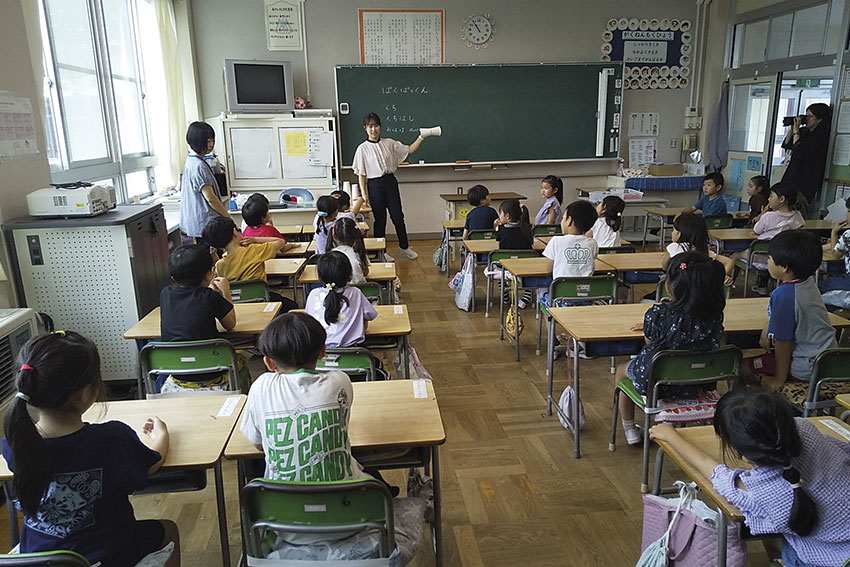
Small-class education in elementary schools

A climber at the fifth station of Mt Fuji
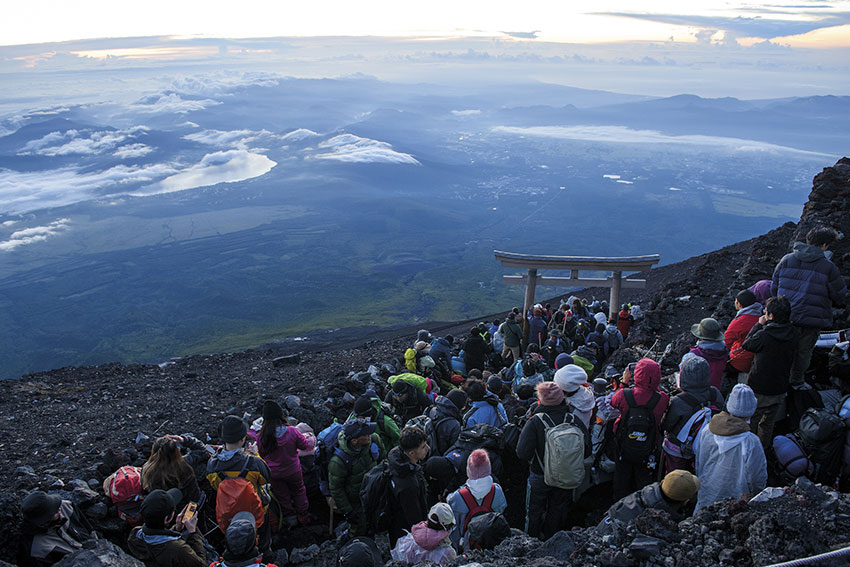
Climbers watching the sunrise on Mt. Fuji
Fascinating. Let’s talk about tourism and sustainability. How is Yamanashi managing growing tourist interest in Mount Fuji and surrounding areas?
First, we warmly welcome visitors from abroad. However, we admit that local communities are still adjusting to this influx.
One example was the so-called “Convenience Store Mt. Fuji” phenomenon—visitors dangerously stepping into roads to photograph Mount Fuji. Initially, black tarps were used to block views, but we realized that wasn’t the right solution. So now, we’ve installed flower beds. People won’t trample flowers. It’s a simple, elegant way to guide behavior.
Going forward, we believe dispersal is key. Rather than concentrating tourists at a few hotspots like the 5th Station or summit, we want to introduce them to lesser-known but deeply cultural routes—such as ancient pilgrimage trails and the Aokigahara Forest at the mountain’s base.
We’re creating new experiences and educational programs to help people appreciate the cultural and natural richness of these areas. The goal is to offer more options and reduce overcrowding, while sharing the true depth of Mount Fuji’s heritage.
Transportation is also a major component of regional revitalization. With projects like the Fuji Tram and the upcoming Linear Shinkansen, how do you envision sustainable mobility fitting into your strategy?
Our Fuji Tram project aims to connect Mount Fuji’s 5th Station to the foot of the mountain and link it with the Chuo Linear Shinkansen station. By doing this, we open a new access point to Mt. Fuji—especially for visitors coming from western Japan, like Osaka or Nagoya.
The Chuo Shinkansen will connect Tokyo to Yamanashi in just 25 minutes. That’s a game changer. It will likely increase the number of train stops in Yamanashi, which in turn will make the line more convenient for residents—not just tourists. You won’t have to wait an hour for the next train.
This convenience will transform our local economy and quality of life. Land prices here are less than one-tenth of Tokyo’s, and we offer abundant nature and outdoor activities. With better access, Yamanashi becomes a compelling place to live and do business.
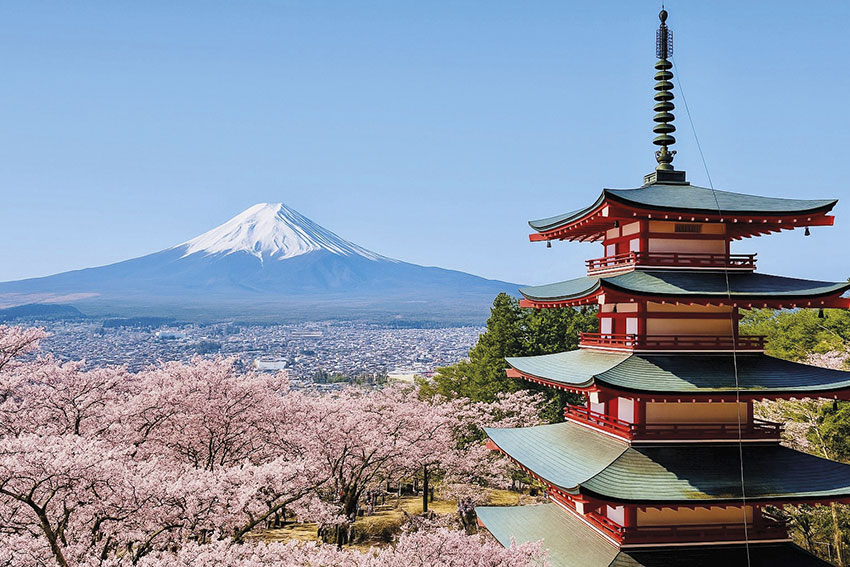
Mount Fuji viewed from Arakurayama Sengen Park in Fujiyoshida City
Finally, we have 75 million readers around the world. If you had to describe Yamanashi in just one sentence to a global audience, what would you say?
We often describe Yamanashi as a “Tōgenkyō”—a utopia. But more precisely, it’s a utopia ten years into the future.
It’s a place where natural beauty and ideal living conditions come together—majestic mountains, pristine water (40% of Japan’s bottled water comes from here), and fresh, clean air from lush forests. Education here nurtures every child’s potential, free from “glass ceilings.” There are no barriers to growth—only opportunity.
Until now, what was missing was business infrastructure. But with the Linear Shinkansen physically connecting us to Tokyo in just 25 minutes, that final piece is falling into place.
In short, Yamanashi is a place where anyone can live freely, grow fully, and thrive without limitations.
Interested in learning more? Click here: https://www.pref.yamanashi.jp/


